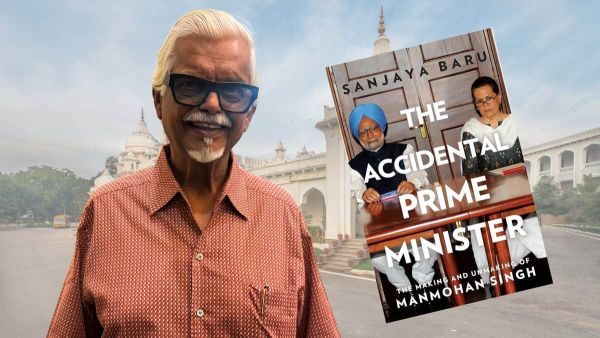
Hyderabad: As the media advisor to former prime minister Manmohan Singh, Sanjaya Baru has been critical about the centralisation of power in the Congress, especially as the party is up against the relentless Bharatiya Janata Party (BJP).
Vocal in his statements, Baru is popular for writing the book “The Accidental Prime Minister” on Singh’s tenure in the top post of the country. The book became controversial for suggesting that Singh did not always wield full political authority and that major decisions were shaped by Congress leadership outside government, widely believed to point to then party president Sonia Gandhi.
Beyond the narrative, though, Singh is widely regarded for leading India’s economic reforms in 1991, strengthening India–US ties and maintaining a reputation for personal probity. The fact remains, however, that Baru was an insider in the political echelons at the time and his words have always garnered attention.

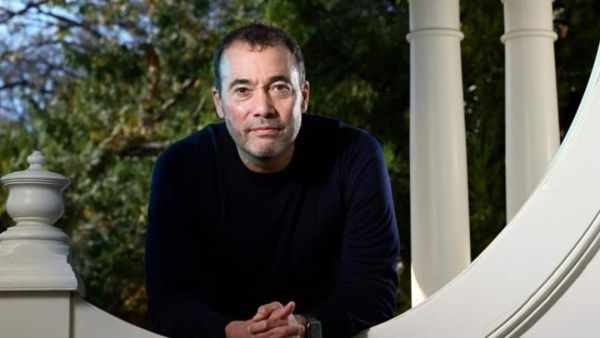
Baru spoke to Siasat.com’s Khadija Irfan Rahim and Osama Salman on the sidelines of the History Literature Festival at the Hyderabad Public School on a range of political topics in an unreserved interview.
Excerpts:
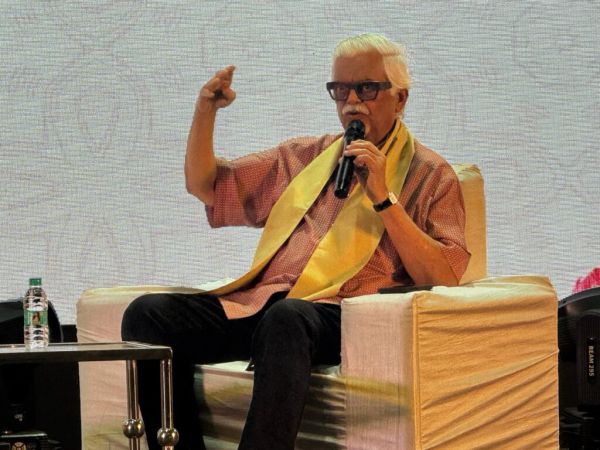
Sanjaya Baru (SB): Power has certainly become more centralised, which is not healthy. But what I was writing was about the exercise of the prime minister’s office. I think that was something that was lacking in the UPA. But now, we have gone to the other extreme.
SB: Not yet. I think the Congress party needs Mamata Banerjee as its president and not Rahul Gandhi.
SB: It has to bring back its leadership across the country. So many people left the Congress. Sharad Pawar left the Congress, Mamata Banerjee left the Congress and Chandrababu Naidu at one time was in the Congress. Jagan Mohan Reddy left the Congress. The Congress has to rebuild itself by bringing back those who walked out. It cannot be a Rahul Gandhi-Priyanka Gandhi party.
That has been my criticism of the UPA. That is what Narendra Modi is taking advantage of and calling it dynastic rule. The Congress is a national party, which is why I’ve been arguing that Mamata Banerjee should become president of the Congress, and not Rahul or Priyanka.
SB: That is where the fight is. After all, we are still a democracy. Congress has to become the platform, the umbrella, that brings together all the political parties. And the whole problem today is that nobody outside wants to go to that party because it’s dominated by one family. That family rule should end. It should go back to becoming the Indian National Congress, which was originally a regular political party. I think that is where the future has to be.
SB: India can only be ruled by a coalition. India itself is a coalition. And the Congress earlier was a coalition. Given the nature of our society, coalition rule has always been better. Look at the numbers. I’m an economist. From 1950 to 1980, the average rate of growth of the Indian economy was around 5 per cent. From 1980 to 2010, when you had coalition governments of Narasimha Rao, Atal Bihari Vaypayee and Manmohan Singh, the average rate of growth was about 7 per cent.
And then now with this one-party rule, again, the economy has slowed down. So purely as an economist, the data tells me that coalition governments have delivered higher economic returns. Coalitions are about give and take, adjustment and compromise. The economy suffered under Indra Gandhi and the economy is suffering under Modi. Under Narsimha Rao, Vaypayee and Manmohan Singh, the numbers tell you the story.
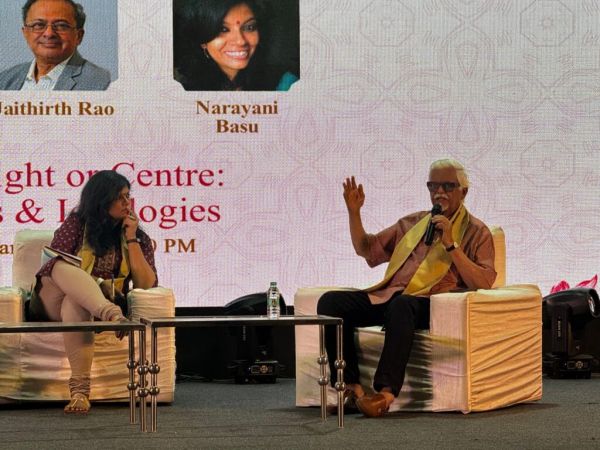
SB: They’ll always be. Under Indra Gandhi, we have had authoritarianism. Under Modi, we have authoritarianism. Both powerful prime ministers have delivered authoritarian governments.
SB: Yes, it’s not good. Badly done. I had nothing to do with it. It says “based” on my book, but it is not a good political film. You see some good Hollywood movies that are political. Indian cinema in any language does not have an understanding of how to make a good political film. We don’t have a single good example of a really good political film.