The rise of artificial intelligence may bring more than a mere change in how we work; it can break the very economic system that has powered the Western world for centuries.
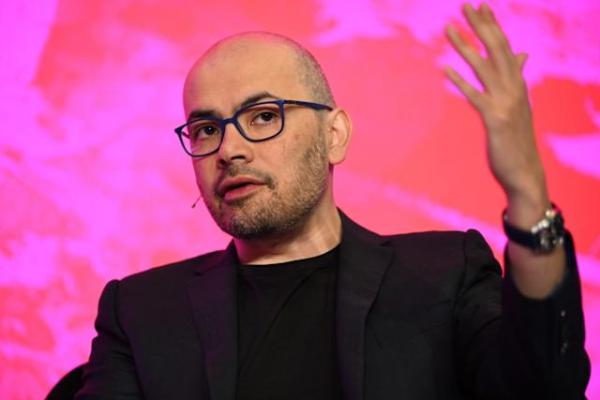
That’s the stark warning from Mo Gawdat, a tech industry veteran who spent decades in senior leadership at Microsoft and Google X. Speaking with Business Insider in September, Gawdat argued AI is a existential threat to capitalism itself-not because the technology is inherently dangerous but because it’s dismantling the very foundation the system depends on.
Capitalism has always worked on a simple formula: employ workers for less than they generate in value, sell their output for more and pocket the difference. It is labor arbitrage that has been driving growth for decades.
But AI is breaking that model, Gawdat explains. As machines take over more tasks, the cost of production drops closer and closer to zero. When you don’t need human workers to make things, the entire logic of wages, pricing, and profit starts to unravel.
“The very base of capitalism, which is labor arbitrage—to hire you for a dollar and then sell what you make for two—is going to disappear,” Gawdat said.
It goes beyond automation because there is no human input; there are no wages, and without wages, people cannot consume, and without consuming, there is no economy. An economy cannot function on a system of productivity alone when there is no mechanism to enable a person to purchase what has been produced.
Gawdat is very candid about his predictions of what is next to come. He predicts massive unemployment that is likely to affect not only the blue-collar industry but also the white-collar industry itself, which could reach up to 20%, 30%, or 50%.
The shakeup will be felt by the educated and high-salaried individuals as much as anyone else. Nor will the tech industry, including the currently self-satisfied tech chief executives who benefit from the efficiencies brought about by AI.
“Those CEOs forget that sooner or later the AI will replace them too,” Gawdat said. “AI is better than humans at every task, including being a CEO.”
This isn’t a future scenario, and we’re already in the midst of these events. The pace is only quickening.
Yet in an era when consumption is about to plummet due to a society plagued by joblessness, governments will have to make an impossible decision: let their economies implode or rethink how money works in society.
Gawdat argues that guaranteed income will, in some form or another, become inevitable. Without it, there will simply not be enough people in a society with the means to purchase anything.
“Without consumption, there is no economy,” he said. “So they’re going to have to give people some kind of income to keep going.”
The effect of this will likely vary from region to region. The Western economies, where productivity and output on an individual level have been emphasized above all else for centuries, will face potentially the most difficult adjustment period. The whole fabric of their society is defined by their jobs.
Although Gate predicts apocalyptic outcomes from capitalism, his own attitude towards AI is not alarmist. For him, intelligence is conceptually neutral. This form of technology does not want anything; it merely exists as such.
The danger really begins with the transition period in which we currently find ourselves-when AI systems are powerful enough to reshape society, but still being directed by human incentives centered around greed, competition, and power.
“The challenge that humanity faces today is not the rise of the AI, it’s the rise of the AI in an age where humanity’s at its lowest morality,” Gawdat said.
Gawdat’s vision isn’t utter dystopia. Over time, he thinks AI will make more rational, fair decisions than today’s political and corporate leaders. The transition will be brutal, but the destination might actually be better than where we are now.
He feels that capitalism, in its present form, will not survive. But it doesn’t have to be catastrophic. Capitalism won’t survive in its current form, he argues. But that doesn’t have to be catastrophic.
“It’s an invitation to change,” Gawdat said. “And if you change, you would create not only an opportunity to survive, but an opportunity to thrive.”
The question is whether society can manage the turbulence ahead—and whether we’ll make the necessary changes before the old system collapses completely.