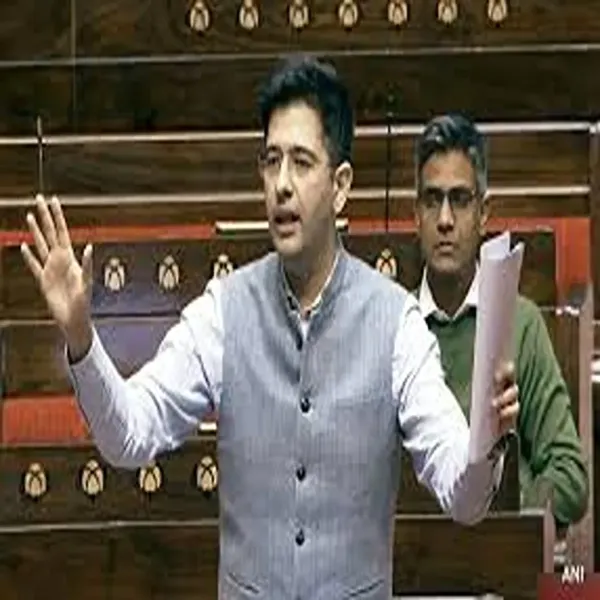
FoodSafety – AAP Rajya Sabha MP Raghav Chadha on Wednesday used the floor of the Upper House to raise alarm over what he described as widespread food adulteration across the country, warning that the issue has quietly escalated into a serious public health challenge. He urged the government to take immediate and decisive action, saying unsafe food products are reaching households daily under the guise of purity and health benefits.

Addressing fellow lawmakers, Chadha said ordinary consumers are being misled by false labels and exaggerated nutritional claims, while dangerous substances continue to enter the food supply unchecked. According to him, essential food items consumed by families every day are being compromised by harmful additives, chemicals, and excessive levels of sugar, salt, and unhealthy fats.
During his speech, the AAP leader listed several examples of alleged adulteration, stating that milk is often mixed with substances such as urea and detergents, while vegetables are treated with oxytocin to improve appearance and speed up growth. He further claimed that paneer is being prepared using starch and caustic soda, ice cream contains detergent powder, and fruit juices are infused with synthetic flavours and artificial colours.
Chadha also pointed to the adulteration of spices with brick powder and sawdust, tea leaves with artificial colouring agents, and honey with sugar syrup and chemical dyes. He alleged that poultry products are laced with anabolic steroids, while sweets sold in markets frequently use vanaspati instead of pure ghee.
To underline the human cost of the issue, Chadha described the situation faced by parents who believe they are providing nutritious food to their children. He said many mothers unknowingly give adulterated milk to their children, assuming it will support growth and health, while in reality it may contain hazardous chemicals.
He warned that children, pregnant women, and elderly citizens are especially vulnerable to the long-term health effects of consuming contaminated food, describing food adulteration as a “silent health emergency” that often goes unnoticed until serious illness develops.
Citing research findings, Chadha claimed that a significant portion of food products tested in recent years failed safety standards. He stated that 71 percent of milk samples examined were found to contain urea, while 64 percent included neutralising agents such as sodium bicarbonate. He also questioned how the volume of milk sold in the country exceeds its actual production capacity.
According to figures referenced in his speech, food adulteration was detected in about 25 percent of all food samples tested between 2014–15 and 2025–26, meaning one out of every four samples was found to be unsafe. He raised concerns about the unknown number of illnesses, hospitalisations, and possible deaths linked to contaminated food.
Chadha also expressed concern over products manufactured in India that are reportedly banned in other countries due to health risks but continue to be sold domestically. He referred to instances where spices produced by major Indian companies were barred from markets in the United States, the United Kingdom, and parts of Europe after cancer-causing pesticides were detected, yet remained available to Indian consumers.
He said this raises serious questions about regulatory enforcement and consumer safety, adding that Indian citizens should not be forced to consume products deemed unsafe elsewhere.
Urging the government to act, Chadha proposed strengthening the Food Safety and Standards Authority of India by increasing staffing levels and upgrading laboratory testing infrastructure. He also called for stricter penalties and higher fines to deter offenders involved in food adulteration.
Additionally, he suggested introducing a transparent public recall system, under which adulterated products would be clearly identified and removed from the market without delay. According to him, restoring public trust in food safety requires swift enforcement and visible accountability.
Chadha concluded by warning that the situation has reached a stage where products unfit for consumption in other countries are being sold freely in India, stressing that urgent reforms are necessary to protect consumer health.


