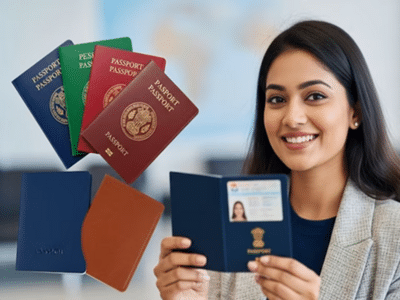
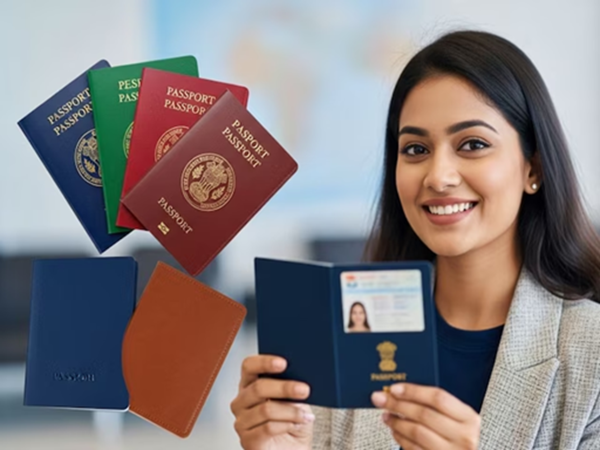
General Knowledge, Indian Passport Colors: Have you ever noticed that some people at the airport have a blue passport, while some special individuals carry white or maroon passports? A passport is essential for international travel. Its color reflects your identity and your standing in the world. The Indian government primarily issues passports in three colors, each corresponding to different categories of people, from ordinary citizens to the country's top diplomats.
The color of your passport determines how easily you will gain entry into a country and how you will be treated at the immigration counter. Understanding the general knowledge behind these passport colors is crucial for young people dreaming of traveling abroad and students preparing for competitive exams. While a blue passport is proof of your Indian citizenship, a maroon passport grants you VVIP privileges that an ordinary person can only dream of. Learn about the secrets hidden in passport colors in this general knowledge guide.
Indian Passport Colors Meaning and Power: The ‘Power Game’ of Passport Colors
Entry into a foreign country is not possible without a passport. Learn what each color of the Indian passport means and which one you should have.
1. Blue Passport (Personal Passport – Type P)
This is the most common Indian passport, known as ‘Type P’ (P for Personal). It is issued to ordinary citizens of the country. Its blue color was chosen to distinguish it from the official passports of other countries. This passport allows the holder to travel abroad for work, education, or tourism.
2. White Passport (Official Passport – Type S)
A white passport is not available to everyone. It is for government officials who travel abroad on official business. It is called ‘Type S’ (S for Service). White passport holders receive certain special privileges at the airport, and immigration officers treat them as official representatives.
3. Maroon Passport (Diplomatic Passport – Type D)
This is the most powerful passport in India. It is called a ‘Diplomatic Passport’. This color passport is issued only to Indian diplomats (IFS officers), Members of Parliament, Union Ministers, and individuals holding constitutional positions.
Its power: Maroon passport holders do not require a visa to travel abroad. In addition, they are exempt from long immigration queues at airports and receive 'diplomatic immunity' in foreign countries, which makes the rules for legal proceedings against them considerably more flexible.
4. Orange Passport
The orange passport is for those who have studied only up to the 10th grade (ECR category). Its main purpose is to protect the interests of less educated laborers abroad and prevent their exploitation.
Which countries can you travel to without a visa?
The strength of the Indian passport is continuously increasing in the Global Passport Index. Currently, Indian passport holders can travel to more than 60 countries, including Thailand, Mauritius, Sri Lanka, Bhutan, and Nepal, without a visa or with a 'visa-on-arrival' facility. This depends on India's diplomatic relations with those countries.
Disclaimer: This content has been sourced and edited from News18 Hindi. While we have made modifications for clarity and presentation, the original content belongs to its respective authors and website. We do not claim ownership of the content.