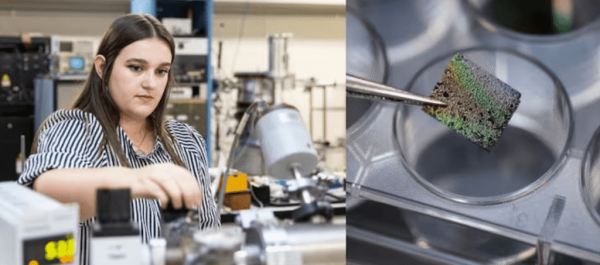
scientists have Cosmic dust in the laboratory for the first time has successfully conducted a historic experiment that will help us understand how molecules form in the universe — and how the earliest chemicals of life may have arisen. this success University of Sydney, Australia Has been achieved by researchers.
Cosmic dust is basically tiny dust particles that float among stars, meteorites and galaxies. These particles play an important role in the formation of planets and possibly the chemical foundation of life. But till now it has been difficult to study these particles by bringing them directly from space to Earth, because Soil-atmospheric pollution changes the actual structure.
How was it possible to create cosmic dust in the lab?
The research team High voltage and selected gases Simulated the harsh conditions present in space using.
He described such gas mixtures (such as nitrogen, carbon dioxide and acetylene) 10,000 volts of energy placed in,
From this plasma effect was produced and complex chemical particles started forming,
These particles eventually settle as a layer of fine dust on surfaces such as silicone.
The composition of these lab‑made particles is different from that of real interstellar dust. very similar found, which ensures that the experiment accurately simulates intergalactic processes.
What does it mean?
This success is important for scientists because now they can study under controlled conditions that How simple molecules gradually turn into complex organic chemicals — which are necessary at the beginning of life. For this, they will no longer depend directly on space missions or samples taken from meteorites.
This research may also reveal that Effects such as changes in structure, temperature, and energy‑bombardment How do they affect interstellar particles, and in what ways? Complex organic molecules—which are essential for life—are formed.
forward direction
The next direction of research is to investigate the effects of lab-made dust. infrared signatures Create a database of so that astronomers can identify directly from telescope data which parts of the universe complex chemical processes Are happening. From this Chemical processes occurring in places of birth of stars, residual lakes of dead stars and meteorites. can be understood better.