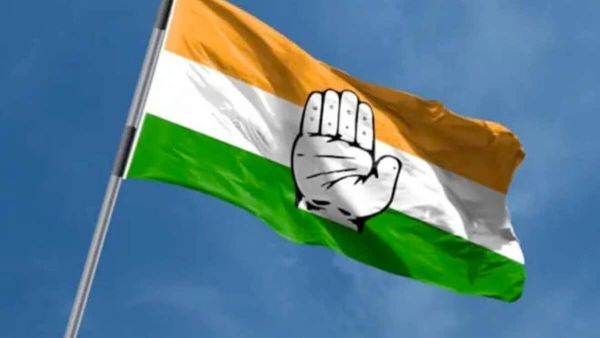
Kolkata: The Congress’ decision to go solo in the West Bengal assembly polls has narrowed the opposition space, reinforced the state’s entrenched TMC-BJP binary and shifted the focus from alliance arithmetic to vote consolidation in an increasingly two-cornered battle.
Senior leaders across party lines agreed that the breakdown of the Left-Congress understanding has effectively collapsed the space for a “third pole” in Bengal politics.
“This election will now be fought almost entirely on the TMC-versus-BJP axis. Breaking that binary without a Left-Congress alliance will be extremely difficult, but our leadership believes the party has nothing left to lose,” a senior Congress leader said, requesting anonymity.

For the first time since 2006, the Congress will contest all 294 assembly seats on its own.
Party insiders said the move reflects organisational fatigue from repeated alliances and a strategic recalibration shaped by Bengal’s altered political arithmetic and national considerations.
The decision, taken at a recent meeting of the Congress’ central leadership with senior West Bengal leaders, formally ends the party’s electoral partnership with the Left that spanned the 2016 and 2021 assembly polls and the 2024 Lok Sabha elections, without yielding any meaningful revival for either side.
The fallout of the break-up between the Left and the Congress is expected to accelerate polarisation, with the BJP emerging as the principal beneficiary of consolidated anti-incumbency votes and the TMC trying to tighten its grip over the state’s nearly 30 per cent minority electorate.
While Congress leaders like Adhir Ranjan Chowdhury favoured continuing the Left tie-up, most of the state unit functionaries pushed for a solo run, arguing that repeated alliances had eroded the party’s organisational identity.
“The party has made sacrifices in every alliance since 2001, first with the TMC, then with the Left. Our workers believe we should now fight on our own to revive the party’s lost ground,” state Congress president Suvankar Sarkar said.
Party insiders said the impending Kerala assembly polls also weighed heavily on the decision, with the Congress-led UDF locked in a direct contest with the Left Democratic Front.
The party’s electoral trajectory underscores the dilemma behind its solo gamble.
In 2011, riding on its alliance with the TMC, the party played a key role in ending the Left Front’s 34-year rule, winning 42 seats as the Mamata Banerjee-led party swept to power with 184 seats. The partnership soon unravelled, and the Congress has struggled since.
Its 2016 alliance with the Left yielded 44 seats for the Congress – more than the CPI(M)’s 26 – but masked a deeper decline.
The grand old party polled just 12.25 per cent of the vote as the TMC returned to power with 211 seats.
The alliance collapsed ahead of the 2019 Lok Sabha polls, forcing the Congress to contest alone. The result was sobering: two seats and a 5.67 per cent vote share, even as the BJP surged.
The BJP’s rise in Bengal has been closely linked to the fragmentation and consolidation of anti-TMC votes. In 2014, the BJP polled 17 per cent and won two Lok Sabha seats.
By 2019, its vote share jumped to nearly 40 per cent, translating into 18 seats, while the TMC’s seat count fell from 34 to 22 despite a higher vote share.
The development has brought cheer to the Bengal BJP camp.
“Voters disillusioned with the TMC no longer have two options. The BJP is the only credible alternative,” said a senior BJP leader.
Within the TMC, the Congress-CPI(M) split is seen as a double-edged sword.
“The absence of another credible secular force will consolidate minority votes behind us. But the BJP will benefit from one-sided consolidation of anti-TMC votes,” a TMC leader said.
The Mamata Banerjee-led party, which has been in power for 15 years in the state, will face anti-incumbency in the upcoming polls.
“Had the Left-Congress alliance remained intact, anti-TMC votes would have split. Now the BJP stands to gain the maximum,” Another senior TMC leader said.
Minority groups say the shift is already visible. Mohammed Kamruzzaman of the All Bengal Minority Youth Federation said voters, who earlier backed the Congress-Left alliance, are now likely to move decisively towards the TMC to block the BJP.
Data from the 2021 assembly polls and the 2024 Lok Sabha polls, when Left-Congress fought as an alliance, show that three-cornered contests in Bengal tend to benefit the ruling party.
In 2021, the TMC secured nearly 48 per cent of the vote against the BJP’s 38 per cent, while the Left and Congress drew a blank but dented BJP votes in several close contests.
The pattern largely repeated in the 2024 Lok Sabha polls, with the TMC winning 29 seats and the BJP’s tally dropping to 12, while the Congress won one seat. The Left had drawn a blank.
CPI(M) leader Sujan Chakraborty said, “Despite hurdles, we tried to present a secular alternative together. The Congress has chosen another route. The people will judge whether it was the right decision.”
Political analyst Moidul Islam said the collapse of the Left-Congress alliance does not revive either party.
“It hardens Bengal’s TMC-BJP binary. The BJP gains from anti-TMC vote consolidation, while the TMC consolidates minority votes. The Third Front remains an idea, not a force,” he said.
As Bengal moves towards another assembly poll, the Congress’ solo call signals no revival, but resignation to a political reality now defined by a straight TMC-BJP fight.