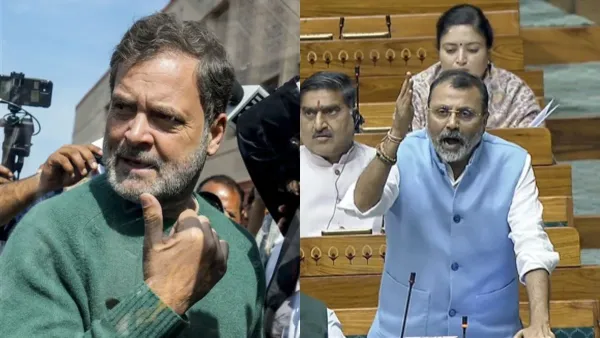
Parliament – The central government has stepped back from its earlier plan to move a motion against Leader of the Opposition in the Lok Sabha Rahul Gandhi over remarks directed at the prime minister, opting instead to allow a notice submitted by a BJP member to take precedence.
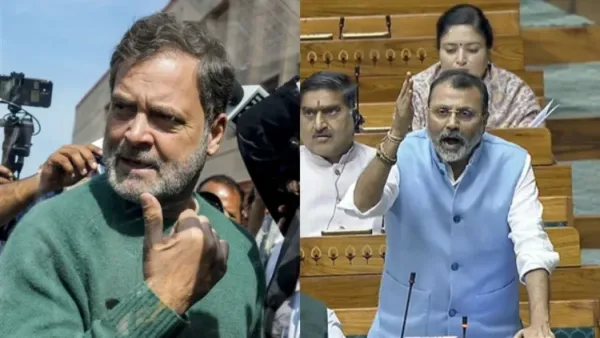
Union Parliamentary Affairs Minister Kiren Rijiju told reporters on Friday that the government would not pursue its own proposal after a private member initiated a substantive motion on the same matter. He explained that since the notice had already been formally submitted, the administration saw no need to file a separate motion.
Rijiju said consultations would now take place with the Lok Sabha Speaker to determine the appropriate course of action. The issue could be referred to the Privileges Committee, the Ethics Committee, or placed directly before the House for consideration.
“It has not yet been decided,” the minister stated, indicating that procedural clarity would follow discussions with the presiding authority.
The development comes amid heightened exchanges between the ruling Bharatiya Janata Party and the Congress in Parliament, particularly over language used during debates.
On Thursday, BJP Member of Parliament Nishikant Dubey confirmed that he had submitted a notice seeking to initiate what is known as a substantive motion against Rahul Gandhi. In his proposal, Dubey has called for the cancellation of Gandhi’s Lok Sabha membership and sought to bar him from contesting elections in the future.
Speaking to media outlet PTI Videos, Dubey said his notice outlines allegations concerning Gandhi’s visits to foreign countries and his alleged interactions with international organizations such as the Soros Foundation, USAID, and the Ford Foundation. He further alleged that such engagements amount to collusion with elements working against national interests.
Dubey asserted that his submission is not a privilege motion but a substantive motion, which is treated as an independent proposal placed before the House for its approval.
A substantive motion is a self-contained proposal brought before a legislative body to seek a formal decision or express an opinion on a specific issue. Unlike procedural notices, it stands independently and requires the House to consider and vote on its merits if admitted.
Whether Dubey’s notice will be admitted for discussion remains subject to the Speaker’s scrutiny and established parliamentary rules.
The controversy centers on statements made by Gandhi during recent proceedings in the Lok Sabha. The ruling party has described certain remarks as unparliamentary, while the opposition has maintained that strong criticism is part of democratic debate.
By stepping aside and allowing a private member’s notice to proceed, the government appears to be relying on parliamentary mechanisms rather than introducing its own motion. This approach places the next decision squarely in the hands of the Speaker and the established committee system.
The coming days are likely to determine whether the matter moves to a parliamentary committee for examination or is debated directly in the House. Any decision could have broader political consequences, given the prominence of the Leader of the Opposition and the sensitivity surrounding parliamentary conduct.
For now, the issue remains under procedural consideration, with no final determination on how it will be addressed within the Lok Sabha.