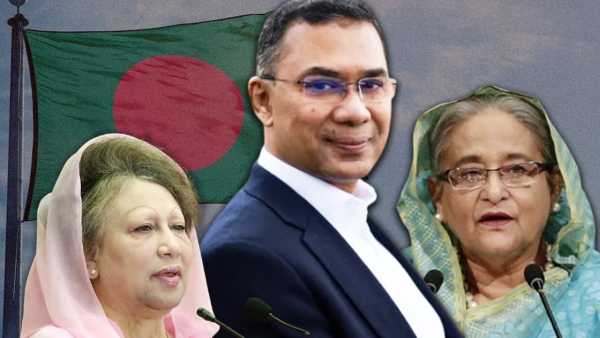
The election results of Bangladesh have brought the country's politics to a new turning point. The biggest event that happened amid the change of power in this election was 'Tariq Rahman' returning to Dhaka after 17 years of exile. Tariq, who was once forced to stay away from politics because of an affidavit signed with his own hands, has now returned to the center of power in the country by breaking the same oath. This time the tsunami of Tariq Rehman came in such an election that his Bangladesh Nationalist Party That means BNP captured more than 200 seats. In this way, the return of Tariq Rahman is not just the return of a leader but has become an event that changes the politics of Bangladesh, its direction and its 'geography' i.e. the balance of power.
The success story of Tariq Rehman is not just of one person, but of an era in which democracy, power struggle, nepotism, conspiracy, exile and return, all are linked together.
The name of Tariq Rahman is not new in Bangladesh politics. He is the son of former Prime Minister Khaleda Zia and was long considered the 'Crown Prince' of the Bangladesh Nationalist Party (BNP). But during the political crisis of 2007-08, circumstances became such that he had to leave the country. He faced serious allegations like corruption, money laundering and involvement in violent incidents. After his arrest, detention and alleged torture, he was allowed to go to London for treatment. But this permission came with a condition, he had to promise in writing that he would not return to Bangladesh politics. This was the oath that changed the direction of his life. The 17 years spent in London were like political 'exile' for him. He could neither do politics openly nor stay away from it completely. He continued to manage the party from behind the scenes but almost disappeared from public life.
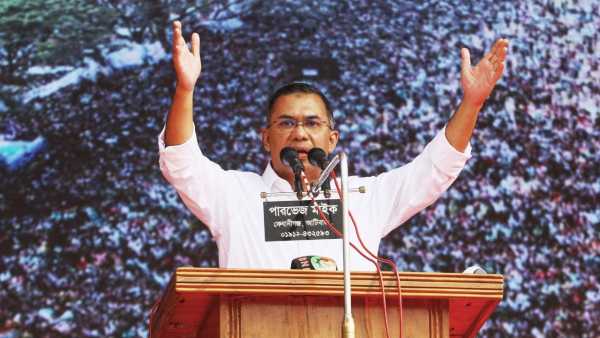
That affidavit of Tariq Rehman was not just a legal document, but in a way, it was a restriction on his political identity. Amidst the arrest of his mother Khaleda Zia and increasing pressure on BNP, this oath had become a compulsion for him. At that time, the 'Minus Two' formula was being implemented in Bangladesh, the objective of which was to eliminate the influence of both the two biggest political forces of the country, Sheikh Hasina and Khaleda Zia. In this environment, Tariq Rehman was sent out of the country and the condition of staying away from politics was imposed. It is said that 'time' is the biggest player in politics. After 17 years, the same oath has now become irrelevant and circumstances have placed him at the top of power.
After 2006, there was tremendous political instability in Bangladesh. Electoral controversies, protests and ultimately emergency shook the entire country. The military-backed interim government launched a campaign against corruption and arrested politicians on a large scale. During this time, the 'Minus Two' formula emerged, the purpose of which was to remove two prominent leaders (Sheikh Hasina and Khaleda Zia) from the country's politics. Its direct impact was on Tariq Rehman. He was accused of money laundering of 20 million dollars, and was also surrounded in other cases. He was also made the main accused in the 2004 Dhaka grenade attack and the court sentenced him. This was the period when BNP was almost on the verge of collapse and questions were raised on the future of the party.
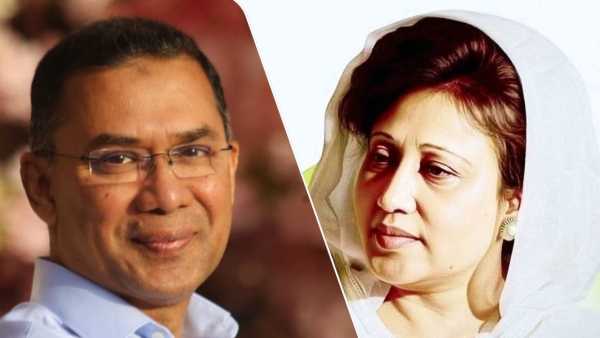
The statements made by Khaleda Zia regarding the arrest of her son, show the sensitivity of that era. She had said that her son was picked up in front of her eyes and after detention, was sent in such a bad condition that he had to be taken abroad on a stretcher. This was not just a political incident, but also the story of the relationship between a mother and son. His mother's illness and international pressure are also considered to be a reason behind Tariq's release and permission to go abroad. But its price was the same oath, which Tariq was kept away from politics forever.
After being thrown out of Bangladesh, Tariq Rahman did not completely distance himself from politics. He started Facebook politics using digital mediums. He used to hold virtual rallies, interact with candidates through Skype and was involved in party decisions. BNP also boycotted the 2014 elections under his leadership. Although he was not publicly active, he maintained his influence within the party. This was a new experiment in running politics from a distance.
The real change in Bangladesh politics came in 2024, when large-scale protests led by students began. These demonstrations gradually took the form of a movement and ultimately Sheikh Hasina's government had to step down from power. An interim government was formed in the country, which was led by Mohammad Yunus. The new government reviewed many old cases and the cases registered against Tariq Rehman were abolished.
This was the turning point that cleared the way for his return.
Read this also :- India PM Modi congratulates Tariq Rahman for his victory in support of progressive Bangladesh
To understand the politics of Bangladesh, it is important to understand the Battle of Begum. This was the conflict between Sheikh Hasina and Khaleda Zia. For three decades from 1991, both the leaders took power one by one. Sheikh Hasina brought the political legacy of her father Sheikh Mujibur Rahman, while Khaleda Zia was carrying forward the legacy of her husband Ziaur Rahman. This conflict between the two was not just about power, but also about ideology, policy and political style. Amidst this struggle, Tariq Rehman emerged as a leader of a new generation.
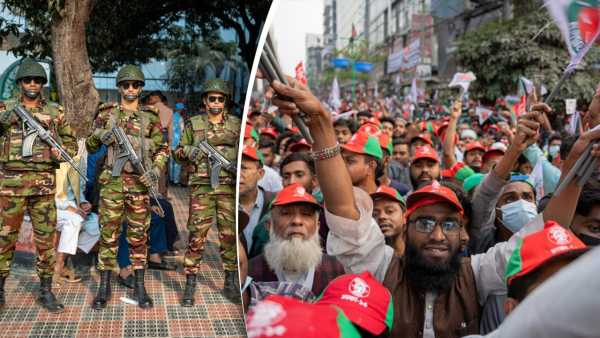
The elections of February 2026 gave a new direction to the politics of Bangladesh. It was clear from the public sentiment and political equations that BNP has again come to a strong position. The return of Tariq Rahman further accelerated this change. Lakhs of people welcoming him on the streets of Dhaka was a sign that the public wanted change. It was not just a matter of changing the government, but it was a process of changing the entire balance of power, that is, the political geography of Bangladesh was changing.
After returning to the country, Tariq Rehman talked about democracy and civil rights in his speech. He said that now people will have to take back their rights. He talked about an inclusive Bangladesh, where people of all religions feel safe. He described the youth as the basis of the future of the country and inspired them to come forward. His message was clear, this is not just a fight to gain power, but an effort to give a new direction to the country.
Read this also :- Fear for Tariq Rehman ahead of victory! A woman PM is necessary for Bangladesh, a man has never been able to rule power.