Households across the UK are being urged to make a heating change before Friday as more snow and cold weather is forecast.
A yellow weather warning for snow has been issued by the Met Office covering parts of Wales, West Midlands, South West England, London and South East England on Wednesday and Thursday, with up to 5cm of snow expected to accumulate in some areas. Households are being warned the wintry weather could leave some rural communities cut off, while power cuts and mobile phone outages could also occur. The weather warning coincides with a cold health alert issued by the UK Health Security Agency (UKHSA) for the East Midlands, East of England, North East, North West, West Midlands, Yorkshire and the Humber, and the South West from 6pm on Tuesday until 6pm on Friday.
With cold temperatures forecast throughout the week, households are urged to make a heating change to help protect against the chilly conditions and prevent condensation.
Condensation is a common problem during bouts of cold weather as the temperature difference between warm, moist air inside and cold exterior surfaces, like windows and walls, causes more water vapour to turn into liquid droplets, resulting in foggy and misty windows, dampness and black mould.
Mould isn't just a cosmetic problem as it can start to spread to other rooms in your home if it's not removed and the spores can trigger allergic and respiratory reactions, particularly for people who suffer with asthma or have a weak immune system.
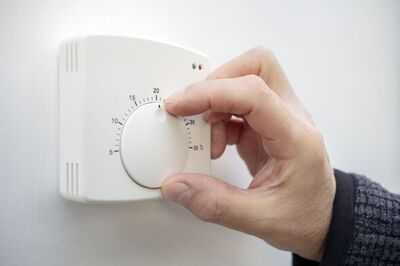
To help avoid this, experts recommend keeping your heating on low all day rather than cranking the thermostat to a high setting for short periods.
The warmer the air is in your home, the more moisture it will hold, so heating all your rooms to the same temperature can help to fend off condensation.
Experts at LV=Insurance said: "Instead of quickly turning up the heating in your home to a high temperature, try putting your boiler on at a lower setting for longer. This can help prevent condensation in your house by reducing large temperature fluctuations.
"Try keeping doors closed in rooms you are using and attempt to keep the thermostat at the same temperature in every room."
Met Office and NHS advice recommends that a heating temperature of at least 18C during bouts of extremely cold weather, particularly if you're aged 65 or over, have health conditions such as heart or lung disease, and aren't very mobile.
North Northamptonshire Council added: "A short burst of high level heating only warms up the room's air temperature. Low or medium level heating over a longer period will heat the air temperature and the fabric of the house, such as the walls.
"Once heated, the fabric will retain some of the added warmth, which in turn will reduce the time and amount of heat needed in warming the room up the next time.
"Heating controls such as thermostats and timers can be used to ensure you have adequate levels of heating in the right places at the right times, this can also help reduce heating bills.
"Keeping the heating on low all day in cold weather will help to control condensation, but keep a check on your meters to check how much it is costing you."