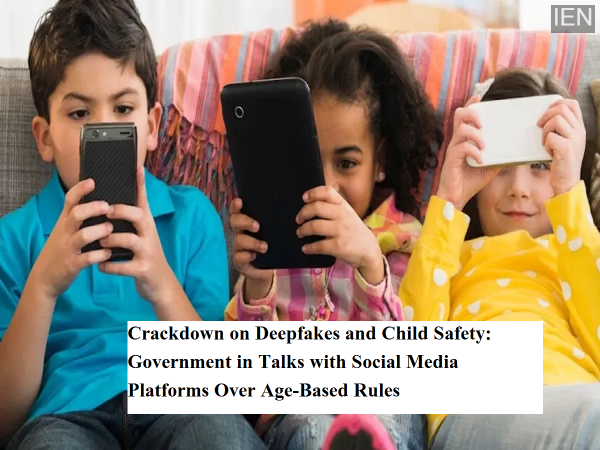
The central government is preparing to tighten regulations around deepfake technology and child safety on social media platforms, signalling a tougher stance on online risks. Union Electronics and IT Minister Ashwini Vaishnaw has confirmed that discussions are underway with major technology and social media companies to explore age-based restrictions, stronger age verification systems, and stricter regulatory frameworks.
Speaking at the India AI Impact Summit in New Delhi, the minister highlighted that the rapid rise of deepfake technology poses a serious challenge to society. According to him, deepfakes are increasingly being used to mislead people, spread fake content, and cause social harm. He stressed that protecting citizens—especially children—from such risks requires more robust measures than those currently in place.
Vaishnaw made it clear that all digital platforms operating in India, whether streaming services or social media networks, must comply with Indian laws and the Constitution. He underlined that no company would be exempt from regulatory scrutiny when it comes to safeguarding users and maintaining trust in the digital ecosystem.
The government is currently consulting with major tech and social media platforms to determine what kind of policy or regulatory structure would be most effective. These discussions focus on introducing age-based access controls, mandatory age verification, and possibly parental consent mechanisms for minors.
According to the minister, existing rules may not be sufficient to deal with evolving threats such as deepfakes, algorithm-driven content addiction, and exposure to harmful material. As a result, new legal and regulatory approaches could be required. He also noted that a parliamentary committee has already studied these issues in depth, and building broader consensus will be key before introducing any new law.
On the subject of age-based controls, Vaishnaw pointed out that several countries have already moved in this direction. Nations like Australia, France, and United Kingdom have either implemented or proposed rules to limit children’s access to social media platforms. These measures include age verification systems, parental approvals, and stricter compliance obligations for companies.
India, too, has already laid some groundwork through the Digital Personal Data Protection (DPDP) Act, which recognises children as a special category of users requiring enhanced protection. The government is now considering whether additional, platform-specific safeguards are needed to strengthen this framework.
Concerns around children’s online exposure are not new. The recent Economic Survey also recommended evaluating age-based access to online platforms to protect minors from harmful content and addictive digital behaviour. The report suggested that platforms should be made responsible for implementing age verification and child-safe default settings, particularly across social media, gaming platforms, gambling apps, autoplay features, and targeted advertising systems.
These recommendations have added momentum to the government’s current push for stricter oversight and accountability.
In addition to deepfakes and child protection, the minister also raised concerns about AI models and copyright issues. He noted that many AI systems are trained on publicly available content, which raises serious questions about the rights of content creators and fair use. This is another area where the government is examining the need for clearer rules to balance innovation with intellectual property protection.
While no final decision has been announced yet, the government’s statements indicate that tighter regulations are likely. Any new rules would aim to create a safer digital environment, particularly for children, while also addressing the misuse of advanced technologies like deepfakes. As consultations continue, India appears set to join a growing group of countries pushing for stronger accountability from social media and tech platforms.