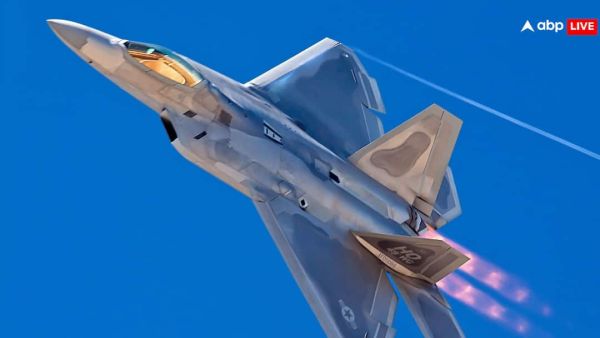
The United States has assembled a massive air fleet, including jet fighters and support aircraft, in the Middle East, amid tensions with Iran. This comes even as officials and advisers signaled that military action against Iran could begin sooner rather than later, Axios reported.
According to the report, any US military operation in Iran would likely be extensive, unfolding over weeks and resembling a full-scale war rather than a limited, targeted strike.
The tensions began after protests broke out in Iran following inflation worries, with the agitation later taking an anti-government turn. Following this, the Ayatollah Ali Khamenei-led regime launched a crackdown on protestors, leading to United States President Donald Trump threatening military action. The focus has now shifted to Iran's nuclear stockpile, with the US trying to halt the country's nuclear program.
America's latest massing of its air power is the greatest in the region since the 2003 invasion of Iraq, the Wall Street Journal reported. The US has, over the past few days, steadily moved cutting-edge F-35 and F-22 jet fighters toward the Middle East, WSJ reported citing flight-tracking data and a US official.
Alongside these, a second aircraft carrier, USS Gerald R. Ford, was dispatched to the region. Carrier USS Abraham Lincoln has already been operating within range of Iran’s coast. USS Gerald R. Ford is loaded with attack and electronic-warfare planes. Meanwhile, command-and-control aircraft, crucial for large air campaigns, are also inbound, and critical missile defences have been deployed to the region, WSJ reported.
It still remains uncertain whether Trump will order strikes on Iran, and if he does, what would be the aim of these strikes. Trump has, amid tensions with the Middle East country, signalled displeasure against their nuclear program, missile force and the Khamenei-led regime.
According to the WSJ report, US officials alleged that Trump has received several briefings on his military options if he chooses to strike, with all of them designed to maximize damage to Iran’s regime and its regional proxies.
These options include a campaign to kill scores of Iranian political and military leaders, and aim to overthrow the regime, WSJ cited US and foreign officials as saying. An air attack has also been suggested, limited to striking targets including nuclear and ballistic-missile facilities. Both these options would be a weeks-long operation.
The firepower deployed near the region currently can give the US President the option of carrying out a sustained, weekslong air war against Iran, according to WSJ. This would be in contrast to the previous US strikes on Iran, which constituted a one-and-done attack against the country's three nuclear sites.
However, US officials maintained that Trump has not yet decided on whether to order strikes against Iran, even as representatives from America and Iran met in Geneva this week. The officials negotiated a possible deal over Iranian enrichment of uranium, with White House press secretary Karoline Leavitt saying there has been “a little bit of progress” in the talks. However, she added that both sides are still “very far apart on some issues.”