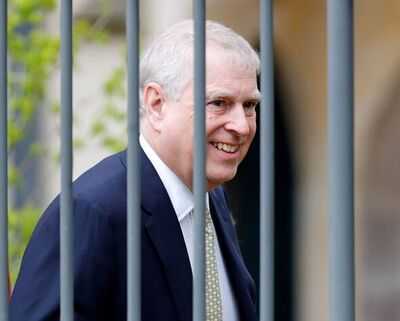

Andrew Mountbatten-Windsor "will face the same criminal justice system as any other individual", a British legal expert has insisted. Simarjot Singh Judge, Managing Partner at Judge Law, based in Windsor, told the Express his former royal status does not provide immunity from criminal prosecution.
The comments come as Andrew was arrested under suspicion of misconduct in a public office this morning, raising legal questions about what the offence involves and what happens next.
He said: "The criminal justice system applies equally regardless of title or former position. The process would be the same as for any other individual."

"If a charge were ultimately brought, the case would proceed through the courts in the usual way."
He added: "At this stage, the focus is on whether there is sufficient admissible evidence to justify prosecution, and that is a matter for investigators and the Crown Prosecution Service."
Mr Judge went on to explain what misconduct in public office actually means from a legal standpoint.
He said: "Misconduct in public office is a serious common law offence which requires prosecutors to show that a public officer deliberately breached their duty in a way that represents a serious abuse of public trust.
"It is not enough for there to have been an error of judgment - the conduct must be wilful and sufficiently serious."
To secure a conviction, prosecutors must prove that the individual was acting in an official capacity at the time and that the alleged misconduct was deliberate.
If confidential reports were shared, investigators would need to examine their classification, whether there was authorisation, and the intent behind any disclosure.
Mr Judge said: "If sensitive government material was shared without proper authority, the question would be whether that amounted to a deliberate breach of official duty.
"Prosecutors would need to establish intent, seriousness and whether the conduct crossed the threshold into criminal wrongdoing."
He also stressed that arrest is only part of the investigative process.
He concluded: "An arrest under suspicion does not mean a charge has been brought, and it does not imply guilt. Police must gather and assess evidence before deciding whether the case meets the charging threshold."