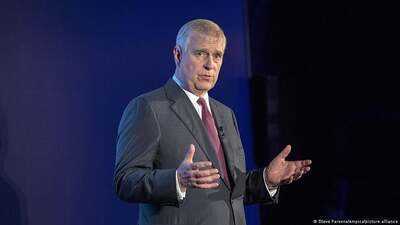
UK police investigating allegations of misconduct in public office against Andrew Mountbatten-Windsor, the younger brother of King Charles III, continued their searches on Friday at his former residence, Royal Lodge, located on the Windsor Castle estate.
Andrew, who turned 66 on Thursday, was arrested in a dramatic early-morning operation and questioned for 11 hours by Thames Valley Police before being released “under investigation”. He subsequently returned to his current residence at Wood Farm on the Sandringham Estate in Norfolk.
While officers have now completed their search of Wood Farm, the police confirmed that enquiries at Royal Lodge in Berkshire remain ongoing.
The arrest of the eighth in line to the British throne — an unprecedented development in modern times — prompted King Charles to respond with a brief statement emphasising that the “law must take its course”. The monarch continued with his scheduled public engagements.
“What now follows is the full, fair and proper process by which this issue is investigated in the appropriate manner and by the appropriate authorities," the 77-year-old monarch said in a statement released by Buckingham Palace.
Andrew’s detention follows weeks of renewed controversy after files linked to the late American sex offender Jeffrey Epstein were released by the US Department of Justice, intensifying scrutiny around past associations.
Police are understood to be examining whether there were breaches connected to Andrew’s tenure as the UK’s Trade Envoy between 2001 and 2011. Investigators are focusing on whether privileged government information may have been shared inappropriately during that period.
"Misconduct in public office is a serious common law offence which requires prosecutors to show that a public officer deliberately breached their duty in a way that represents a serious abuse of public trust,” said Simarjot Singh Judge, founder and managing partner of Judge Law.
The Indian-origin legal expert underlined that an arrest represents only one stage in a complex investigative process. If confidential material was shared, investigators would need to scrutinise its classification, whether proper authorisation existed, and the intent behind any disclosure.
"If sensitive government material was shared without proper authority, the question would be whether that amounted to a deliberate breach of official duty. Prosecutors would need to establish intent, seriousness and whether the conduct crossed the threshold into criminal wrongdoing,” he explained.
Police must now gather and assess evidence to determine whether the case meets the threshold for charging. To secure a conviction, prosecutors would have to demonstrate that Andrew was acting in an official capacity at the relevant time and that any alleged misconduct was intentional.
"It is not enough for there to have been an error of judgment — the conduct must be willful and sufficiently serious," added Judge.
Andrew, who was stripped last year of his royal titles of Prince and Duke of York, has consistently and strenuously denied any wrongdoing.
His arrest marks the first time in modern British history that a senior member of the royal family has been taken into police custody, dealing a significant blow to the monarchy.
The only historical precedent involving a sibling of a reigning monarch dates back to 1554, when Elizabeth Tudor — later Elizabeth I — was arrested during the reign of her sister.
Anti-monarchy campaigners swiftly seized on the development. Graham Smith, CEO of Republic, said the moment demanded greater transparency from the royal family. The organisation has claimed credit for Andrew’s arrest after “instigating a private prosecution when the police were reluctant to investigate”.
“Charles and William should stand together in front of the cameras. They need to make a full statement and answer questions from journalists," said Graham Smith, CEO of Republic, a group which has claimed credit for the arrest of Andrew after "instigating a private prosecution when the police were reluctant to investigate”.
"They must address what they knew and when, how Andrew's conduct was unreported for so long. And they must recognise the plight of the victims of Epstein's crimes and speak up on the need for accountability and justice,” he said.
Edited report by Aditi Khanna/PTI