Curiosity Corner: What is the flattest place on Earth?
ETimes February 21, 2026 12:39 PM
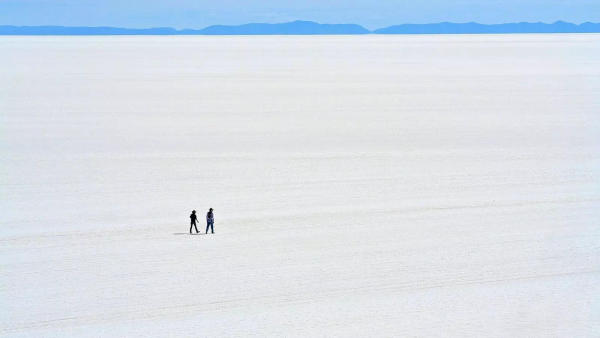
 Imagine standing in a place where the ground is so flat that it feels like the world forgot to give it a wrinkle. No hills. No bumps. No trees. Just a wide, white sheet stretching as far as the eyes can see. It almost feels like walking on a frozen cloud. The place we are going to describe is called Salar de Uyuni , and it is in the country of Bolivia. It is widely known as the flattest place on Earth . But what makes it so flat? And why does it look like a giant mirror sometimes? Here’s everything you need to know.
How did the Earth become so smooth here?
Quite a long time ago, this land was not dry at all. It was covered by a huge lake. Over thousands of years, the water slowly dried up. When it disappeared, it left behind thick layers of salt. As the salt settled to the ground, it formed a crust. Over time, nature pressed and shaped it into an almost perfectly level surface. Today, the salt crust is several meters thick in some places. The entire area spreads across about 10,500 square kilometers.
That is larger than many cities combined. Scientists have measured the surface carefully. They found that the height difference across large areas is less than a few centimeters. That tiny variation is what makes it one of the flattest natural surfaces ever recorded.
 A mirror on the ground
During the rainy season, something magical happens. A thin layer of water covers the salt. When that happens, the land turns into a giant mirror. The sky reflects so clearly that it becomes hard to tell where the ground ends and the sky begins. Clouds appear to float under your feet.
This mirror effect happens because the surface is so flat that water spreads evenly without forming puddles. Even satellites in space use this place to test their equipment. Its flatness helps scientists check if their tools are measuring correctly. That is how smooth it is.
Is it truly the flattest place on Earth?
Many experts describe Salar de Uyuni as the flattest natural place on Earth. Some man-made surfaces, like airport runways or special testing grounds, can be made flatter using machines. But in nature, without human help, Salar de Uyuni stands out.
Researchers have found that its elevation changes by less than one meter across huge distances. That is an incredible level of flatness for something shaped by lakes and time. So, while there may be flatter artificial surfaces, this salt flat is called the flattest natural landscape on Earth.
A white desert that is full of life
At first, the salt flat looks empty. But it is not lifeless. Tiny organisms live beneath the crust. In certain seasons, pink flamingos gather in nearby areas to feed. Under the salt lies something very important too: lithium. Lithium is used to make batteries for phones, laptops, and electric cars.
That means this white land plays a role in modern life around the world. But mining must be done carefully. The area is fragile. Changing it too much can disturb its natural balance.
Disclaimer: This article is written for educational purposes for young readers. While Salar de Uyuni is widely recognized as the flattest natural place on Earth based on scientific measurements, natural landscapes can vary slightly over time due to environmental changes .