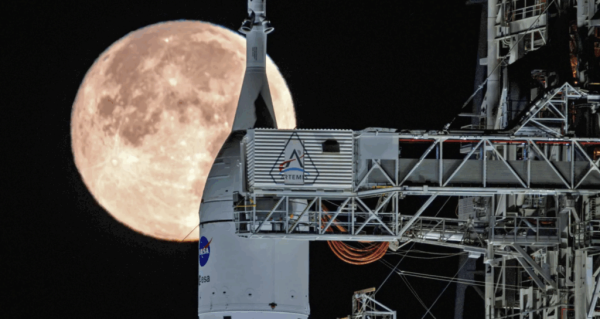
NASA is gearing up for a historic spaceflight that would mark the first time humans have travelled around the Moon in more than 50 years. According to international space updates, the agency is targeting a launch as early as March 6, 2026 for its Artemis II mission — a crewed flyaround of the Moon.
Artemis II is part of NASA’s broader Artemis programme, which aims to return humans to lunar space and eventually land astronauts on the Moon’s surface again. This mission will be the first crewed flight of NASA’s Space Launch System (SLS) rocket and Orion spacecraftcarrying four astronauts on a roughly 10-day mission around the Moon and back to Earth.
The crew will include:
Unlike Apollo missions that landed on the lunar surface, Artemis II will orbit around the Moon and returnoffering a vital test of deep space systems with humans aboard before attempting a surface landing later under Artemis III.
The Artemis II mission is significant for several reasons:
NASA’s Space Launch System rocket, paired with the Orion spacecraft, represents the most powerful launch vehicle and crew capsule built for deep space missions, designed to carry crew safely on extended voyages beyond Earth orbit.
Like all complex space missions, Artemis II has faced technical hurdles. Earlier hydrogen leaks during a wet dress rehearsal test delayed launch plansrequiring seal replacements and retesting before NASA could confidently schedule a firm launch window in March.
NASA is completing final flight readiness reviews, crew quarantine, and pre-flight procedures ahead of the targeted launch in the March 6 window. These steps ensure every subsystem performs reliably under real mission conditions.
If Artemis II succeeds, it will validate NASA’s deep space mission architecture and set the stage for Artemis IIIplanned to land astronauts on the Moon’s surface — the first lunar landing since Apollo 17. These missions are part of an enduring effort to explore the Moon and eventually use it as a springboard for missions to Mars and deeper space.