New Delhi. In the war scenario of the 21st century, military strength is no longer assessed only by the ground forces, but by the technical capabilities of the Air Force and Navy. This is why countries around the world are rapidly investing in state-of-the-art fighter jets, aircraft carriers, submarines and long-range missiles. India is also working in this direction on a strategy to modernize its military power.
India has pursued several major defense deals in recent years. Huge investments have been planned on proposals to fighter aircraft and state-of-the-art submarines, which are being counted among the biggest modernization drives in the country’s defense history. The aim of these initiatives is to prepare for future high-tech warfare.
Israeli technology will provide stand-off strike capability
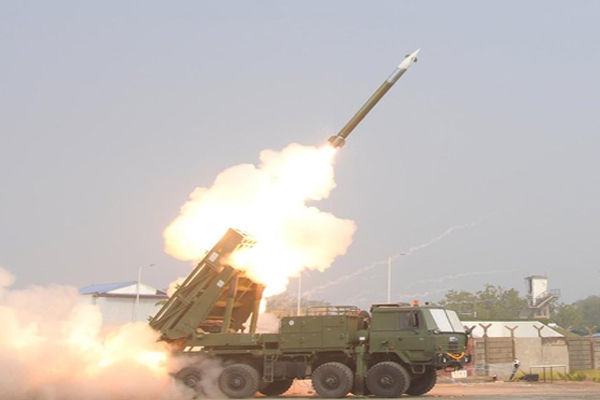
According to reports, India has signed an agreement with Israel to acquire advanced long-range cruise missiles. This missile has been developed by Israeli defense company Rafael Advanced Defense Systems and has been designed keeping in mind the needs of modern warfare.
Experts believe that this system will give the Indian Air Force the ability to accurately attack enemy targets from a safe distance. Such attacks are called “stand-off strikes”, in which fighter aircraft can destroy targets without entering enemy territory.
Preparation to meet A2/AD challenge in modern warfare
The biggest military challenge today is to penetrate the enemy’s A2/AD (Anti-Access/Area Denial) networks. These multi-layered air defense systems make areas where penetration by conventional weapons or aircraft extremely risky.
The new generation of cruise missiles are specifically designed to evade such defenses. Its main features-
Ability to fly very close to the ground, thereby avoiding radar
Stealth design, making detection difficult
Artificial Intelligence based navigation
Perfect hit on target in the last moments
Attack while keeping the pilot and aircraft away from risk
Due to these capabilities it can become a serious challenge for the modern air defense network.
India’s strategy getting strengthened by global defense cooperation
India has been working on a multi-level defense cooperation policy for a long time and is increasing technological partnerships with countries like France, Russia, Germany and Israel. Its objective is not just to purchase weapons, but to develop future network-centric and high-precision warfare capabilities.
Strategic analysts believe such long-range smart missiles could give India an edge in potential conflict areas, especially in situations where state-of-the-art air defenses are present, such as China’s defense networks.
Indication of change in air war strategy
The inclusion of new technologies shows that India is moving beyond the traditional war model towards a “high-tech, precision-driven” war doctrine.
In this-
accurate shot from distance
complete missions in less time
human risk reduction
network based operation
Multi-Domain Warfare (Air-Sea-Cyber Coordination)
Concepts like these are at the center.
India’s defense modernization is not just an attempt to increase its arsenal, but signals a strategic shift towards a future technological war—where speed, accuracy and invisibility will be the driving force.