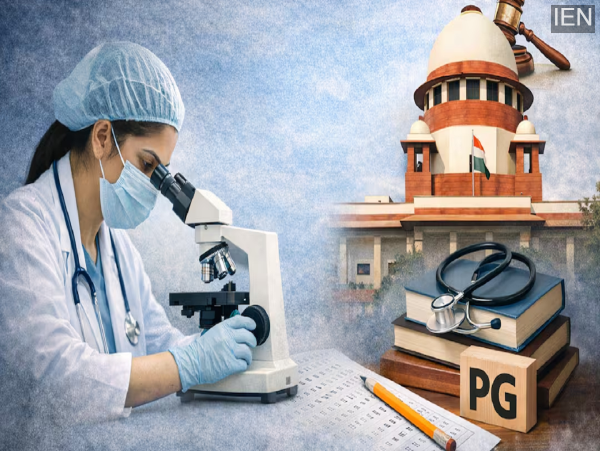
There has been considerable discussion about the low NEET PG cut-off numbers. However, the government has clearly stated in the Supreme Court that low marks do not necessarily indicate a doctor's incompetence.
The recent significant reduction in the NEET-PG cut-off marks has sparked debate across the country. Medical students, parents, and health experts have questioned whether this decision will impact the quality of medical education. Many have expressed concern that low marks in PG admissions could impact the quality of future specialist doctors. Meanwhile, the Central Government clarified its position in the Supreme Court, stating that the purpose of NEET-PG is not to determine a student's minimum qualification as a doctor. According to the government, the true eligibility to become a doctor is established by completing MBBS and an internship. NEET-PG is merely an entrance exam intended to prepare a merit list of candidates for limited postgraduate (MD/MS) seats.
Every candidate appearing for the NEET-PG exam is already a qualified doctor. They have completed 4.5 years of MBBS studies followed by a mandatory one-year internship. To pass the MBBS exam, students must score at least 50 percent in both theory and practical exams. This means that candidates have already received the necessary medical training and qualifications before taking the NEET-PG.
What are the new cut-offs?
This time, the NEET PG cut-off has been set quite low. The cut-off for General and EWS categories is 103 points, while for General and PWD candidates it is 90 points. The cut-off for SC, ST, and OBC categories is -40 points. With this reduction in the cut-off, more students will be able to participate in the counseling process and gain the opportunity to secure a postgraduate medical seat.
Why was the cut-off lowered?
The government's primary reason for lowering the cut-off is that a large number of postgraduate medical seats remain vacant each year. Despite approximately 70,000 seats being available, not all seats were filled, even though more than 200,000 students appeared for the exam. The government states that medical seats are funded through public resources, and leaving them vacant is detrimental. Therefore, the cut-off was lowered to allow more candidates to participate in counseling, ensure that seats remain vacant, and increase the number of specialist doctors in the country.