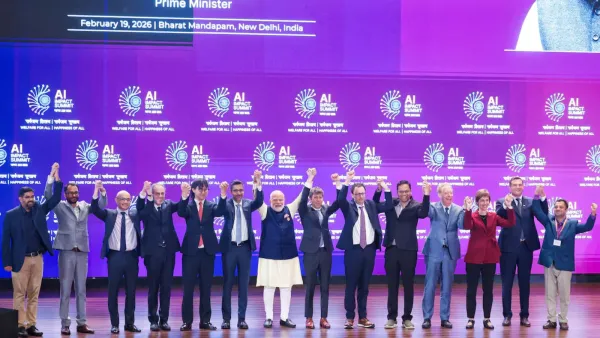
Last week, when India held a global AI summit in New Delhi, the country was projected as the next “AI superpower,” a pitch Prime Minister Narendra Modi made during the high-profile gathering attended by top tech CEOs, world leaders, and acclaimed AI researchers.
Google CEO Sundar Pichai flew to India, and OpenAI CEO Sam Altman was there too. Microsoft CEO Satya Nadella was not present, but the company’s president, Brad Smith, attended the summit. NVIDIA CEO Jensen Huang did not make it to the summit, though top executives from the company did. However, if there was a major tech company missing from the global artificial intelligence summit, it was Apple.
For some, it may seem like a big miss not seeing CEO Tim Cook alongside other tech leaders like Pichai and Altman. But honestly, Apple never really belonged at a large AI conference like this. It also sends a loud and clear message that Apple isn’t an AI company, nor does it intend to be one.
The AI Summit that New Delhi hosted, which lasted a week, was a big moment for India, an opportunity to turn the AI wave the world is currently witnessing to its advantage by positioning itself as the AI “infrastructure” capital. It is understandable that India will do everything it can to convince stakeholders and ecosystem players that they cannot ignore a fast-growing nation with a predominantly young, digital-savvy population, abundant talent at its disposal, relatively less stringent laws, and a massive 1.5 billion population needed to train their AI models alongside a huge parcel of land to construct data farms.
There is a reason why major tech companies like Google, Microsoft, OpenAI, and Anthropic among others, are investing billions of dollars in India and expanding their presence; participating in the international artificial intelligence summit makes a lot of strategic sense for them. Apple, however, takes a distinct approach compared to its peers and Silicon Valley heavyweights in how it views artificial intelligence, though the Cupertino-based company is just as bullish about India as any other company.
While a narrative has been building for months that Apple has fallen behind in the AI race, the truth is that the company is taking a different path and is definitely not joining the chorus like Google or OpenAI.
Unlike Google, OpenAI, or Anthropic, Apple is not in the race to build the largest models or massive data centres. Instead, it is positioning itself as a one-stop shop for distributing AI through its devices, making the best AI models available to more than a billion consumers. It’s no surprise that Apple is actively hiring and steadily expanding its AI team, without making too much noise about it.
Story continues below this ad
Apple’s approach to AI is to maintain control over iOS and the App Store while forming strategic relationships with companies like Google and OpenAI, with Apple Intelligence sitting on top and shaping how most people interact with AI. The idea is clear: leverage the best AI models without worrying about pricing, training models, or investing billions in building data centres. Apple is choosing the distribution path, and for Cupertino, it doesn’t matter whether the data centres are built in India, the US, or Europe.
That’s the major difference between Apple and the others.
Apple doesn’t have to be like Google, which needs to build its own marquee AI models, own the data and the user spanning both consumers and enterprise, and create a new marketplace for how AI is consumed. For Apple, its fundamentals are clear: power Apple Intelligence through models like Google’s Gemini, customise them for its users, and deliver that experience to a massive installed base through the iPhone and the Mac, two of the most popular consumer devices on the market.
Let’s not forget: Apple is still a hardware company, and Apple Intelligence is a feature, one that may improve over time as AI models become more mature. Apple doesn’t have to worry about or deal with the complexities of operating large-scale backend infrastructure, which is complicated and difficult to manage in the long run, especially once stricter regulations come into play.
Story continues below this ad
The point is, Apple has never claimed it is building the smartest AI model or that Apple Intelligence is the best, and you are unlikely to hear that claim in the future either. What Apple does best is control how AI reaches billions of users at once. It has the power to do so without being part of the AI arms race or spending billions on model training and data centres.
Whatever AI model is considered the best cannot truly claim that title unless it runs on the iPhone or the Mac and complies with Apple’s privacy, data use, and monetisation rules. That gives Apple the power to make its own rules, tax, and restrict, or promote, AI makers however it wants to.
Clearly, Apple is positioning itself as the centre of consumer AI (and enterprise AI too, given the popularity of Macs), but worrying about who owns the intelligence. Think of it like a gatekeeper.
One thing no one acknowledges is that both Google and OpenAI need Apple more than ever. For Google, whose search business is under threat from AI, Apple gives Gemini access to billions of iPhone users. Google needs Apple because scale is essential for testing and improving how consumers respond to AI. If Google captures a substantial number of Gemini users on iOS, it’s a win for Apple too, since the company owns the platform. That makes Apple a very unique player in the AI landscape. Similarly, Apple gives OpenAI direct access to hundreds of millions of premium consumers who are not on Android but on iOS.
Story continues below this ad
Apple’s strategy is not to compete with top AI labs like OpenAI or Google’s DeepMind. Instead, Apple may play a central role in controlling how users interact with AI on everyday devices. That also means the company will have a say in which AI provider gains prominence, and, in a way, there could eventually be no single dominant AI maker in the market.
This is important because a great deal of power lies in the hands of those who ultimately distribute AI, especially in major markets, whether in the West or Asia. While everyone is talking about AI models, open-source or closed, along with building infrastructure and data centres, the real key to AI lies with those who control its distribution. With shifting geopolitics, the rise of hyper-nationalism, and growing demands for sovereign AI, the company best positioned in the AI economy may well be Apple, whether you believe it or not.
Apple may not be dominant in developing world-class AI models or building the infrastructure around them, but it is the only company that tightly controls the interface between humans and their devices. In the long run, people don’t care which AI model powers a service; they care about how good the feature is and whether they can use it on the device they own.
Apple’s recent partnership with Google signals (although it may not be exclusive) the role the company will play in the AI era. The multiyear partnership will rely on Google’s Gemini models and cloud technology to support future Apple foundational models. For some, a partnership like this shows cracks in Apple’s vertical integration strategy and hints at a struggle to build its own large language model. It’s true that Apple has not been transparent about how it plans to roll out Apple Intelligence, as many features have been delayed and the long-awaited debut of an updated Siri has been pushed back numerous times. This has dented Apple’s reputation.
Story continues below this ad
We may never know what went wrong, but Apple has always been more patient when it comes to chasing new trends like AI. If the repeated delays are to meeting specific requirements such as privacy standards, then the wait may well be justified.
It is no secret that Apple wants an AI model that is as capable as those from OpenAI and Google, yet compact enough to run entirely on an iPhone so that user data does not need to be transmitted to the cloud. By partnering with Google, Apple can focus on refining compression techniques and model architecture while also signalling its seriousness about AI.
History tells us that Apple has rarely been a first mover in new technologies. It takes time, learns from competitors, and then brings those efforts in-house. It is also true that Apple never built a browser as dominant as Google’s, and that hasn’t hurt the company. At some level, Apple may have recognised that Google’s Gemini is a better AI model, and the partnership reflects that reality. Perhaps Apple may never build an AI model as powerful as Google’s, and that may not matter to its broader strategy.
But for a moment, even if we assume that Apple is “anti-AI,” the company has nothing to lose. Unlike other tech companies, Apple hasn’t poured tens of billions into building massive data centres that may never pay off, especially if the AI bubble bursts. Investors are already worried that the web of interlinked investments (or circular deals, as it is commonly known) raises the risk of catastrophic losses if AI falls short of its potential. Much of the recent investment in AI has come from debt and equity markets.
Story continues below this ad
Even if AI falls flat, Apple’s core business is unlikely to be impacted. Despite being under pressure from Wall Street, iPhone sales continue to boom. Last month, Apple reported that in the three months ending in December, it generated $143.8 billion in revenue, up 16 per cent year over year.
 Apple wants to distribute AI through its devices, and the company is less interested in setting up the
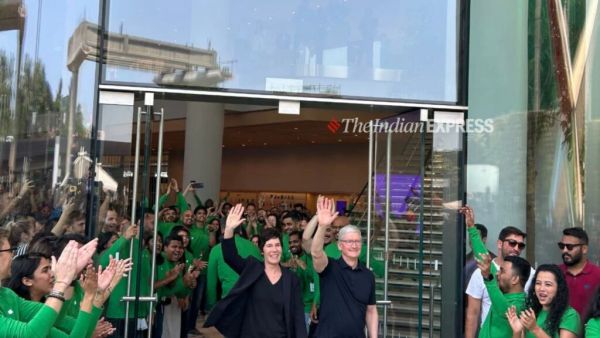
India is very much a key market for Apple, and it is where much of the company’s future growth is likely to come from. Although Apple was not present at the AI Impact Summit in New Delhi last month, the company continues to aggressively expand its operations in India. The country has a population of 1.5 billion, with a growing middle class willing to spend more on premium phones.
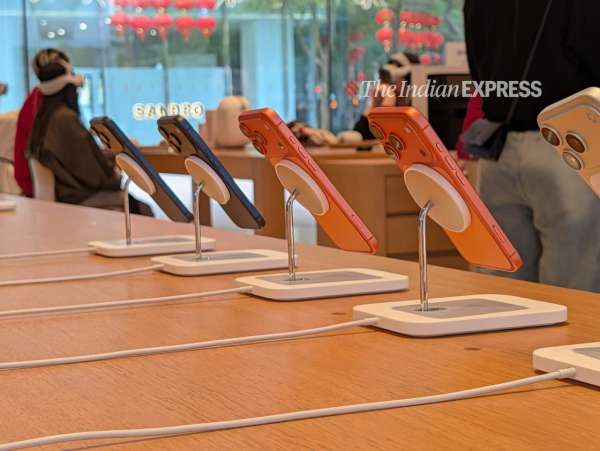
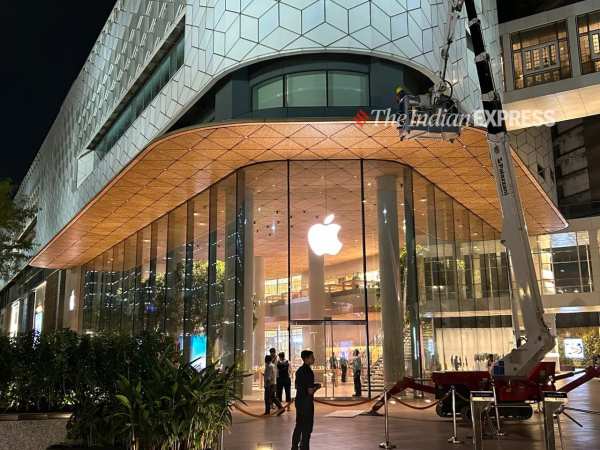
The tech giant has also boosted its manufacturing footprint in India through Foxconn, the Taiwanese firm that assembles iPhones. Apple now produces around 1 in 7—or 14 per cent—of its iPhones in India. At the same time, the company continues to add physical stores in the country, with its second store in India’s financial capital, Mumbai, opening this week.
For those who say that Apple is not an AI company, they may be right. It is not looking to develop the best-performing AI model or build massive data centres. But Apple has always believed in AI, perhaps being the first company to build a voice-based assistant in the form of Siri, or applying machine learning to overcome the limitations of tiny smartphone cameras, such as with its Deep Fusion imaging technology, which captures multiple exposures and blends them into a final, evenly exposed image. It’s just that the company isn’t going overboard on AI and using the tech behind the scenes, yet quietly controls the AI economy without being noticed.