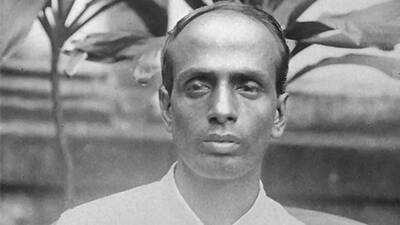
Surya Sen faced unimaginable brutality at the hands of the British. His execution on January 12, 1934, was marked by extreme torture; he was dragged to the gallows unconscious after suffering broken teeth, pulled fingernails, and shattered joints. Following his death, the British displayed his body in a metal cage, discarding it into the Bay of Bengal, denying him a proper burial. What led to such inhumane treatment? Sen was a schoolteacher who, on a fateful April evening in 1930, led a group of his former students in a daring raid on the British armory, raising the Indian flag and declaring a provisional government.
Born on March 22, 1894, in Noapara, Chittagong district (now in Bangladesh), Surya Kumar Sen was destined for a life of education, following in his father's footsteps as a teacher. After earning his Bachelor of Arts from Berhampore College, he was introduced to the freedom movement, joining the Anushilan Samiti in 1916, which advocated for armed resistance against British rule. Returning to Chittagong, he became a beloved mathematics teacher at the National School of Nandankanan, earning the affectionate title "Masterda" from his students. Unbeknownst to them, he was secretly organizing a revolutionary force.
In the 1920s, Sen actively recruited and trained young revolutionaries, including notable figures like Ganesh Ghosh and Pritilata Waddedar. Uniquely, he included women in his plans, believing they could transport weapons without raising suspicion. By 1930, inspired by the Easter Rising in Ireland, Sen devised an audacious plan to raid two major armories in Chittagong, disrupt communication lines, and incite a larger uprising. The operation was set for April 18, 1930, on Good Friday, when many European officials would be absent, maximizing the element of surprise.
At 10 PM on April 18, the revolutionaries sprang into action. Under Ganesh Ghosh's leadership, one group captured the police armory, while Lokenath Bal led another team to seize the Auxiliary Forces' armory. They successfully cut communication lines and sabotaged railway tracks. However, they were dismayed to find that the captured weapons lacked ammunition, rendering them ineffective. Despite this setback, Sen rallied his forces outside the police armory, donned in white khadi, and declared a Provisional Revolutionary Government, marking a brief moment of Indian sovereignty in Chittagong.
The British response was immediate and fierce. By dawn, troops were dispatched to hunt down the revolutionaries, forcing Sen and his group into the Jalalabad Hills. On April 22, they were surrounded, resulting in a fierce battle that claimed the lives of twelve revolutionaries and over eighty British soldiers. The survivors found refuge in local villages, where they continued guerrilla operations for three years. Tragically, in September 1932, Pritilata Waddedar was cornered during an attack and chose to take cyanide rather than be captured.
On February 16, 1933, Sen's luck ran out when he was betrayed by Netra Sen, who sought a reward for his capture. The Gurkha soldiers apprehended him, and Netra Sen was later executed by fellow revolutionaries. Sen faced trial and was sentenced to death alongside Tarakeshwar Dastidar. On January 12, 1934, they were taken to the gallows, where Sen endured horrific torture before his execution. His body was disposed of in the Bay of Bengal, but the British underestimated his impact. The Chittagong Armoury Raid invigorated India's freedom struggle, proving that ordinary citizens could challenge colonial rule.
Today, Surya Sen is commemorated in both India and Bangladesh, with institutions named in his honor. Despite his significant contributions, many Indians only recognize him from history books. In his poignant final letter, he expressed his hope for a free India, leaving behind a legacy that transcends his tragic end. He was a schoolteacher who, through his courage and vision, altered the course of history.