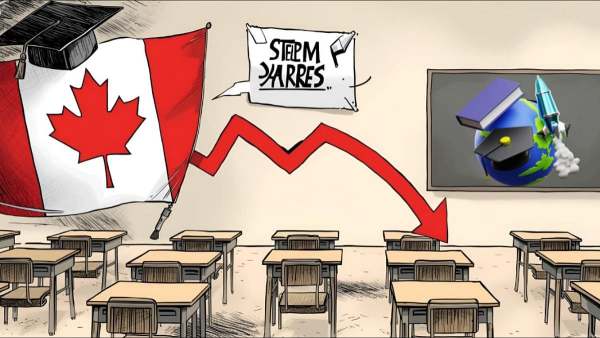
Canada has recorded an almost 90% drop in new international students over two years, with study permit holders falling from 95,320 in December 2023 to 9,665 in December 2025, signalling a sharp tightening of student inflows.
Canada has recorded a dramatic fall in the number of new international students entering the country, with fresh government data showing an almost 90 per cent drop over two years.
According to immigration figures, the number of study permit holders stood at 95,320 in December 2023. By December 2025, that number had plunged to just 9,665 which is an 89.9 per cent decline. In effect, Canada is now welcoming only about one-tenth the number of new international students it did two years ago.
The decline did not occur overnight. The first major dip came in 2024. By December that year, study permit holders had fallen to 29,835, nearly 70 per cent lower than the 2023 figure.
The downward trend continued into 2025. From 29,835 in December 2024, the number dropped further to 9,665 by December 2025 another fall of more than 67 per cent within a year.
According to HT reports, last year, the number of Indian students with study permits fell from 188,715 to 94,605, a nearly 50% decrease and in 2023 saw a total of 277,965.
The back-to-back annual declines point to a sustained tightening of Canada’s temporary resident inflows, particularly in the student category. The scale of the reduction marks one of the sharpest contractions in recent years.
Immigration System Under Transition
The steep fall in student arrivals comes at a time when Canada is reshaping its immigration management systems. Immigration, Refugees and Citizenship Canada (IRCC) recently unveiled its first artificial intelligence (AI) strategy, signalling a push toward modernisation.
Under the strategy, AI tools will be designed to remain human-centred, transparent, fair, secure and reliable. The department says the technology could help cut processing times and strengthen fraud detection mechanisms. For example, computer vision tools may be used to flag suspicious documents in real time.
IRCC has outlined three levels of AI use. The first involves routine administrative support, such as summarising documents or responding to common enquiries. The second includes assisting officers with data analysis and identifying straightforward, low-risk files that could move faster through the system. The third category covers pilot projects aimed at testing new AI capabilities before broader implementation.
Crucially, the department has clarified that final decisions especially refusals will always be made by human officers. AI systems will not independently reject or recommend rejecting applications.
Canada PM Mark Carney visit to India
The developments come as Canada PM Mark Carney arrives in Mumbai today, February 27, for an official visit to India that will run until March 2.
During his visit, Carney is scheduled to meet Narendra Modi in Delhi to discuss bilateral relations and economic cooperation. In Mumbai, he will participate in business engagements and interact with Indian and Canadian CEOs, industry leaders, financial experts, innovators, educators and representatives of Canadian pension funds operating in India.
With student mobility forming a significant pillar of India–Canada ties in recent years, the sharp decline in study permits is likely to remain a key backdrop to discussions on education, economic collaboration and migration management.