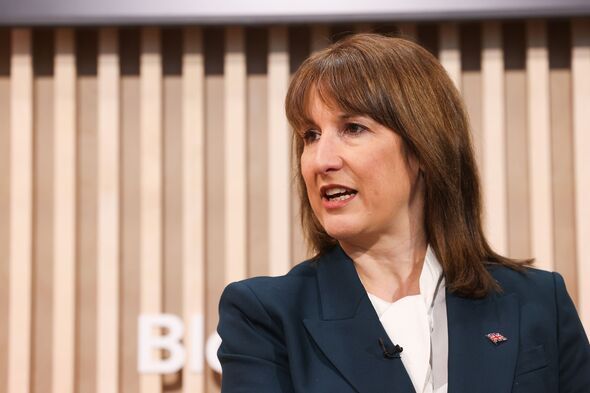
Car dealers are noticing a "drop" in interest for electric vehicles after Rachel Reeves' confirmed plans for a new EV pay-per-mile road tax charge. Reeves' confirmed plans for a 3p per mile electric Vehicle Excise Duty (eVED) charge from 2028, with the fee developed to offset the loss of petrol and diesel fuel duty fees.
The controversial fee was questioned by the industry, with fears the move was likely to put off customers and lead to a reduction in electric car sales. The Office for Budget Responsibility predicted as many as 440,000 fewer electric vehicles could be sold under the plan.
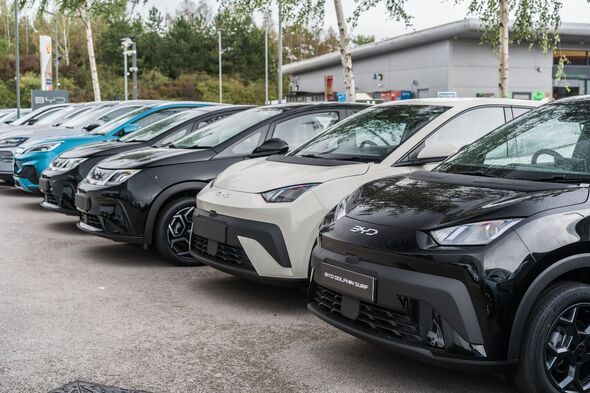
And the predictions appear to have come true with dealers admitting they have already noticed a change, with still two years to go until eVED comes into effect. Fraser Brown, Managing Director of MotorVise, a consultancy firm working closely with hundreds of car dealerships across 39 car brands in Europe, admitted customer concerns are already stark.
Speaking exclusively to Express.co.uk, Fraser said: "Since the announcement of the 3p per mile charge, we've seen a noticeable drop in EV enquiries, which is beginning to show in registration figures. We're already seeing early signs in more cautious buyer conversations.
"Car purchasing decisions are driven largely by affordability and perceived future costs. Even if a charge is years away, customers factor it into today's monthly payment mindset. Dealers are fielding more questions about long-term taxation and running costs than they were previously."
Robert Forrester, Chief Executive of Vertu Motors plc, slammed Reeves' new tax charge as an "ill-thought-out" policy, telling Express.co.uk that increasing taxes was "clearly" going to reduce demand. Although he said he sympathised with officials for needing to replace fuel duty, he called for the introduction of a simple flat fee instead of charging by the mile.
Last month, data from the Society of Motor Manufacturers and Traders (SMMT) revealed that electric car sales had slowed, with numbers up just 0.1% in January. More importantly, EV market share dropped to just over 20%, massively down on the Government's target of 33% by the end of the year.
*** Ensure our latest news headlines always appear at the top of your Google Search by making us a Preferred Source. Click here to activate or add us as Preferred Source in your Google search settings. ***
John Cassidy, Managing Director at Close Brothers Motor Finance, a leading car finance provider, feels sure the drop in EV market share just weeks after Reeves' Autumn Budget announcement could be linked.
John told Express.co.uk: "While it could be a mixture of [coincidence and cause], there is a definite cause. It's no surprise to see stalling figures in light of the new tax, as prospective EV drivers have less motivation to make the switch."
They predict that the new charge would "hamper demand" and would likely be an "unnecessary barrier to prospective car buyers".
Speaking to Express.co.uk about the data. SMMT Chief Executive Mike Hawes explained: "Almost a quarter of all new cars bought in Britain last year were EVs. January 2026 was down on the back of a strong end of year performance but the year will undoubtedly see further growth.
"The pace of that growth, however, is still not fast enough to meet government ambition, with drivers needing every encouragement to switch."
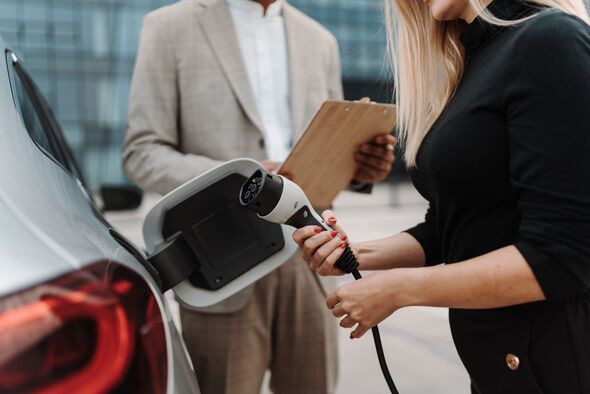
Online could buck the trend - car retailer AutoTrader told Express.co.uk they had not yet seen demand dampen for those currently on the search for an electric vehicle. But, they warned that it was undeniable Reeves' new tax would eat into the savings of owning an EV and could therefore be a deterrent.
Marc Palmer, Head of Strategy and Insights at AutoTrader said: "Consumers are price sensitive when it comes to switching cars anyway, and with most EVs still at a price premium, eroding cost of ownership benefits is certainly not going to help adoption."
However, some experts have suggested the news may make little difference at all. Adam Gray, founder of The Car Buying Coach explained to Express.co.uk that EV decisions are driven by overall running costs, incentives, charging access, and model choice, with pay-per-mile unlikely to cause a sharp short-term drop in demand.
Mike Hawes is among those leading the calls against the fee, reiterating that the measure was not the right one at this stage of the country's EV transition.
He added: "Whilst a change in motoring will require a change in taxation, the announcement of an electric-only eVED tax sends the wrong message at the wrong time. That's why we need a comprehensive review of the transition, including taxation, production costs, public charging and the regulatory and fiscal framework so that ambition matches market reality."
The Treasury claims their reforms will help to lay the foundations for a fair transition to EVs, while protecting the long-term fiscal sustainability of the country.
A Government spokesperson told Express.co.uk: "We are committed to the electric vehicle transition - boosting support, not cutting it. Drivers can access grants up to £3,750, while over £3 billion is going into UK manufacturing and charging infrastructure. Right now, electric vehicle drivers pay no fuel duty, while petrol drivers pay around £480 a year. That's not fair. Under the new system, electric vehicles will pay half the duty of petrol cars - still the cheaper, greener choice."