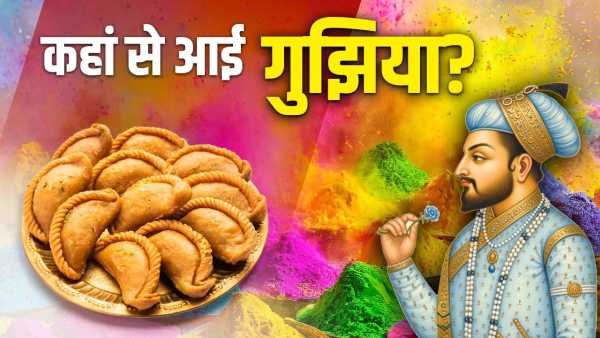
Holi 2026: Holi and Gujhiya. There is an amazing relationship between the two. This is a dish which is being prepared in every home. And with its fragrance, any person becomes its fan. One cannot remain without tasting it. As time progressed, the methods of making Gujiya also changed. The stuffing in Gujhiya also changed but one thing that did not change is the design of Gujhiya. It can be small or big in size but in appearance the design of Gujhiya is generally seen to be the same.
But do you know where Gujhiya came from? Is it related to the Mughals or is it completely Indian? Let us take a look at the interesting history of Gujhiya and its journey on the occasion of Holi.
The history of Gujhiya is very old. Many food historians associate it with ancient Indian dishes. The tradition of sweet dishes in India is centuries old. There is mention of dishes like Apup and Pua in ancient texts. The initial form of Gujhiya is considered to be 'Shashkuli'. Shashkuli was a type of fried sweet. Flour and sugar were used in this.
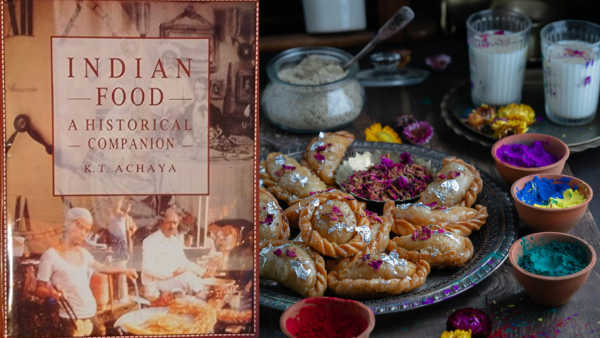
Evidence of dishes like Gujhiya is found around the 13th century.
There is a lot written on the evolution of Indian cuisine in Katie Achaya's book Indian Food: A Historical Companion. According to the book, evidence of dishes like Gujhiya is found around the 13th century. At that time it was known by different names. The tradition of filling it started during the medieval period.
Often people associate Gujhiya with Mughals. A big reason behind this is Samsa or Samosa. Samosa came to India from Central Asia. Sweet forms of samosas also became popular during the Mughal era. Some historians believe that Gujhiya is a sweet incarnation of Samosa. Sweets like baklava were popular in Türkiye and Central Asia. There was a custom of filling dry fruits in layers of flour.
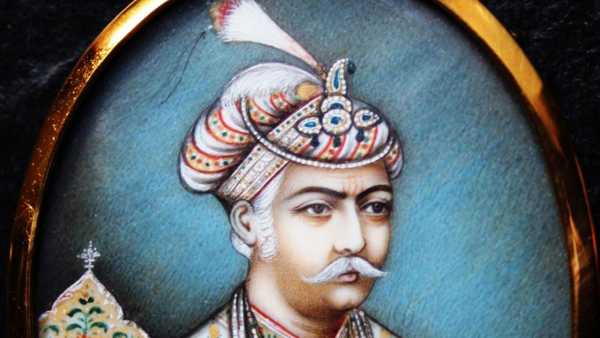
During the reign of Mughal emperor Akbar, many experiments were done in food. Photo: Getty Images
There were many changes in food during the Mughal period. New experiments were done in the royal kitchens. The use of mawa (khoya) and dry fruits increased. The art of filling mawa in Gujhiya probably flourished during this period. However, the shape of Gujhiya and the way of making it makes it different from Samosa. It would be wrong to call it completely Mughlai. It appears to be a beautiful blend of Indian and Central Asian cooking.
Gujhiya is known by many different names in different regions of India. In North India it is called Gujhiya and at some places it is called Pedakiya. In Maharashtra it is called Karanji. In South India it is known as Somas or Kajjikayalu. In Gujarat it is called Ghugra. Its filling changes in every area.
In North India it is filled with mawa and semolina. Coconut and jaggery are used in Maharashtra. In South India, it is filled with gram pulses and coconut. The name and taste may be different, but its soul is the same. It works to spread happiness everywhere.
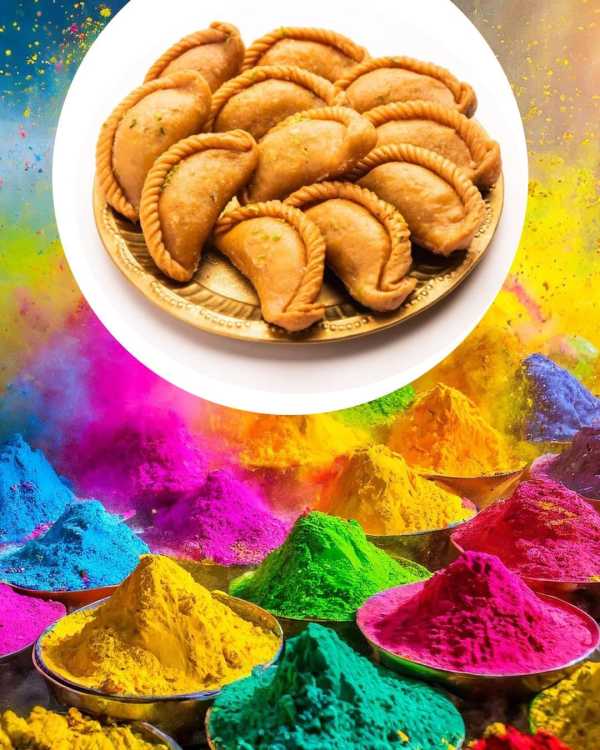
Making Gujhiya has become a ritual on the festival of Holi. In old times, women used to make Gujhiya together. It was a means of social interaction. Making Gujhiya takes a lot of hard work and time. It is shaped using molds or by kneading it by hand. There is also a practical reason behind making Gujhiya on Holi. The weather changes in the month of March. At this time the body needs energy. Mawa, ghee and dry fruits give strength to the body. Also, Gujhiya can be stored for several days. This is the best sweet to welcome guests.
To make Gujhiya, mainly flour, ghee and mawa are required. First of all, the dough is kneaded by adding ghee to the flour. Mawa is lightly roasted for the filling. Sugar, cardamom and dry fruits are added to it. Small balls of dough are made and rolled out. Then it is closed by placing the filling in the middle. Finally it is fried in ghee or oil until it turns golden. Nowadays, health conscious people also 'bake' it. Chocolate and strawberry flavored Gujiyas are also available in the market. But the taste of traditional Mawa Gujhiya is still on top.
In this way we can say that the history of Gujhiya tells us the story of India's diversity and coordination. It is a confluence of ancient Indian traditions and Central Asian influences. Whether it has connections to the Mughals or ancient India, today it is completely our own.
KT Achaya's book reminds us that food is not just for filling the stomach. It is a mirror of our history and culture. This Holi, when you enjoy Gujhiya, remember its long journey. This sweet contains within itself centuries of history.