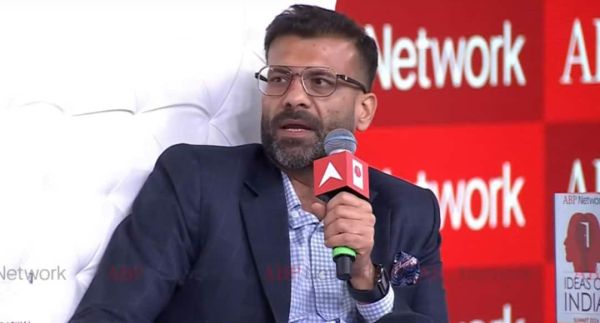
For Mayank Agarwal, CEO of Gallantt Group, the chaos currently unfolding in the Middle East - specifically the U.S.-Israel actions against Iran - is less about shifting borders and more about "recalibrating" control over the world’s most precious resources. Speaking on the new world order, Agarwal argued that we are entering an era where energy and data are the ultimate weapons of statecraft.
Agarwal stripped away the diplomatic jargon to focus on the economic drivers of modern warfare. He noted that the history of global conflict is often a history of energy control.
"Geopolitics is entirely governed by geo-economics. Who the economy favors is dictating terms. Everyone knows the biggest reason for the attack on Iran is oil. The Venezuela attack by the U.S. was also because of oil."
In his view, the modern "battlefield" has expanded beyond land and sea to include the invisible foundations of the global economy.
"It’s clear that geo-economics is about who's got control on data, energy, chips, and semiconductors. Controlling the atmosphere of these precious resources... the world is more interested, it seems, on who gets to dictate terms. And we all know the U.S. is somewhat the one now dictating those terms."
When asked how India fits into this high-stakes recalibration, Agarwal struck a hopeful but realistic tone. He highlighted India’s unique position as a stable, massive market that is perfectly timed to catch the world's eye as it looks for alternatives to China.
"India is very well positioned being democratic. We have the scores in terms of land and population where we can substantially enhance our production and manufacturing base. Being very stable in terms of politics, we have an environment that the world will be coming to us and moving away from China."
While many speak of "decoupling" from China as a simple task, Agarwal warned that the global economy is too deeply entwined for a clean break. Instead, he sees India’s future in the "China Plus One" strategy—a policy where global firms keep their Chinese bases but add India as a necessary second hub.
"Decoupling from China seems impossible, but 'China Plus One' is now a thing, and India can benefit from it. The AI summit is an example. India is now trying to create corridors and doing trade agreements which, in the long term, will benefit India."