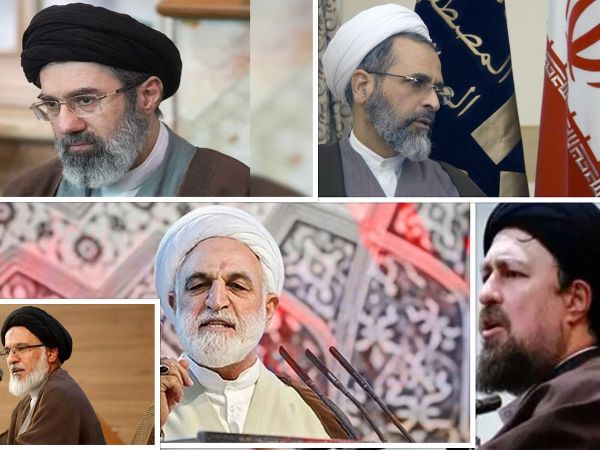
Behind the closed doors of the Iranian establishment, a fierce battle for the soul of the revolution would certainly unfold as dynastic heirs, hardline visionaries and seasoned judicial enforcers will likely vie to inherit absolute authority during the nation’s most dangerous security crisis
The death of Ayatollah Ali Khamenei, following a series of military strikes in Tehran, has created an immediate and high-stakes power vacuum in Iran. While the Assembly of Experts is constitutionally mandated to select the next Supreme Leader, several key figures have emerged as frontrunners, each representing a different potential direction for the Islamic Republic’s future.
Mojtaba Khamenei: The continuity candidate
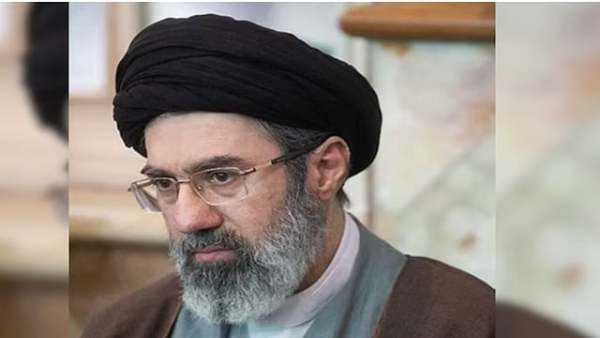
Image courtesy X handle of @KasraAarabi |
As the second son of the late Supreme Leader, Mojtaba Khamenei is often viewed as the candidate for institutional continuity. At 56, he has spent decades working within his father’s office, effectively controlling access to the Supreme Leader and building deep ties with the Islamic Revolutionary Guard Corps (IRGC) and the Basij. His candidacy is bolstered by his intimate knowledge of the state’s security apparatus, yet it faces significant ideological hurdles.
Many within the clerical establishment oppose hereditary succession, arguing that it mirrors the monarchy that the 1979 Revolution was designed to overthrow. Despite these concerns, his strong support from the military-security wing makes him a formidable contender for a transition focused on stability.
Alireza Arafi: The clerical institutionalist
Image courtesy IROON |
Ayatollah Alireza Arafi, 67, represents the traditional religious and administrative elite of the Islamic Republic. As the director of Iran’s nationwide seminary system and a member of both the Guardian Council and the Assembly of Experts, Arafi possesses the religious credentials that many other candidates lack.
He is known for his loyalty to the system’s foundational principles while also demonstrating a pragmatic ability to manage complex religious and educational bureaucracies. His recent high-profile diplomatic engagements, including a notable mission to Moscow, suggest he was being groomed for a more prominent role. Arafi is seen as a "safe" choice for those who wish to maintain the current theocratic structure without the controversy of a family dynasty.
Mohammad Mahdi Mirbagheri: The hardline visionary
Image courtesy IranWire |
Mohammad Mahdi Mirbagheri, 64, is the standard-bearer for the most conservative and "apocalyptic" wing of the Iranian establishment. Heading the Islamic Sciences Academy, he is known for his uncompromising rejection of Western development models and his advocacy for a strictly religious society.
Mirbagheri’s profile rose significantly during the 2024 presidential elections, where his speeches positioned him as a spiritual guide for the ultra-hardline factions. His selection would signal a "revolutionary" turn inward, likely resulting in intensified domestic crackdowns and a more confrontational foreign policy. While popular with the ideological core of the regime, his lack of executive experience and extreme views could make him a polarising figure within the Assembly.
Gholam Hossein Mohseni Ejei: The security pragmatist
Gholam Hossein Mohseni Ejei | Image courtesy Iran-htm
As the current Chief Justice of Iran, Gholam Hossein Mohseni-Ejei, 69, is perhaps the most experienced candidate in terms of high-level state governance. Having served as the Minister of Intelligence and Prosecutor General, he has a long history of managing Iran's internal security and judicial systems.
Unlike most other candidates, Ejei has exercised direct authority over national security matters, which may be viewed as a vital asset during a period of war and transition. While he lacks the "Sayyid" status (descendant of the Prophet) often preferred for the role, his deep institutional roots and "tough on dissent" reputation make him a candidate who could bridge the gap between the clerical establishment and the security forces.
Hassan Khomeini: The reformist bridge
Image courtesy Tehran Times |
Hassan Khomeini, the 53-year-old grandson of the Islamic Republic’s founder, Ayatollah Ruhollah Khomeini, remains a wild card in the succession debate. Although he has been sidelined by the hardline establishment for years and was even barred from running for the Assembly of Experts in 2016, his family name provides him with unmatched symbolic legitimacy.
In early 2026, he was reportedly substituted for Ali Khamenei at a major revolutionary event, fuelling speculation that he might be reconsidered as a compromise candidate to soothe public unrest. A move toward Hassan Khomeini would likely represent an attempt at national reconciliation and a shift toward a more moderate domestic and international stance.