KOKO Networks (UK) Limited has entered administration after 'significant financial strain' linked to a dispute over carbon credit sales pushed the wider group to the brink. Rachael Wilkinson, Adam Seres and Mark Tobias Banfield of PricewaterhouseCoopers LLP (PwC) were appointed as joint administrators of the UK company.
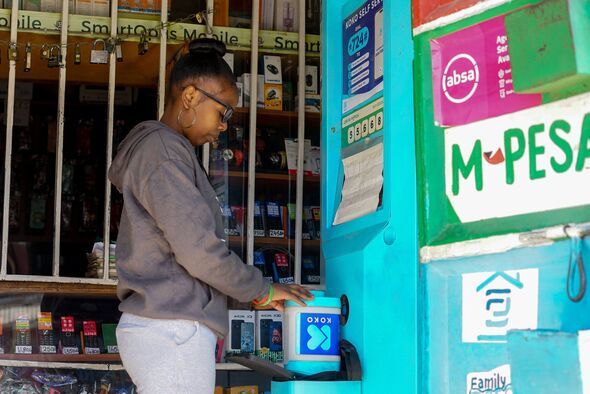
The UK entity is a subsidiary that includes a Mauritian parent and a Kenyan operating company, KOKO Networks Limited, Kenya LLC, which was founded in 2013 and became one of Africa's biggest clean cooking companies. Backed by Vitol and the World Bank, the firm was one of the world's largest cookstove project developers operating in Kenya and had over 1,300 staff across East Africa and India at its peak. The Kenyan arm manufactured and distributed bioethanol cooking stoves to households across Kenya, positioning itself as a large-scale clean cooking provider.
Central to the group's model was the generation and sale of carbon credits. By operating below its permitted emissions cap, the Kenyan business accrued carbon credits, which were transferred to the UK subsidiary for sale into international compliance markets. Revenue from those sales was used to subsidise the cost of stoves and fuel for consumers.
However, the Kenyan government did not issue the licence required for the continued trading of those credits in compliance markets.
Without authorisation to sell existing credits or receive new issuances, the group's cash flow was severely disrupted. Administrators said this regulatory impasse created 'significant financial strain' in recent months.
At the end of January, the company laid off its entire 700-strong workforce in Kenya and halted operations after being prevented from selling its carbon credits.
The business invested almost $300 million (£222 million) overall, about half of which went into building a nationwide bioethanol distribution network serving approximately 1.3 million low-income urban households, The Financial Times reported.
The shutdown risks therefore forcing over one million households that relied on its subsidised bioethanol back to more polluting fuels such as kerosene and charcoal.
The business employed more than 700 staff directly and worked with thousands of agents who operated a network of more than 3,000 automated refuelling machines nationwide.
Koko had previously planned to expand its customer base in Kenya to at least three million households by December 2027, according to Business and Human Rights Centre.
A PwC spokesperson said: "Rachael Wilkinson, Toby Banfield and Adam Seres of PwC have been appointed Joint Administrators of Koko Networks (UK) Limited (the Company).
"The Company is the UK subsidiary of Koko Networks Limited Mauritius LLC (KNL). The Group's Kenyan operations, Koko Networks Limited ("KNK") and Koko Networks Global Services (Kenya) Limited were formally placed into an insolvency process in Kenya on 1 February 2026.
"The Group is a climate technology organisation focused on accelerating Africa's energy transition by providing affordable, clean bioethanol cooking fuel to replace traditional charcoal and kerosene. The Group's operations in Kenya generated carbon credits, which were then transferred to the Company to be sold on the compliance market generating funds to subsidise the Group's wider operations.
"The Kenyan government has not granted KNK a licence to continue trading these carbon credits on the compliance market, which meant that the Company was unable to sell its existing carbon credits or any new carbon credits generated.
"Regrettably, as a result the Company was unable to continue to operate and therefore has been placed into an administration process. A small number of employees have been retained to support essential winddown activities, while eight have sadly been made redundant upon appointment."