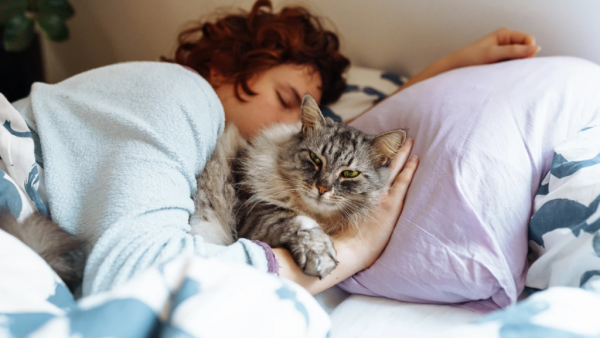
Some people may wonder if it’s healthy, or even safe, to let your cat sleep in your bed. Fortunately, science says there are multiple benefits, and they just might surprise you.
As a cat owner, I can’t imagine not allowing my furry baby to snuggle up in bed with me. However, for others, the decision isn’t so cut-and-dry. Some cats might even become more active at night, making sharing a bedtime a difficult endeavor. But, if your favorite feline is on the same sleep schedule, it might be a good idea to let him share your blankets because it’s really helping you, too.
Krakenimages.com | Shutterstock
Evidence has shown that a cat’s purr vibrates at around 25 to 150 Hz, a frequency which is known for its healing effects. Purring may stimulate bone growth and the formation of new skin and soft tissue, both in cats and humans.
Additionally, being around a purring cat can lower your blood pressure by calming your nervous system. A lower heart rate and levels of cortisol (the stress hormone associated with blood pressure) can decrease the strain on your cardiovascular system, reducing your risk of developing heart disease or experiencing a heart attack.
: How Cats & Their Owners Affect Each Other’s Brains, According To Science
For many, cats can reduce feelings of loneliness, anxiety, and depression. Spending time with cats triggers the release of oxytocin, the love hormone. Whether it’s petting them, playing with them, or just listening to their purr, you’re bound to feel better.
When a cat lies with you in bed, their warmth, steady breathing, and gentle weight activate the parasympathetic nervous system, slowing your heart rate and promoting relaxation to allow you to fall asleep. The effect is similar to using a weighted blanket or stuffed animal.
 Guillermo Spelucin R | Shutterstock
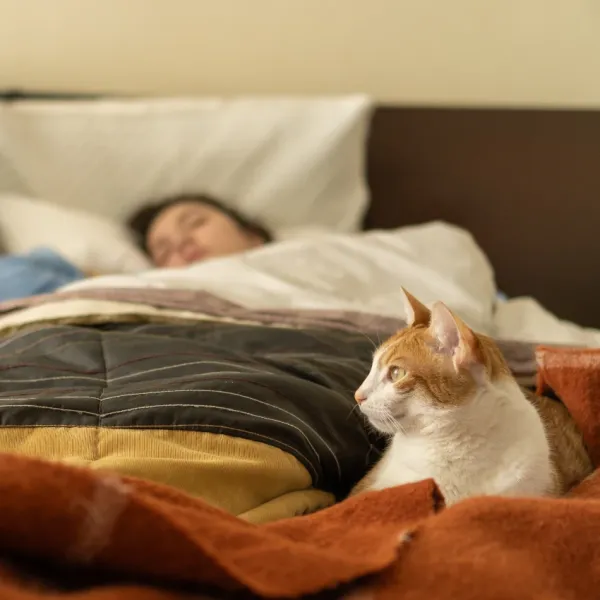
Nighttime can sometimes amplify difficult emotions. If your thoughts make it hard for you to fall asleep alone, having another living being around can be a quiet and comforting presence that won’t judge you.
Cats aren’t particularly known for their guarding abilities, but their natural alertness and sensitivity to noise and movement may also make some feel more at ease. They’re likely to hear even the faintest of noises, and if something is wrong in their territory, they’ll know it.
: If Your Cat Has These 3 Traits, You Have A Very Special Guardian Spirit By Your Side
Sleeping is a deeply vulnerable behavior for cats. They must feel completely safe in their environment to fall asleep, and choosing your bed means they know they can let down their guard and rest. To them, you become a safe zone, even during the daytime.
Cats thrive on routine, especially within their social group. Bedtime means you settle in together, something they can count on and expect every single day. Shared social behaviors like this strengthen bonds and build trust.
 ajlatan | Shutterstock
A cat’s body temperature is normally around 99 to 102.5 degrees Fahrenheit, much warmer than the human average. This makes them an excellent tiny heat source, especially on colder nights.
While many studies have suggested that sleeping in cooler temperatures is better to promote the release of melatonin, being too cold can cause micro-awakenings that disrupt the process of falling asleep. The warmth of a cat can be a small comfort without interfering with your decreasing core temperature.
: People Who Prefer Cats Over Dogs Usually Display These 5 Specific Personality Traits
Kayla Asbach is a writer currently working on her bachelor’s degree at the University of Central Florida. She covers relationships, psychology, self-help, pop culture, and human interest topics.