The custom of marking Jesus Christ's resurrection with chocolate eggs might appear odd - yet it actually stems from a mediaeval practice. Today, Brits snap up approximately 80 million Easter eggs annually, marking the celebration with a sweet treat, but there is a deeper meaning.
According to scripture, God's son was crucified on what we now know as Good Friday, before rising again on Easter Sunday. This yearly occasion, which lands on April 20 this year, is commemorated by Christians across the globe and is believed to have commenced in the second century.
It's important to recognise that tales of resurrection linked to springtime existed before Christianity - including the story of goddess Inanna who journeyed into the underworld seeking her late husband, met her death, but was subsequently brought back to life.
The myth suggests she was allowed to emerge into the earthly realm as the sun for half the year, before being compelled to descend back into the underworld throughout winter for the remaining six months.
Further stories of resurrection and spring imagery feature the Egyptian god Horus and the Greek God Dionysus. But how did all this evolve into our beloved chocolate eggs, and what's the Easter Bunny's role in proceedings?
• 'I compared Cadbury Mini Eggs to M&S and Lidl and there was a clear winner'
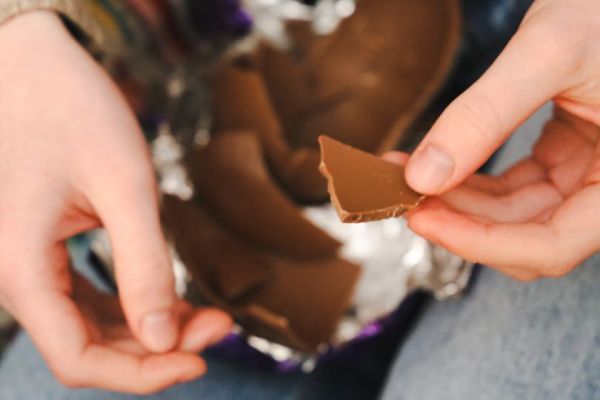 Why do we eat chocolate eggs at Easter?
Plenty of Britons who aren't religious still mark Easter, seizing the bank holidays and school half-terms as a chance to reunite with loved ones. There's also an argument that Easter has grown increasingly commercialised, with sweet manufacturers raking in millions through flogging confectionery.
Yet this tradition isn't purely a modern marketing ploy - it actually dates back to medieval times when consuming eggs throughout Lent was forbidden. According to English Heritage, eggs (the feathered variety, not chocolate) were presented to the church on Good Friday, whilst villagers commonly gave this then-prized delicacy to their lord.
Numerous donated eggs were embellished with elaborate patterns and coloured in striking hues. They became entwined with various superstitions too, including double yolks representing impending prosperity.
Others held the belief that eating eggs over the Easter season would 'improve fertility and prevent sudden death'.
This custom slowly transformed into the arrival of chocolate eggs, pioneered by Fry's in 1873. Cadbury swiftly jumped on board, releasing their hollow chocolate egg merely two years afterwards.
Where did the Easter Bunny come from?Much like Father Christmas and the festive season, the Easter Bunny shares no direct link with Christianity's Easter story. Nevertheless, there's substantial mystery surrounding the origins of this legendary creature, which is technically a hare - not a rabbit.
Numerous historians believe the Easter Hare bounded across from Germany, with a 1572 document declaring: "Don't worry if the Easter Bunny escapes you. Should we miss his eggs, we will cook the nest."
Steeped in tradition and folklore, this mythical creature is believed to have hopped into Pennsylvania Dutch settlements in the US around 1757 and has been adorning magazine covers at Easter since 1899.
According to Scientific American, the hare has been associated with Mary for centuries. "Their association with virgin birth comes from the fact that hares – often conflated mistakenly with rabbits – are able to produce a second litter of offspring whilst still pregnant with the first," the magazine explains.
Since that time, the Easter Bunny has become firmly embedded in Easter celebrations, appearing as cupcakes and various sweet treats, including the iconic Lindt Bunny. The claim that the legend stems from Pagan origins has been debunked time and again, yet continues to resurface on social media each Easter.