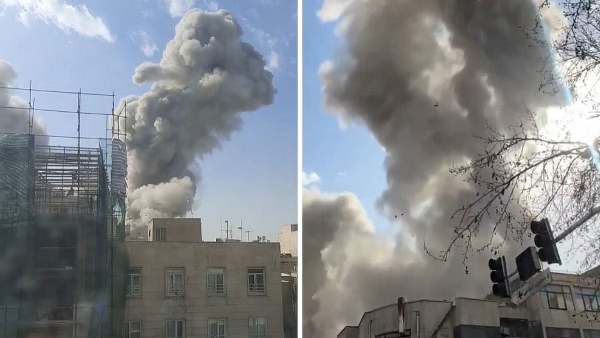
ABP Deep Dive: What may appear to be another “forever war” in West Asia is, in many ways, the continuation of a shadow conflict between the United States and Iran that has simmered since the 1980s. Over the past 24 hours, hostilities have intensified dramatically, with multiple countries drawn into the widening confrontation.
Saudi Arabia confirmed that its air defence systems intercepted nine drones after they entered the Kingdom’s airspace. Major General Turki Al Maliki said two cruise missiles were also shot down over Al Kharj Governorate.
The United States Central Command (CENTCOM) stated that American forces destroyed 17 Iranian naval vessels and struck nearly 2,000 targets within 100 hours of operations. The command added that Iran’s air defence network had been significantly degraded, with hundreds of ballistic missiles, launchers and drones neutralised, as per reports.
President Donald Trump said the U.S. Navy would begin escorting oil tankers through the Strait of Hormuz “as soon as possible” to secure energy shipments. Crude prices have jumped more than 15 percent since strikes on Tehran began, reflecting fears of supply disruptions.
In Pakistan, Defence Minister Khawaja Asif accused Israel of advancing a “Zionist agenda” aimed at extending its reach toward Pakistan’s borders, reported The Indian Express.
In Iraq, explosive-laden drones targeting the US Consulate General and a coalition base at Erbil International Airport were intercepted. Loud blasts were reported across the city as air defences engaged incoming threats.
Authorities in Dubai confirmed that alarms were activated after air defence systems intercepted hostile objects.
The United Kingdom announced precautionary deployments. Prime Minister Keir Starmer confirmed that HMS Dragon and counter-drone equipped helicopters had been sent to Cyprus following an Iranian drone strike on the RAF base at Akrotiri. However, he reiterated that Britain would not participate in U.S. offensive strikes.
Meanwhile, Volodymyr Zelenskyy offered assistance to the UAE in countering Iranian drone threats, citing Ukraine’s experience defending against Shahed drone attacks.
Israel intensified its operations in Lebanon, with air raids on southern Beirut and nearby towns killing six civilians and wounding eight, according to Lebanon’s health ministry, as clashes with Hezbollah escalated, as per reports.
Missiles launched from Iran were intercepted over Jordan and the West Bank, further underscoring the conflict’s expanding geographic footprint.
Israeli Prime Minister Benjamin Netanyahu defended the strikes on Iran, arguing they were essential to prevent Tehran’s nuclear programme from becoming “immune within months.”
With Gulf states activating air defences, Western militaries reinforcing positions, and energy markets reacting sharply, the confrontation has entered a dangerous new phase. While leaders insist their actions are defensive or preventive, the scale and speed of escalation suggest that the long-running US–Iran rivalry may now be unfolding in full view — with profound implications for regional stability and global markets.