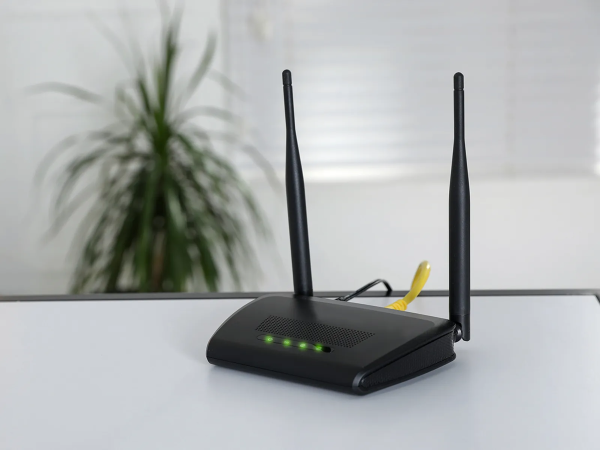
Today, you'll find a Wi-Fi router in almost every home and office. Everything from smartphones to smart TVs and IoT gadgets runs smoothly through it. Many people keep it on 24/7, but from a tech expert's perspective, the question arises: Does a router that remains on overnight really affect our health, energy consumption, and network security? Let's understand this in technical terms.
Negative Effects of Constant Connection
Actually, Wi-Fi routers use electromagnetic frequency (EMF) or radiofrequency (RF) waves to transmit internet data. This is the same RF category used in devices like mobile phones, TV towers, and microwaves. The World Health Organization (WHO) has also classified these frequencies as "potentially carcinogenic." However, more research is still underway.
In technical terms, Wi-Fi operates on the 2.4GHz and 5GHz bands. These are non-ionizing radiation, which does not directly damage DNA. However, scientists are still studying the effects of continuous exposure.
There are many benefits of turning off your Wi-Fi router at night.
Better sleep and less interference.
Some research has shown that RF signals can affect the body's circadian rhythm. This means that a continuously active Wi-Fi signal in the bedroom can cause micro-electronic interference, which can affect brain wave patterns.
Low-power radiation is also a long-term issue.
Notably, Wi-Fi radiation is low-intensity, but it continues 24/7. Prolonged exposure can cause mild headaches, decreased focus, and mild fatigue or brain fog.
Power Savings
From a technical perspective, a typical router consumes between 6 and 12 watts of power. If you keep it on 24/7, it consumes 50 to 100 kWh annually, which adds to your electricity bill. Turning it off for 6 to 8 hours at night can save you a significant amount annually.
Disclaimer: This content has been sourced and edited from Dainik Jagran. While we have made modifications for clarity and presentation, the original content belongs to its respective authors and website. We do not claim ownership of the content.