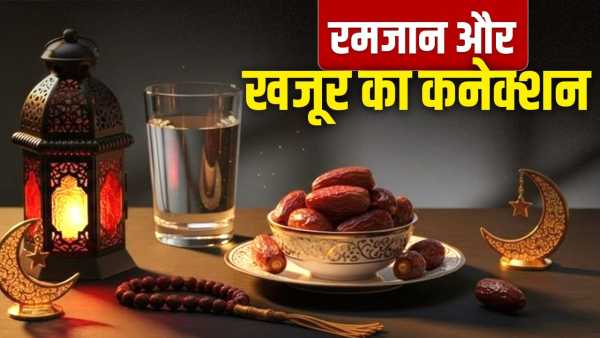
Ajwa Dates Benefits in Islam: The holy month of Ramadan is going on, which is especially for worship and fasting. Muslims wait for this month the whole year. It is believed that even the biggest sins are forgiven in the holy month of Ramadan. During Ramadan, Muslims fast for 29-30 days and become engrossed in the worship of Allah. Sehri and Iftar have special significance in Ramadan and when it comes to Iftar, the first thing that comes to mind is dates. Muslims from many countries like Saudi, India, Pakistan, Bangladesh break their fast with dates.
Dates are considered very important in Islam and Prophet Muhammad Sahib used to like it. According to Islamic belief, Prophet Muhammad always broke his fast with dates. have ever seen Ramadan It became Sunnah to break the fast with dates, which continues till today. But do you know which dates Prophet Muhammad used to eat? Let us tell you.
In Islam, breaking the fast with dates is considered Sunnah. Prophet Muhammad had advised to eat dates to break the fast. Dates are also mentioned in the Quran, the holiest book of Islam. Not only from the religious point of view, but also from the health point of view, dates have been said to be an excellent fruit. It is Sunnah to break the fast with dates in Ramadan, but not necessary. Even if the fast is not broken with dates, there is no problem or sin in it. But breaking Roza with dates is considered much better.
Dates have been mentioned more times than any other fruit in the Quran, the holiest book of Islam. Dates have been mentioned 22 times in the Quran. Therefore its importance increases even more in Islam. Prophet Muhammad Sahib also used to eat dates and used to tell people about its benefits. Especially in Surah Maryam, Allah Almighty had asked Maryam (a.s.) to eat dates when Prophet Jesus (a.s.) had pain in her womb.
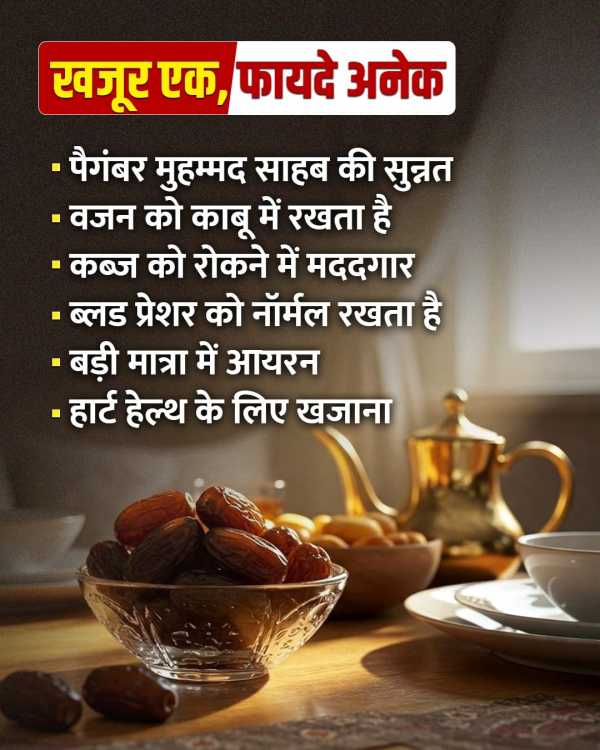
Prophet Hazrat Muhammad Mustafa Sallallahu Taala Alaihi Wasallam liked dates the most. Ramadan In ancient times, Muhammad Saheb used to break Iftar with a few dates, that is, he used to break Iftar with fresh dates. If fresh dates were not available then you used to break iftar with dry dates which we call dates and if dry dates were also not available then you used to break iftar with water.
Among the dates, you liked Ajwa dates the most. The Prophet said that there is never faqa (poverty) in the house where there are dates. Ajwa dates are a famous and culinary variety of Medina. According to the Hadith, Prophet Muhammad advised to eat seven Ajwa dates every morning on an empty stomach, as it is considered very beneficial for health and safety (from magic/poison). Bukhari and Abu Dawud in Sahih al-Bukhari (5445) narrated from Saad ibn Abi Waqqas that the Prophet (peace and blessings of Allaah be upon him) said, “Whoever eats seven Ajwa dates in the morning, no poison or sorcery will harm him that day.”
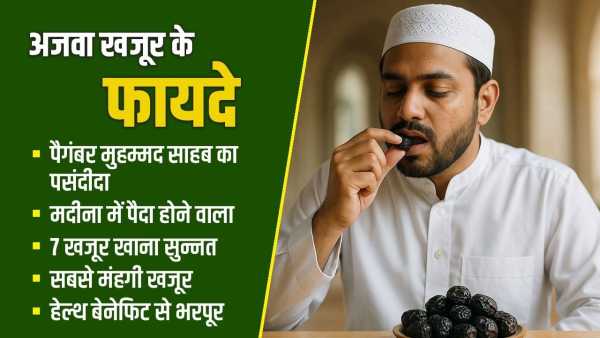
Ajwa date has been described as the most expensive date found in the world. The price of one kg of Ajwa dates can be up to Rs 14 thousand. At the same time, only about 50-60 Ajwa dates come in 1 kg. Ajwa dates are so expensive because they are produced only in one city. This city is Medina of Saudi Arabia, which is considered the second holiest city among the Muslim community after Mecca.