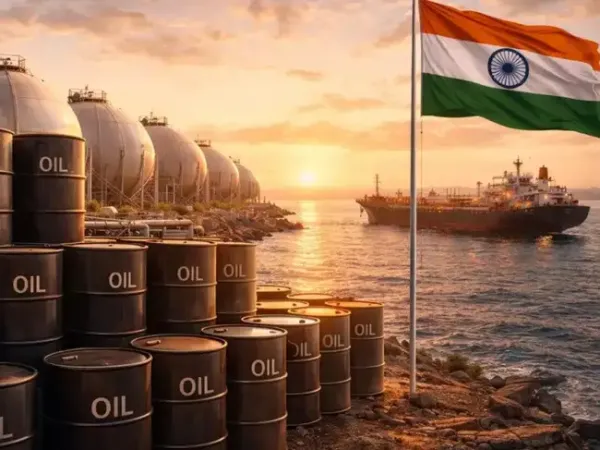
A storm brewing in the Gulf could soon hit Indian homes, farms, and factories. Rising tensions in West Asia are threatening the flow of energy, fertilisers, industrial raw materials, and diamonds into the country, leaving large parts of the economy exposed to potential shortages and price shocks, according to a report by the Global Trade Risk Institute (GTRI).
You can follow our live coverage of the Iran-Israel war here
As per the report, with domestic crude stocks covering less than 30 days, prolonged disruptions could push up fuel prices, affecting transport, logistics, and agriculture, including diesel-powered irrigation pumps and tractors.
Natural gas supplies are similarly vulnerable. West Asia supplied 68.4% of India’s LNG imports in 2025. The vulnerability is already visible: Qatar’s Petronet LNG has halted allocations to GAIL from 4 March 2026 due to restrictions on vessel movement.
Cooking fuel supplies are also exposed. LPG imports from the Gulf, accounting for 46.9% of total imports, cover roughly two weeks of consumption. Any extended disruption could affect millions of households.
Other petroleum products, including refined fuels ($1.9 billion, 19.7% of imports) and petroleum coke ($1.3 billion, 37.3%), used in cement, aluminium, and power generation, could also face shortages.
Supply disruptions could reduce fertiliser availability, raise government subsidy costs, and push up food prices. Crops including cereals, fruits, and vegetables are at risk if the disruptions coincide with the planting or crop season.
Disruptions in raw diamond shipments could slow production in Surat, Gujarat, impacting global supply and employment in the jewellery sector.
Construction minerals are also exposed: limestone ($483 million, 68.5%), sulphur ($420 million, 65.8%), and gypsum ($129 million, 62.1%) support cement, fertiliser, and chemical industries. Metals like direct reduced iron ($190 million, 59.1%) and copper wire ($869 million, 50.7%) are essential for steelmaking, power transmission, and renewable energy infrastructure.
Ras Tanura oil export terminal, Saudi Arabia
LNG plants at Ras Laffan and Mesaieed, Qatar
Fuel storage at Fujairah, UAE
Ports at Duqm and Salalah, Oman
These attacks, coupled with navigation risks for tankers, have delayed shipments and disrupted production, raising fears of a broader global energy supply shock.
Also Read: Insider info suggests Iran war can stretch on till September
“The figures highlight how closely India’s economy is tied to West Asian supply chains. Any prolonged disruption could cascade across multiple sectors, from energy and agriculture to manufacturing and exports,” said Ajay Srivastava, the founder of the think tank.
Energy imports face immediate risk
India imported $98.7 billion worth of goods from West Asia in 2025, with petroleum and liquefied natural gas (LNG) forming the largest share. Nearly $70 billion of India’s petroleum imports come from the region, including $50.8 billion of crude oil, which accounts for 48.7% of India’s crude imports.You can follow our live coverage of the Iran-Israel war here
As per the report, with domestic crude stocks covering less than 30 days, prolonged disruptions could push up fuel prices, affecting transport, logistics, and agriculture, including diesel-powered irrigation pumps and tractors.
Natural gas supplies are similarly vulnerable. West Asia supplied 68.4% of India’s LNG imports in 2025. The vulnerability is already visible: Qatar’s Petronet LNG has halted allocations to GAIL from 4 March 2026 due to restrictions on vessel movement.
Cooking fuel supplies are also exposed. LPG imports from the Gulf, accounting for 46.9% of total imports, cover roughly two weeks of consumption. Any extended disruption could affect millions of households.
Other petroleum products, including refined fuels ($1.9 billion, 19.7% of imports) and petroleum coke ($1.3 billion, 37.3%), used in cement, aluminium, and power generation, could also face shortages.
Fertiliser supplies could hit agriculture
India imported $3.7 billion worth of fertilisers from West Asia in 2025. Mixed fertilisers (NPK) accounted for $2.2 billion (31.1% of imports), while nitrogen fertilisers totaled $1.5 billion (30.3%).Supply disruptions could reduce fertiliser availability, raise government subsidy costs, and push up food prices. Crops including cereals, fruits, and vegetables are at risk if the disruptions coincide with the planting or crop season.
Diamond industry and exports vulnerable
Additionally, India’s diamond sector depends heavily on Gulf imports. Rough diamonds worth $6.8 billion, or 40.6% of imports, were sourced from West Asia in 2025.Disruptions in raw diamond shipments could slow production in Surat, Gujarat, impacting global supply and employment in the jewellery sector.
Industrial raw materials and plastics at risk
Several industrial inputs are sourced from the Gulf. India imported $1.2 billion of polyethylene polymers (35.6% of total imports), which are critical for packaging, plastic products, and agricultural films used in irrigation.Construction minerals are also exposed: limestone ($483 million, 68.5%), sulphur ($420 million, 65.8%), and gypsum ($129 million, 62.1%) support cement, fertiliser, and chemical industries. Metals like direct reduced iron ($190 million, 59.1%) and copper wire ($869 million, 50.7%) are essential for steelmaking, power transmission, and renewable energy infrastructure.
Escalating Gulf tensions
Missile and drone attacks between 1–3 March have targeted key energy and logistics facilities across Saudi Arabia, Qatar, the UAE, and Oman. Impacted sites include:Ras Tanura oil export terminal, Saudi Arabia
LNG plants at Ras Laffan and Mesaieed, Qatar
Fuel storage at Fujairah, UAE
Ports at Duqm and Salalah, Oman
These attacks, coupled with navigation risks for tankers, have delayed shipments and disrupted production, raising fears of a broader global energy supply shock.
Also Read: Insider info suggests Iran war can stretch on till September
Economy-wide implications
GTRI warns that if shipping through the Strait of Hormuz is disrupted beyond a week, the effects could quickly ripple across energy markets, fertiliser supplies, industrial manufacturing, construction materials, and exports such as diamonds.“The figures highlight how closely India’s economy is tied to West Asian supply chains. Any prolonged disruption could cascade across multiple sectors, from energy and agriculture to manufacturing and exports,” said Ajay Srivastava, the founder of the think tank.