Summary: Disruptions in the Strait of Hormuz are forcing ships to consider routes like the Cape of Good Hope, but these alternatives are longer, costlier, and cannot fully replace the vital oil and trade flows through the strait.
The intensifying confrontation involving the United States, Israel and Iran has turned the Strait of Hormuz into the most volatile shipping corridor in the world today. The crisis is no longer theoretical.
Tanker traffic has collapsed, ships have been hit by projectiles, insurers are withdrawing cover, and hundreds of vessels are waiting outside the Gulf for clarity.
For India, the dangers are not just geopolitical but deeply human. Two Indian seafarers, Captain Ashish Kumar from Bihar and Dixit Solanki from Mumbai, were killed when the tanker Skylight was struck near Oman’s Musandam Peninsula. Another Indian crew member remains missing.
The attack underscores the vulnerability of merchant sailors who keep global trade moving even as geopolitical tensions rise.
At the centre of the crisis lies a simple reality: the global economy depends heavily on a narrow stretch of water barely a few kilometres wide.
The Strait connects the Persian Gulf to the Arabian Sea and is bordered by Iran and Oman. Around 20% of the world’s oil and gas supply normally passes through this corridor, making it the single most critical energy chokepoint in global trade.
Any disruption, even temporary, has immediate consequences.
Brent crude prices jumped sharply in the early days of the crisis, while tanker freight rates and insurance costs surged. Analysts warn that prolonged instability could push oil towards the $100-per-barrel mark.
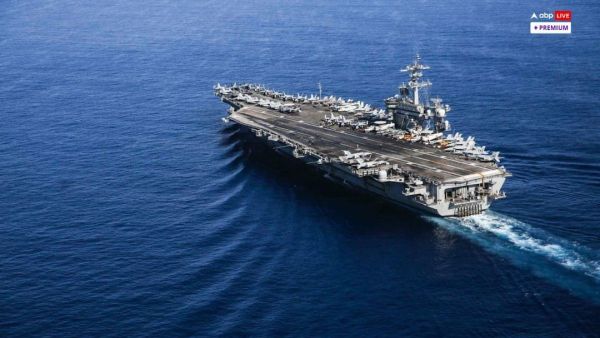
The situation is further complicated by military escalation. Iranian forces have warned vessels against transiting the strait, while US and allied naval forces are weighing options to protect commercial shipping.
Major container lines including Maersk, MSC Mediterranean Shipping Company, Hapag-Lloyd and CMA CGM have suspended transits through the strait or nearby routes.
Some companies have halted cargo bookings to Gulf ports altogether, while others have instructed ships already in the region to proceed to “safe shelter” areas until the security situation becomes clearer.
The result is a massive traffic backlog.
More than 150 vessels are reportedly stranded or anchored in the Gulf, unable to move safely.
The most widely discussed alternative route is the long diversion around the southern tip of Africa via the Cape of Good Hope.
Ships travelling between Asia and Europe normally use the Suez Canal and the Bab el-Mandeb Strait. But with tensions rising in both the Persian Gulf and the Red Sea, many shipping companies are choosing to avoid the region entirely.
The diversion around Africa adds 10–20 days to voyages and significantly raises fuel and operational costs.
Freight rates on India–Europe routes have already increased by 40–50% as carriers shift to the longer route.
This detour is feasible for container cargo, but it is far less effective for oil exports that originate inside the Persian Gulf.
In theory, oil and cargo could move through the Red Sea and the Suez Canal.
But that route is itself under threat.
The Bab el-Mandeb Strait, the narrow entrance to the Red Sea, has been a target for attacks on commercial shipping in recent years. With tensions rising across the region, shipping companies worry the Red Sea corridor could become another conflict zone.
This means the global shipping system is facing a troubling scenario: two strategic chokepoints under simultaneous pressure.
Several Gulf states have attempted to hedge against exactly this kind of crisis by building pipelines that bypass the strait.
For example,
These pipelines provide some relief but are far from sufficient.
Their combined capacity is only a fraction of the oil that normally passes through Hormuz each day. In other words, they help reduce disruption but cannot replace the strait entirely.
From Tehran’s viewpoint, the Strait of Hormuz is not merely geography but a strategic deterrent.
Iran has long maintained that if its sovereignty is attacked, it can expand the conflict across the region. The strait, through which Gulf energy exports flow to Asia, Europe and beyond, becomes a powerful bargaining tool.
However, Iranian leaders are also aware that a complete closure could provoke overwhelming international military retaliation.
As a result, analysts believe Iran’s strategy may rely more on limited disruptions and maritime pressure rather than a permanent blockade.
For India, the crisis carries serious strategic implications.
India imports more than 80% of its crude oil, much of it from Gulf suppliers such as Saudi Arabia, Iraq, Kuwait and the UAE. Nearly all of those shipments normally pass through the Strait of Hormuz.
The death of Indian sailors aboard the tanker Skylight highlights the human dimension of this dependence. Indian seafarers make up one of the largest workforces in global merchant shipping, meaning conflicts at sea directly affect Indian families.
Economically, the risks include:
Indian exporters are already reporting longer shipping times and higher logistics costs due to route diversions.
Despite the urgent search for alternatives, the reality remains stark.
There is no real substitute for the Strait of Hormuz.
The Cape of Good Hope route increases travel time and costs. Pipelines bypass only a limited portion of Gulf exports. And the Red Sea corridor carries its own security risks.
The global trading system can adapt temporarily, but only at a significant economic cost.
For India and the wider world, the lesson is clear, stability in this narrow stretch of water remains critical to global energy security.
Until diplomacy cools the conflict, the Strait of Hormuz will continue to remind the world just how fragile the arteries of global trade can be.