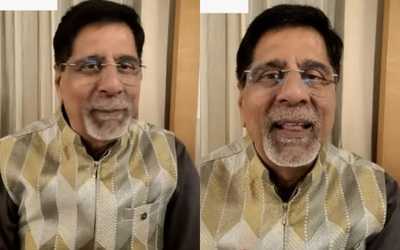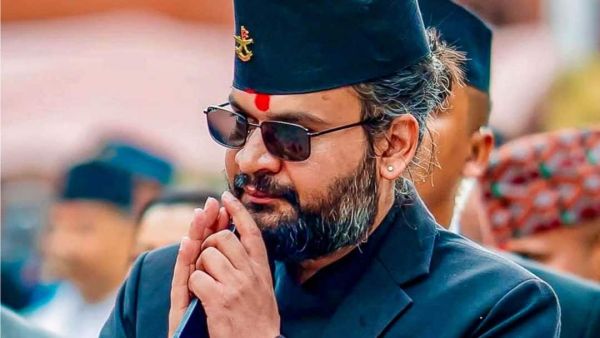
The newly formed Rastriya Swatantra Party (RSP), led by former rapper-turned-politician Balendra Shah, is looking at a massive victory in Nepal’s election as early trends show RSP had won three seats and was ahead in 45 of the 57 constituencies.
Counting is underway for the first general elections in Nepal since the Gen Z-led protests that brought down the coalition government headed by K. P. Sharma Oli.
Oli’s Communist Party of Nepal (Unified Marxist–Leninist) was leading in five constituencies, while the Nepali Congress, headed by Gagan Thapa, was in third place with leads in four seats, news agency PTI reported, citing sources.
The Nepal Communist Party (Maoist Centre) led by former prime minister Pushpa Kamal Dahal Prachanda was ahead in two seats, while the pro-monarchist Rastriya Prajatantra Party was leading in one constituency.
According to PTI, the RSP had secured three constituencies, Kathmandu 1, Kathmandu 7 and Kathmandu 8, though the Election Commission of Nepal had yet to formally announce the results.
In Kathmandu 8, Biraj Bhakta Shrestha emerged victorious, while Ranju Darshana won Kathmandu 1 and Ganesh Parajuli secured Kathmandu 7.
According to RSP central committee member R. K. Dhungana, Darshana won the Kathmandu 1 seat by a “huge margin,” securing more than 10,000 votes, which is nearly double that of her nearest rival, Prabal Thapa Chhetri.
Meanwhile, Shah, widely known as Balen, was leading in Jhapa 5 constituency against former prime minister Oli.
Media reports indicated that the RSP was ahead in all 10 constituencies in Kathmandu.
Nepal recorded around 60 per cent voter turnout in the elections to the House of Representatives of Nepal held on Thursday. Vote counting began late Thursday night and is expected to conclude by Friday evening, according to the election commission.
Founded in 2022, the RSP has attracted considerable support during the campaign, with Shah emerging as a strong contender for the prime minister’s post.
The Nepali Congress and the CPN (UML) were part of the government that collapsed last year following the Gen Z-led protests. Thapa has been projected as the Nepali Congress’ prime ministerial candidate, while the UML has put forward Oli as its nominee.
A total of 18.9 million voters were eligible to elect 275 members of the House of Representatives. Of these, 165 members are chosen through the first-past-the-post system, while the remaining 110 are elected through proportional representation.
More than 3,400 candidates contested the 165 direct seats, while 3,135 candidates were in the fray for the proportional representation seats.