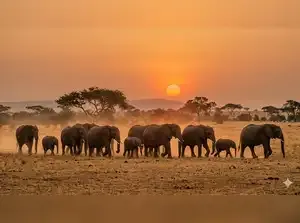
Numerous studies, particularly across diverse species, reveal that animals tend not to live in isolation. We know, from studies conducted in the field, that social organization is a key factor in survival, influencing how animals feed, avoid predators, and reproduce. Research carried out by behavioral ecologists on mammals, birds, insects, and fish has revealed a variety of social structures, ranging from fluid, daily-varying social structures to tightly organized hierarchies that control access to resources, and research in behavioral ecology continues to reinforce that social groups are built upon complex interactions.
Some animals also live in societies where membership is dynamic and changes often. This is called a fission-fusion society, and it occurs when animals form smaller groups and then rejoin the larger society. This is a useful way for animals to adjust to changing environmental conditions, such as shifts in food availability or predator populations. Examples of animals with fission-fusion societies include elephants, chimpanzees, dolphins, and some bat species. Researchers at the University of Oxford studied African elephants and found that the family groups adjust their membership in smaller groups according to the distribution of water and food in their environment. Smaller groups reduce competition for scarce resources, and larger groups provide safety and socialization when resources are abundant.
Other primatologists who studied chimpanzee societies in Tanzania’s Gombe National Park also found similar fission-fusion societies. Researchers who published their study in the behavioral ecology literature found that chimpanzees in Africa often form temporary foraging groups, and the membership of those groups changes throughout the day. This helps animals sustain long-term social relationships and adjust to changing circumstances in their environment.
Many animal societies rely on hierarchical ranking systems that determine which individuals gain priority access to food, territory, and mating opportunities. These systems are referred to as dominance hierarchies, which help reduce repeated conflict by establishing predictable relationships among group members. Wolf packs provide one of the clearest examples: studies conducted by wildlife biologists at Yellowstone National Park revealed that wolf packs typically center around a dominant breeding pair that leads hunting activities and reproduces most successfully within the group. The hierarchical structure allows packs to coordinate cooperative hunting while limiting internal disputes over resources.
Primate societies show how hierarchical systems can vary between species. Research conducted by Frans de Waal at Emory University and published in the journal Science has examined dominance patterns among chimpanzees and bonobos. Chimpanzee communities generally show strong male dominance, while bonobo groups display more balanced social relationships, with female alliances influencing group decisions. These variations tell us that dominance structures evolve in response to factors such as environmental pressures, food distribution, and reproductive strategies. Such hierarchies provide a framework for organizing group activity, while also maintaining social stability.
Scientists have coined the term behavioral synchrony to describe a form of group living, often characterized by coordinated actions among individuals. Synchronization can involve simultaneous movement, vocal signaling, or shared patterns of activity such as feeding and resting. Studies of primate behavior conducted by researchers at the University of Strasbourg, and reported in behavioral science journals, have found that baboons frequently align their travel and rest periods with those of nearby group members. This alignment reduces conflict over decisions about movement and helps maintain a strong bond within large troops.
Mathematical modeling research from Princeton University and Rutgers University, published in Proceedings of the Royal Society A, has demonstrated that complex group movements can stem from simple interaction rules between neighboring individuals. When each animal adjusts its direction based on the movement of nearby group members, the entire group forms coordinated patterns such as flocking or schooling. These collective formations provide important advantages: fish schools and bird flocks confuse predators through rapid directional shifts, while coordinated travel allows groups to locate food sources more efficiently.
At the more organized end of the social spectrum, we find eusocial societies in which individuals specialize in particular roles that benefit the group as a whole. This type of social organization is observed in species such as ants, bees, termites, and naked mole rats. Studies done by researchers in the field of insect societies at Arizona State University have shown that in eusocial societies, individuals of the species are of different castes and perform different roles. Worker insects are in charge of foraging for food and caring for the nest, while the reproductive ones are in charge of producing offspring. This division of labor leads to the efficient running of the society.
A 2019 study published in Scientific Reports sought to understand the evolution of the mechanisms that govern cooperative societies. The study concluded that genetic relatedness and environmental pressures play important roles in the development of cooperative roles in societies. When the rate of cooperation in society is high, the society's survival is enhanced even if individual members forgo reproduction. These societies are highly organized and exemplify how natural selection drives the evolution of extreme cooperation. Animal societies are characterized by flexible alliances, hierarchical structures, movement, and cooperative labor, and more research is being conducted in this field.
Some animals also live in societies where membership is dynamic and changes often. This is called a fission-fusion society, and it occurs when animals form smaller groups and then rejoin the larger society. This is a useful way for animals to adjust to changing environmental conditions, such as shifts in food availability or predator populations. Examples of animals with fission-fusion societies include elephants, chimpanzees, dolphins, and some bat species. Researchers at the University of Oxford studied African elephants and found that the family groups adjust their membership in smaller groups according to the distribution of water and food in their environment. Smaller groups reduce competition for scarce resources, and larger groups provide safety and socialization when resources are abundant.
Other primatologists who studied chimpanzee societies in Tanzania’s Gombe National Park also found similar fission-fusion societies. Researchers who published their study in the behavioral ecology literature found that chimpanzees in Africa often form temporary foraging groups, and the membership of those groups changes throughout the day. This helps animals sustain long-term social relationships and adjust to changing circumstances in their environment.
Image credit: Gemini
Primate societies show how hierarchical systems can vary between species. Research conducted by Frans de Waal at Emory University and published in the journal Science has examined dominance patterns among chimpanzees and bonobos. Chimpanzee communities generally show strong male dominance, while bonobo groups display more balanced social relationships, with female alliances influencing group decisions. These variations tell us that dominance structures evolve in response to factors such as environmental pressures, food distribution, and reproductive strategies. Such hierarchies provide a framework for organizing group activity, while also maintaining social stability.
Scientists have coined the term behavioral synchrony to describe a form of group living, often characterized by coordinated actions among individuals. Synchronization can involve simultaneous movement, vocal signaling, or shared patterns of activity such as feeding and resting. Studies of primate behavior conducted by researchers at the University of Strasbourg, and reported in behavioral science journals, have found that baboons frequently align their travel and rest periods with those of nearby group members. This alignment reduces conflict over decisions about movement and helps maintain a strong bond within large troops.
Mathematical modeling research from Princeton University and Rutgers University, published in Proceedings of the Royal Society A, has demonstrated that complex group movements can stem from simple interaction rules between neighboring individuals. When each animal adjusts its direction based on the movement of nearby group members, the entire group forms coordinated patterns such as flocking or schooling. These collective formations provide important advantages: fish schools and bird flocks confuse predators through rapid directional shifts, while coordinated travel allows groups to locate food sources more efficiently.
At the more organized end of the social spectrum, we find eusocial societies in which individuals specialize in particular roles that benefit the group as a whole. This type of social organization is observed in species such as ants, bees, termites, and naked mole rats. Studies done by researchers in the field of insect societies at Arizona State University have shown that in eusocial societies, individuals of the species are of different castes and perform different roles. Worker insects are in charge of foraging for food and caring for the nest, while the reproductive ones are in charge of producing offspring. This division of labor leads to the efficient running of the society.
A 2019 study published in Scientific Reports sought to understand the evolution of the mechanisms that govern cooperative societies. The study concluded that genetic relatedness and environmental pressures play important roles in the development of cooperative roles in societies. When the rate of cooperation in society is high, the society's survival is enhanced even if individual members forgo reproduction. These societies are highly organized and exemplify how natural selection drives the evolution of extreme cooperation. Animal societies are characterized by flexible alliances, hierarchical structures, movement, and cooperative labor, and more research is being conducted in this field.