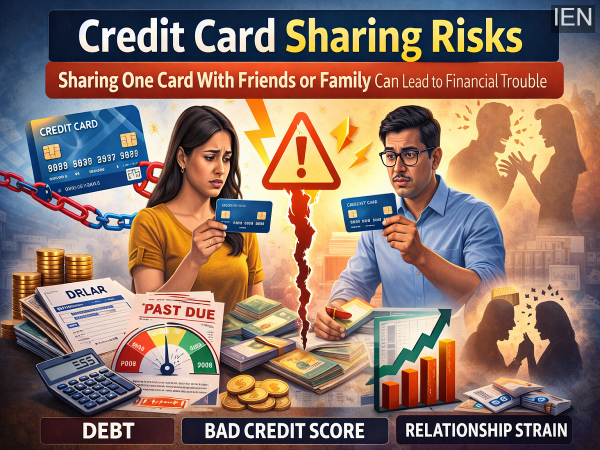
Sharing a credit card with a friend, partner, or family member may appear convenient, especially when managing common expenses. However, financial experts warn that this seemingly simple arrangement can create serious financial and legal risks if not handled carefully.
While many people assume that sharing a credit card evenly distributes responsibility, the reality is very different. In most cases, the primary cardholder remains fully responsible for all spending, even if another person is using the card. This can lead to debt problems, credit score damage, and even disputes between close relationships.
As credit card usage continues to rise in India, understanding the risks of shared cards has become increasingly important.
Many individuals share credit cards with their spouses, family members, or trusted friends to simplify expense management. For example, couples may use a single card for household spending, travel bookings, or grocery purchases. Similarly, parents often provide cards to children for emergency or education-related expenses.
This setup may appear practical because it allows multiple people to use the same credit limit while tracking spending in one place. It can also make budgeting easier when expenses are shared within a household.
However, financial advisors emphasize that convenience should not overshadow responsibility, as credit card agreements place legal liability on the main cardholder.
In India, banks typically do not issue fully joint credit cards. Instead, there is a primary cardholder and one or more add-on card users.
The primary cardholder is the person who applied for the card and whose credit profile was evaluated by the bank. Add-on cardholders are authorized users who receive a separate card linked to the same account.
Despite having their own card, add-on users do not carry legal responsibility for the account. All spending, repayment obligations, and penalties ultimately fall on the primary cardholder.
This means that if the add-on user overspends or fails to coordinate payments, the financial burden will still impact the person whose name is on the original account.
One of the biggest risks of credit card sharing is accumulating unexpected debt. If the secondary user spends beyond the agreed limit or makes frequent purchases, the total outstanding amount can rise quickly.
Another major concern is the impact on credit scores. Late payments, missed bills, or exceeding the credit limit can negatively affect the primary cardholder’s credit rating. A lower credit score can make it difficult to obtain future loans such as home loans, car loans, or personal loans.
In addition, unpaid credit card balances often attract high interest rates and penalties, increasing the financial burden.
Beyond financial consequences, shared credit cards can also lead to personal conflicts. Disagreements over spending habits, repayment responsibilities, or unexpected purchases can strain relationships between friends, partners, or family members.
Many people assume that using an add-on card helps them build their own credit history. However, reports indicate that add-on cardholders usually do not build an independent credit score from the card usage.
Even if the add-on user spends responsibly and payments are made on time, the credit history is primarily recorded under the main cardholder’s credit profile.
At the same time, if there are payment delays or defaults, the negative impact is borne mainly by the primary cardholder.
Despite the risks, shared credit cards can offer certain advantages when used responsibly. For families or couples, they can make expense tracking easier and help maintain transparency in shared finances.
For example, all purchases appear in a single monthly statement, allowing households to monitor spending patterns more effectively. It can also be useful for managing joint travel expenses, household bills, or subscription payments.
However, experts stress that these benefits only work when there is clear communication and financial discipline.
If you plan to share a credit card with someone, financial experts recommend setting clear guidelines to avoid misunderstandings.
First, establish spending limits for each user so that the total balance remains manageable. Second, decide in advance how repayments will be handled, including who will contribute and when payments will be made.
It is also advisable to regularly review credit card statements to ensure that all transactions are authorized and within the agreed budget.
Most importantly, the primary cardholder should remember that they are legally responsible for all charges, regardless of who made the purchase.
Sharing a credit card can offer convenience, but it also carries significant financial responsibility. Without proper planning and communication, it can lead to rising debt, credit score damage, and even conflicts between close relationships.
Financial experts suggest that individuals should carefully evaluate the risks before sharing their credit card. By setting clear rules, monitoring expenses, and ensuring timely repayments, users can reduce potential problems and make shared credit cards work more effectively.
Ultimately, while credit cards are useful financial tools, responsible usage remains the key to avoiding long-term financial trouble.