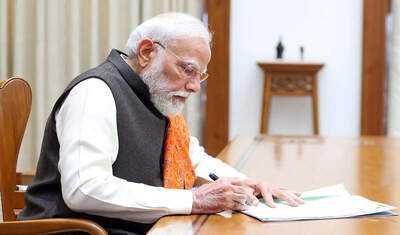
In a recent cabinet meeting chaired by Prime Minister Narendra Modi, several crucial decisions were made. The Modi administration has taken steps regarding the country's economic framework, infrastructure, and welfare programs, indicating a commitment not just to announce development projects but to align them with the long-term vision of a developed India. This approach aims to achieve regional balance, social empowerment, and convey a political message.
Among the most notable decisions is the extension of the Jal Jeevan Mission for rural water supply until 2028, with a substantial allocation of ₹8.79 lakh crore. This initiative aims to establish sustainable water service systems in every village, moving beyond merely laying pipelines. A national digital framework named Sujal Bharat will connect each village's water supply from source to tap digitally.
In 2019, only 17% of rural households had access to piped water, a figure that has now risen to over 81%. This expansion has significantly transformed rural life, freeing millions of women from the daily labor of fetching water, allowing them to engage in education, employment, and other economic activities. The positive health impact is evident, as access to clean water has reduced waterborne diseases. Through Jal Jeevan Mission 2.0, the government aims to provide round-the-clock water supply in rural areas, considered essential for a developed India.
Additionally, the cabinet approved several major transport projects to strengthen infrastructure. A significant step is the plan to develop the Badnawar-Petalwad-Thandla-Timarwani road into a four-lane highway, connecting Ujjain in Madhya Pradesh to the Delhi-Mumbai Expressway. This approximately 80-kilometer corridor will reduce travel time and lower freight costs, boosting the local economy in tribal-dominated Dhar and Jhabua districts by enhancing connectivity to industrial centers.
Similarly, the construction of a green regional connectivity route to link Jewar International Airport in Uttar Pradesh and Haryana with the Delhi-Mumbai Expressway has been approved. This 31-kilometer route will strengthen multi-modal transport connectivity in the National Capital Region, facilitating faster access from South Delhi, Faridabad, and Gurugram to the airport, thereby stimulating regional trade, tourism, and investment.
In the railway sector, the cabinet has also approved two multi-track projects in five districts of West Bengal and Jharkhand. The addition of a fourth track on the Santhia-Pakur and Santragachi-Kharagpur routes will enhance the capacity of the rail network and reduce congestion, providing better rail connectivity to over 5,000 villages. This expansion will also expedite and lower the cost of transporting coal, steel, grains, and other goods, while reducing oil consumption and carbon emissions, which is crucial for environmental sustainability.
Moreover, the decision to designate Madurai Airport in Tamil Nadu as an international airport holds significant importance for promoting tourism and trade in southern India. Madurai is a major center for ancient temples and pilgrimages. The international status is expected to increase the number of foreign visitors, benefiting the tourism industry, hospitality sector, and local employment.
From a political perspective, these decisions related to West Bengal and Tamil Nadu are seen as significant in the context of upcoming assembly elections. Through railway projects, the government aims to convey a message of infrastructure expansion in rural and semi-urban areas. Improved rail connectivity is likely to enhance trade, tourism, and employment opportunities, creating a positive image of development among voters.
The decision to grant international status to Madurai Airport is also viewed as politically strategic. Southern Tamil Nadu has long sought more investment and better connectivity. This decision addresses both regional pride and economic expectations, signaling the central government's commitment to the development of southern India.
Overall, these decisions reflect the government's simultaneous efforts in various areas such as rural water security, transport connectivity, tourism, and regional development. The Jal Jeevan Mission aims for social transformation, while new highways and railway projects are set to stimulate economic growth, and the establishment of international airports seeks to enhance global connectivity. This multifaceted approach is considered a significant step towards realizing the goal of a developed India.