The United States Defence Secretary Pete Hegseth’s remarks of “no fixed timeframe” and the decision to conclude the Middle East conflict rests with President Donald Trump have only fuelled concerns of a prolonged war, with ripple effects on global oil markets.
QatarEnergy Chief Executive Officer (CEO) Saad al-Kaabi told Reuters that Iran’s attacks have damaged 17 per cent of the country’s LNG exports, indicating the company would be forced to declare force majeure as it would take around five years for repair, which has so far cost an infrastructure damage of USD 26 billion.
“I never in my wildest dreams would have thought that Qatar would be – Qatar and the region – in such an attack, especially from a brotherly Muslim country in the month of Ramadan, attacking us in this way,” he told Reuters.

“I mean, these are long-term contracts that we have to declare force majeure. We already declared, but that was a shorter term. Now it’s whatever the period is,” he said.
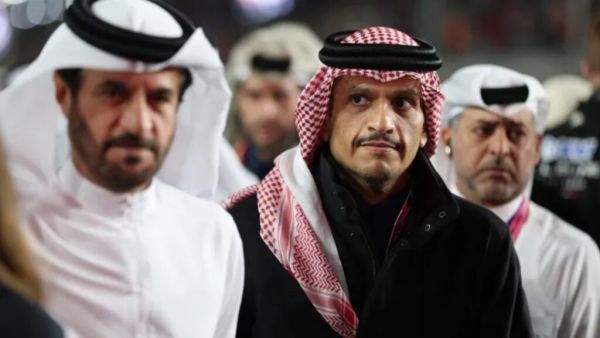
Qatar’s Prime Minister, Sheikh Mohammed bin Abdulrahman bin Jassim Al Thani, reacted to Iran targeted Ras Laffan LNG plant, an energy infrastructure in the UAE and Saudi Arabia and vital for Tehran. He called for an immediate end to the war, calling Iran’s claims of only focusing on US military bases “unacceptable and unjustified.”
“Iran must stop its attacks and not expand the conflict. Any expansion of the war will never enable stability,” Thani said.
He said the war so far has caused a “massive shock” and questions Qatar-Iran relationships. “Trust has been lost now, but it will be restored. We want to live in peace with the Iranian people,” he said.
The death toll in Lebanon has crossed over 1,000 since March 2, the Health Ministry said. The dead included 79 women, 118 children and 40 healthcare workers. As many as 2,584 people have been wounded in the Israeli attacks.
KLM Royal Dutch Airlines has extended the suspension of its flights to Riyadh, Dammam and Dubai until at least May 17, citing safety concerns amid the ongoing US-Israel conflict with Iran.
Several other major international carriers, including British Airways, Cathay Pacific and Aegean Airlines, have also prolonged flight suspensions to key Gulf destinations until April or May due to heightened regional tensions.
Meanwhile, Eurowings has extended some of its suspensions until late June.
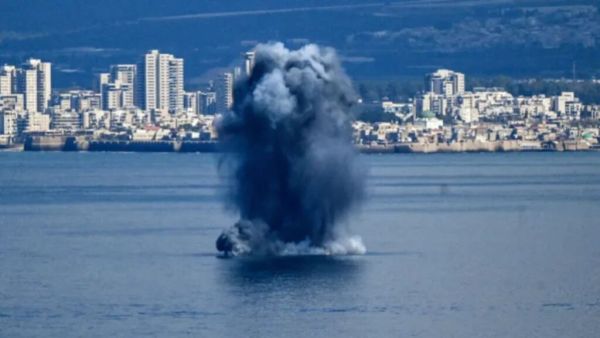
Missiles from Iran struck Israel’s Haifa oil refinery, leaving one person wounded, Energy Minister Eli Cohen said, and stressed there was no significant damage. “The power has been restored to most of the residences disconnected and will be restored to the remaining affected areas shortly,” he said.
Iran intensified its attacks on oil and natural gas facilities around the Gulf on Thursday, raising the stakes in a war that is sending shock waves through the global economy.
Israel’s Air Force targeted an Iranian port in the Caspian Sea. It is believed several naval ships, carrying air defence systems and anti-submarine weapons, were anchored at the time of the attack.
After refusing to send troops to help the US secure the Strait of Hormuz, the United Kingdom, France, Germany, Italy, the Netherlands, and Japan announced they will take efforts to stabilise the global energy markets due to the closure of the water passageway.
In a joint statement, the countries said they will work with certain energy-producing nations to increase output and stabilise markets.
“We condemned attacks by Iran and called on it to halt them immediately. We express our readiness to contribute to appropriate efforts to ensure safe passage through the Strait. We welcome the commitment of nations that are engaging in preparatory planning,” the statement said.
Iran’s foreign minister said Tehran has used only a fraction of its capabilities in recent strikes on energy infrastructure across the Gulf, warning of a stronger response if its own facilities are targeted again.
“Our response to Israel’s attack on our infrastructure employed a fraction of our power. The only reason for restraint was respect for requested de-escalation,” he said in a post on X.
He warned there would be “ZERO RESTRAINT” if Iranian infrastructure is hit again, adding that any resolution to the conflict “must address damage to our civilian sites.”