Israel attacked on Wednesday Iran's main energy source, South Pars gas field and its infrastructure at the nearby Asaluyeh processing hub, prompting Iranian attacks on energy targets across the Middle East.
The strikes are the biggest escalation yet in the U.S.-Israeli war on Iran, which began nearly three weeks ago, sending global oil and gas prices soaring and stoking fears about the impact on the global economy.
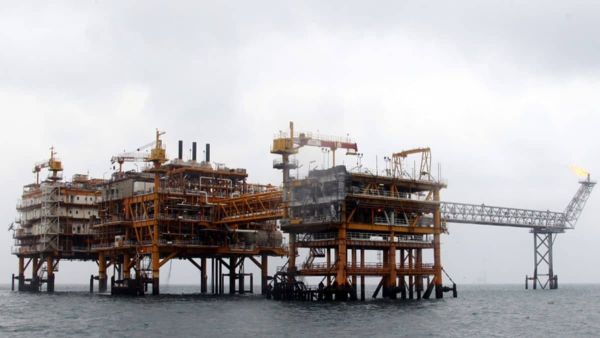
South Pars in the Persian Gulf is shared by Iran and Qatar and is the world's largest offshore natural gas field.
The reservoir contains an estimated 1,800 trillion cubic feet (51 trillion cubic meters) of usable gas - enough to supply the world's needs for 13 years.
Statistics from the Organization of the Petroleum Exporting Countries show Iran's total proven natural gas reserves at 34 trillion cubic meters.
The supergiant gas field underpins Iran's position as the Middle East's largest gas producer and the world's third-largest after the United States and Russia.
It has been developed in phases, each comprising offshore platforms, pipelines and onshore processing facilities clustered around the Iranian port city of Asaluyeh. South Pars has been targeted before.
Last June, Israeli strikes hit four units of Phase 14, located roughly 200 km (125 miles) from Qatar's gas installations.
South Pars supplies most of the gas Iran uses, which was 276 billion cubic meters in 2024, according to data by the Gas Exporting Countries Forum. Iran is one of the world's largest gas consumers.
According to trade publication Argus, South Pars accounts for between 70% and 75% of Iran's total gas production. More than 90% of Iran's production is consumed domestically as Iranian households are heavily dependent on gas for cooking and heating.
The residential sector accounted for 41.5% of total final gas consumption in 2023, followed by industry with 36%, according to the International Energy Agency. Gas is also used as feedstock at petrochemical plants to produce plastics and fertilisers.
About 85% of Iran's electricity is generated by gas-fired power plants, according to data from professional body the Energy Institute. Domestic gas production, however, is insufficient to meet peak demand in summer, which has resulted in blackouts.
When short of natural gas, Iran can burn diesel and fuel oil at its thermal power plants.
Unlike Qatar, Iran has no liquefied natural gas capacity and exports gas only by pipelines to neighbouring countries. In 2024, the country exported about 15 bcm of gas, mainly to Turkey and Iraq. Its long-term gas contract with Turkey expires in mid-2026 and is expected to be renewed at lower volumes.
In 2024, Iraq signed a five-year deal to supply Iraqi gas power plants. Iranian gas flows to Iraq were halted after Wednesday's attack as Iran diverted its gas domestically, a senior Iraqi official told Reuters.