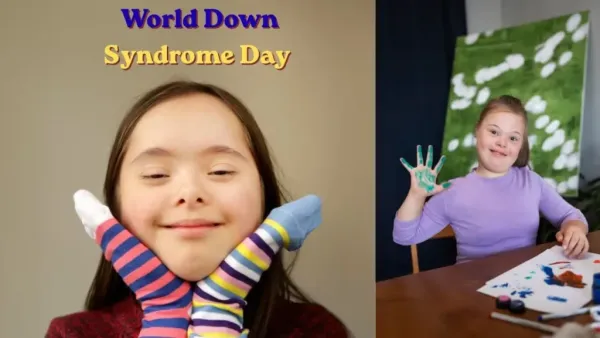
World Down Syndrome Day 2026: Today, March 21, is a day dedicated to the respect and rights of people around the world who are born with an extra chromosome. World Down Syndrome Day (WDSD) aims to break the stereotypes prevalent in the society and include individuals suffering from Down Syndrome in the mainstream. According to the United Nations, this day reminds us that diversity is humanity’s greatest strength.
Normally, there are 23 pairs of chromosomes in every cell of the human body. But Down syndrome is a condition in which a baby is born with an extra copy of chromosome 21. In the language of medical science, it is called Trisomy 21. That is why the 21st day of the third month of the year (March) has been chosen to celebrate it, which directly symbolizes chromosome 21 being three.
On this day, people all over the world wear different colored or mismatched socks. This is not just a fashion trend but a deep message. In fact, when seen under the microscope, the shape of chromosomes appears like a sock. By wearing different colored socks, people give the message that “We may be different in appearance, but our rights and our feelings are the same.”
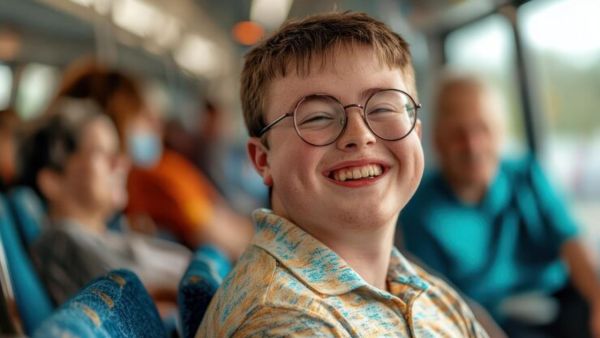
Child with Down Syndrome (Ms. Freepik)
This year’s global campaign focuses on inclusivity. Children and adults with Down syndrome often face discrimination in the areas of education, health and employment. The United Nations emphasizes that they need not just sympathy but equal opportunities to be recognized as active members of society. With the right therapy, special education and family support, these individuals are fully capable of living an independent and dignified life.
It is estimated that approximately 1 in every 1,000 babies worldwide is born with Down syndrome. In a country like India where health awareness is still lacking, this condition is often confused with illness or madness. Experts say that it is not an infectious disease nor is it incurable. Efforts like early intervention and speech therapy can ensure their quality lifestyle.
Today inspires us to take a pledge that we will create a society where the potential of any person will not be measured by the number of his chromosomes but by his personality and dreams.