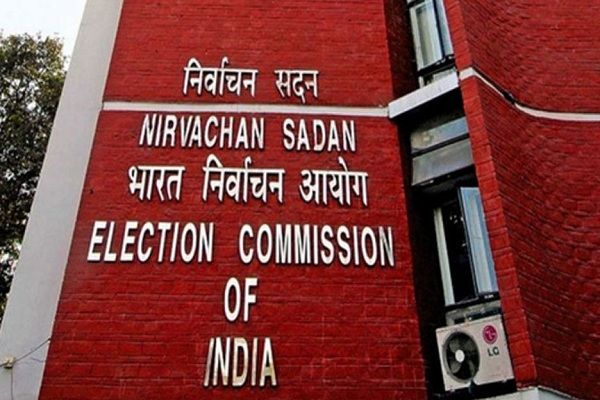
New Delhi, 20 March. The Election Commission of India (ECI) has issued strict guidelines for political parties and candidates regarding the upcoming assembly elections scheduled next month in five states. The Commission has clarified that now it will be mandatory to obtain pre-certification from the Media Certification and Monitoring Committee (MCMC) before releasing all political advertisements.
It is noteworthy that on March 15, the Election Commission had announced the schedule of assembly elections in Assam, Kerala, Puducherry, Tamil Nadu and West Bengal as well as by-elections in six states. After this, these instructions have been issued to keep the election process transparent and fair.
According to the Election Commission, any registered political party, organization, candidate or individual shall take permission from MCMC before issuing advertisements on electronic mediums like TV, radio, audio-video display in public places, e-paper, bulk SMS/voice messages and social media. No political advertisement can be released on the internet or social media platform without pre-certification.
MCMC keeps a close eye on suspected cases of paid news
Candidates can apply to the district level MCMC for certification of their advertisements while political parties having their headquarters in a state or union territory will seek permission from the state level MCMC. Along with this, an Appellate Committee has also been formed under the chairmanship of the Chief Electoral Officer for appeals against the decisions of the District or State MCMC.
It is mandatory to provide information about official social media accounts in the affidavit.
The Election Commission has also said that the MCMC will keep a close watch on suspected cases of paid news in the media and take necessary action. Apart from this, it will be mandatory for all the candidates to give information about their official social media accounts in the affidavit at the time of nomination so that the election campaign can be monitored.
Complete details of expenditure on publicity will have to be given within 75 days after the elections.
According to Section 77(1) of the Representation of the People Act, 1951 and the directions of the Supreme Court, political parties will have to give complete details of the expenditure on publicity made through internet and social media to the Election Commission within 75 days of the end of the elections. This will include all expenses to payments made to internet companies, advertising expenses, content creation and social media operations.
The Election Commission also held a meeting in this regard on March 19 with the Chief Electoral Officers of all the election-bound states, State Police Nodal Officers, IT Nodal Officers and representatives of social media platforms. The objective of this meeting was to stop fake news, misinformation and misleading news in a timely manner and ensure strict action during the elections.