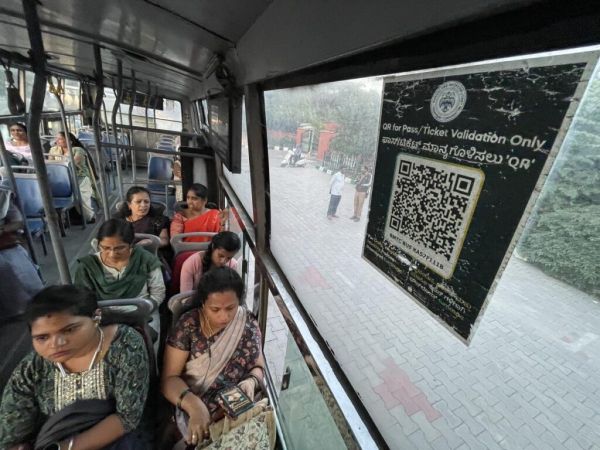
Imagine boarding a bus, scanning a QR code in seconds, and getting your ticket instantly—no cash, no confusion, no “change nahi hai” drama.
That future is already being tested.
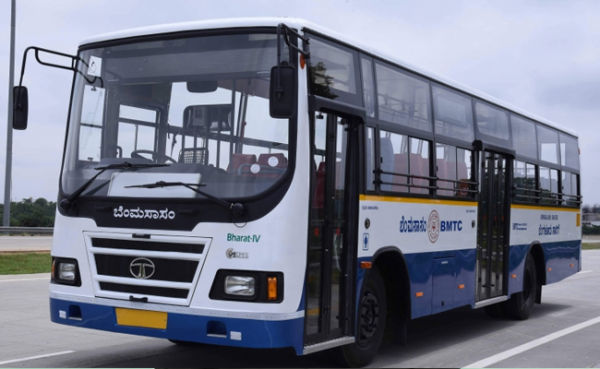
The Bengaluru Metropolitan Transport Corporation has teamed up with mobility startup Hello to pilot a dynamic QR-based UPI ticketing system—bringing Bengaluru one step closer to a fully digital public transport experience.
The rollout has begun with 50 buses from Yeshwantpur depot, but if all goes as planned, this could soon become the norm across the city.
Credits: Urban Acres
Let’s be honest—static QR codes inside buses were never perfect.
You had to scan, type the fare manually, double-check the amount… and hope everything went through smoothly.
Now, that friction is gone.
With the new system, conductors generate a unique QR code for each passenger using smart electronic ticketing machines (ETMs). You scan, pay via any UPI app, and only after the payment is confirmed does the ticket get printed.
It’s quick. It’s precise. And most importantly—it’s foolproof.
This upgrade isn’t just about convenience—it’s about control.
Earlier this year, a fraud incident involving conductors swapping official QR codes with personal ones exposed a major loophole. Add to that the common issue of fake payment screenshots, and the system clearly needed an overhaul.
Dynamic QR codes fix both problems at once.
Every transaction is now machine-generated, trackable, and verified in real time. No payment = no ticket. Simple.
For BMTC, that means tighter accountability. For passengers, it means peace of mind.
Behind the scenes, this transformation is powered by a ₹30 crore deal between BMTC and Chalo.
In the first phase, 11,000 smart ETMs will be deployed—each equipped to handle multiple payment modes, store large volumes of data, and print tickets on the go. Over time, this number could scale up to 15,000 machines.
But this isn’t just about machines—it’s about building a connected system that can evolve with the city.
Here’s where things get interesting.
BMTC’s new system is being designed to integrate with the National Common Mobility Card (NCMC)—a single card that can work across buses, metros, and more.
This could finally align BMTC with the Bangalore Metro Rail Corporation Limitedwhich has been pushing NCMC in partnership with RBL Bank since 2023.
So far, adoption has been slow—largely because BMTC wasn’t part of the ecosystem.
That missing piece? It might finally be falling into place.
The impact goes beyond just regular commuters.
Karnataka’s Shakti Scheme, which allows women to travel free in non-AC buses, is also getting a digital upgrade. A new smart card—based on NCMC—is in the works, aiming to make access seamless while keeping the system efficient.
It’s a small change with a big implication: inclusion powered by technology.
Interestingly, commuters have already started making the shift.
After the January fare hike, nearly 50% of BMTC’s ticket revenue now comes via UPI. With fares going up and loose change becoming a daily hassle, digital payments have quietly taken over.
This new system simply accelerates what was already happening.
Credits: Vartha Bharati
With operations in over 65 cities, Chalo isn’t new to this game. But what’s happening in Bengaluru could be bigger than just one city.
If this pilot works, it could become a blueprint for public transport systems across India—faster boarding, lower leakages, and a much smoother commuter experience.
For now, Bengaluru is testing the waters.
But soon, scanning a QR code on a bus might feel as normal as booking a cab.