


In the first episode of the Ricky Gervais series After Life, the protagonist Tony visits the grave of his recently deceased wife. The blink-and-miss-it shot of the tombstone didn't keep me from noting that the death date was February 26, 2018. Which was exactly one day before my mother died - of the same cause, breast cancer, as Tony's wife.
Much of the show has Gervais watching videos his wife had left behind for him. How healthy and upbeat this dying woman looks compared to my mother in her last weeks, I thought bitterly. But these scenes also made me conscious of how few recordings I have of mum's voice - something that can be even more integral than photographs for keeping a person's memory alive.
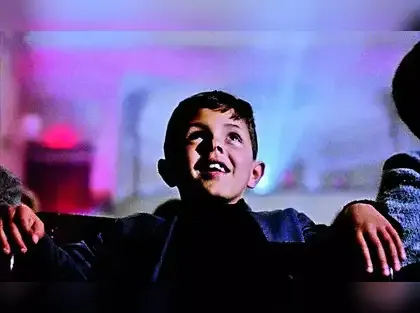
Film-watching has involved many such epiphanies and jolts for me in the past few years. Last week, while watching the wonderful Manipuri film Boong--about a little boy who runs away in search of his absentee father - it struck me that for many of us movie-nerds, cinema can be a way of excavating things about our parents. I often experience films through the lens of how my mother might have felt about them, or in terms of memories of the things we did together.
Memories are unreliable, though, and we tend to make dramatic movies of our own lives. A vivid demonstration of this is a story my mother related about her dad, whose untimely death had been the most traumatic incident in her life.
Never having known my nana, I had asked mum once if he had liked Amitabh Bachchan. Yes, my mother replied, he loved some of those early films - Anand, and so on. And then, the little detail: my nana cried when Amitabh died in Sholay. That scene with Jaya Bhaduri's Radha closing the window as the pyre burnt, she said: 'We were watching the film together, I looked at dad from the side and there was a tear running down his cheek.'
The specificity of this recollection left no doubt that it was one of the most poignant memories she had of her father - a heart-breaking onscreen death made more urgent by the fact that this man, who meant everything to her, was soon to depart. It makes me think of the last two films I watched with her: Shoojit Sircar's Piku (another film in which Bachchan dies) and Lenny Abrahamson's Room - both of which centre on parent-child relationships, the claustrophobic circumstances in which those relationships can unfold, and the need for escape.
To think of my mother and grandfather, quiet, reserved people in a dark hall together, watching that tragic Sholay scene... it feels right. True, on every level.
Except for this inconvenient detail: Sholay was released in August 1975, and my nana had died in January that year. It was only in adulthood that I realised my mother's memory had been a manufactured one.
How did this happen? Maybe she went to see Sholay some months after her dad's death, and was so vulnerable to emotional scenes that it became conflated in her mind with a real-life viewing of another film with her father?
Or, was it a conscious mistruth? Parents do create easily digestible tales for their children. Is it possible that my mother had briefly turned into a screenwriter for her own life, processing a real trauma into a fictional nugget involving a scene from a famous film?
I'll never know. But such is our relationship with films as emotion-generators, catharsis-providers. Or, as curators of our inner feelings. Or, all of the above at the same time. Mum did tell me on another occasion that almost the first thing she did after her father died was to go by herself to a nearby hall and watch a film. She had to be alone. She couldn't bear the thought of participating in communal mourning with extroverted family members and well-wishers. She needed that big dark space, to conceal her own inner darkness in. And today I think I understand why.
Much of the show has Gervais watching videos his wife had left behind for him. How healthy and upbeat this dying woman looks compared to my mother in her last weeks, I thought bitterly. But these scenes also made me conscious of how few recordings I have of mum's voice - something that can be even more integral than photographs for keeping a person's memory alive.
Film-watching has involved many such epiphanies and jolts for me in the past few years. Last week, while watching the wonderful Manipuri film Boong--about a little boy who runs away in search of his absentee father - it struck me that for many of us movie-nerds, cinema can be a way of excavating things about our parents. I often experience films through the lens of how my mother might have felt about them, or in terms of memories of the things we did together.
Memories are unreliable, though, and we tend to make dramatic movies of our own lives. A vivid demonstration of this is a story my mother related about her dad, whose untimely death had been the most traumatic incident in her life.
Never having known my nana, I had asked mum once if he had liked Amitabh Bachchan. Yes, my mother replied, he loved some of those early films - Anand, and so on. And then, the little detail: my nana cried when Amitabh died in Sholay. That scene with Jaya Bhaduri's Radha closing the window as the pyre burnt, she said: 'We were watching the film together, I looked at dad from the side and there was a tear running down his cheek.'
The specificity of this recollection left no doubt that it was one of the most poignant memories she had of her father - a heart-breaking onscreen death made more urgent by the fact that this man, who meant everything to her, was soon to depart. It makes me think of the last two films I watched with her: Shoojit Sircar's Piku (another film in which Bachchan dies) and Lenny Abrahamson's Room - both of which centre on parent-child relationships, the claustrophobic circumstances in which those relationships can unfold, and the need for escape.
To think of my mother and grandfather, quiet, reserved people in a dark hall together, watching that tragic Sholay scene... it feels right. True, on every level.
Except for this inconvenient detail: Sholay was released in August 1975, and my nana had died in January that year. It was only in adulthood that I realised my mother's memory had been a manufactured one.
How did this happen? Maybe she went to see Sholay some months after her dad's death, and was so vulnerable to emotional scenes that it became conflated in her mind with a real-life viewing of another film with her father?
Or, was it a conscious mistruth? Parents do create easily digestible tales for their children. Is it possible that my mother had briefly turned into a screenwriter for her own life, processing a real trauma into a fictional nugget involving a scene from a famous film?
I'll never know. But such is our relationship with films as emotion-generators, catharsis-providers. Or, as curators of our inner feelings. Or, all of the above at the same time. Mum did tell me on another occasion that almost the first thing she did after her father died was to go by herself to a nearby hall and watch a film. She had to be alone. She couldn't bear the thought of participating in communal mourning with extroverted family members and well-wishers. She needed that big dark space, to conceal her own inner darkness in. And today I think I understand why.
(Disclaimer: The opinions expressed in this column are that of the writer. The facts and opinions expressed here do not reflect the views of www.economictimes.com.)





JAI ARJUN SINGH
The writer is the author of The World of Hrishikesh Mukherjee