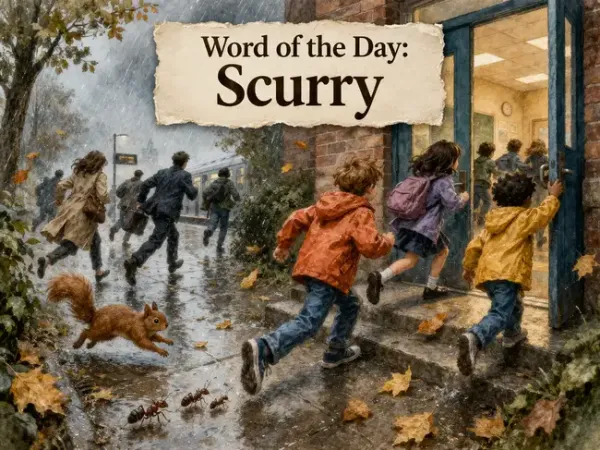
Scurry means to move quickly with short, hurried steps, often because you are in a rush, excited, or slightly nervous. It paints a picture of fast, light movement, almost like darting from one place to another.
This is a commonly used word in everyday English, especially in conversations, storytelling, and descriptive writing.
The word scurry is typically used when someone or something moves quickly in a somewhat restless or hurried way. It is often used for small animals like mice, squirrels, or insects, which naturally move in quick bursts. However, it can also describe people, especially when they are late, trying to avoid attention, or reacting suddenly to something. For instance, commuters might scurry through a busy station, or children might scurry indoors when it starts raining.
Scurry generally has a neutral tone, but it can sometimes carry a slight sense of nervousness, urgency, or even mild chaos depending on the situation.
Part of Speech:
Verb (most common usage)
Origin/Etymology:
The word scurry dates back to the 17th century and likely comes from older English dialects. It is believed to be related to words that mean “to hurry” or “to move briskly,” reflecting its sense of quick motion.
Example Sentences:
In short, scurry is a lively and expressive word that describes fast, hurried movement, often with a hint of urgency or nervous energy, making it a valuable addition to everyday vocabulary.
This is a commonly used word in everyday English, especially in conversations, storytelling, and descriptive writing.
The word scurry is typically used when someone or something moves quickly in a somewhat restless or hurried way. It is often used for small animals like mice, squirrels, or insects, which naturally move in quick bursts. However, it can also describe people, especially when they are late, trying to avoid attention, or reacting suddenly to something. For instance, commuters might scurry through a busy station, or children might scurry indoors when it starts raining.
Scurry generally has a neutral tone, but it can sometimes carry a slight sense of nervousness, urgency, or even mild chaos depending on the situation.
Part of Speech:
Verb (most common usage)
Origin/Etymology:
The word scurry dates back to the 17th century and likely comes from older English dialects. It is believed to be related to words that mean “to hurry” or “to move briskly,” reflecting its sense of quick motion.
Example Sentences:
- The ants scurried across the kitchen floor looking for crumbs.
- She scurried down the street after realizing she was late for her meeting.
- The students scurried out of the classroom as soon as the bell rang.
In short, scurry is a lively and expressive word that describes fast, hurried movement, often with a hint of urgency or nervous energy, making it a valuable addition to everyday vocabulary.