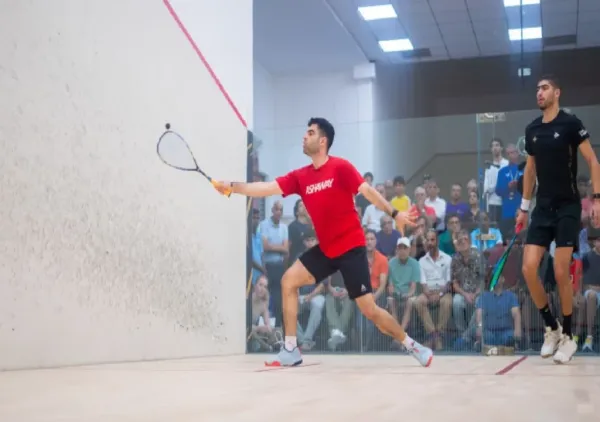
mumbai: Rising Indian squash player Veer Chotrani is making rapid strides on the professional circuit, but at the heart of his journey lies the enduring influence of his father, Manish Chotrani, a former national champion whose legacy continues to shape his son’s career.
The 25-year-old recently underlined his growing stature by reaching the semifinals of the JSW Indian Open, defeating Egypt’s Mohamed Sharaf in straight games. His rise has been swift, moving from a world ranking bracket of 150–200 to an impressive 43 within a short span.
Despite his father’s achievements, Veer has never seen him play at his peak. Over the years, he has searched for old footage of Manish Chotrani’s national championship-winning performances but has come up empty-handed.
“I’ve tried to find videos but just can’t. The game has changed a lot,” Veer said, reflecting on how squash has evolved. He notes that earlier generations played with heavier wooden racquets, while modern equipment allows for greater speed and power, transforming the sport into a more physical and explosive contest.
Yet, even without visual records, conversations with his father have helped him understand the nuances of the game and carry forward that legacy.
Veer’s connection to squash began almost at birth. Growing up around courts, he was drawn to the sport from a very young age.
“I was almost born there,” he recalled. “I started playing at three and competed in my first tournament at six.”
Frequent trips to Chennai to watch top-level matches further deepened his passion. It was during these early experiences that he found his idol in Ramy Ashour, whom he considers the most talented player in the sport.
Competing on the PSA Tour, Veer has had to navigate a demanding schedule that spans eight to nine months annually. The combination of frequent travel, intense matches, and mental pressure makes the journey challenging.
“It’s mentally draining at times, but I do it because I love it,” he said.
After graduating from Cornell University in 2024, Veer initially funded his own participation in smaller tournaments to build ranking points. His consistent performances have now begun to attract support, especially with squash set to feature in future Olympic programmes.
A significant factor in Veer’s development has been his association with coach David Palmer, a former world champion and ex-World No. 1.
During the off-season months from June to August, Veer trains in the United States, focusing on both physical conditioning and match simulation. His regimen includes endurance runs, strength training, and high-intensity on-court drills.
“We do pressure drills where he attacks constantly, and I have to defend,” Veer explained. These sessions are designed to replicate the intensity of competitive rallies and sharpen his reflexes.
While Veer’s natural game is aggressive, aimed at finishing points quickly, he acknowledges the value of building endurance and defensive skills—qualities Palmer was renowned for during his playing career.
Beyond technical guidance, Manish Chotrani continues to play a crucial role as a mentor and motivator. His advice often comes during difficult phases, providing the mental push needed to stay consistent.
“He motivates me, especially on days when I don’t feel like training. That extra push comes from him,” Veer said.
Although he experimented with various racquet sports during his early years, squash remained his calling—perhaps a reflection of both inherited talent and environment.
As Veer climbs the rankings and establishes himself on the global stage, he is also creating his own body of work—matches, victories, and milestones that will define his career.
Unlike his father, whose peak performances exist largely in memory, Veer’s journey is being documented in the digital age. His growing archive of matches will not only chart his progress but also serve as inspiration for future generations.
Veer Chotrani’s rise in international squash is a story of talent, discipline, and legacy. While his father’s achievements laid the foundation, it is his own determination and adaptability that are driving his success.
As he continues to climb the rankings, Veer is not just chasing victories—he is building a legacy that future players will be able to watch, study, and draw inspiration from.