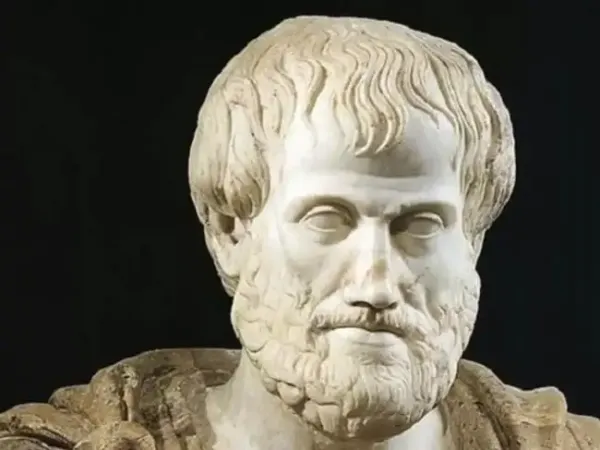
Quote of the Day by Aristotle: How often do we pause to ask, are we truly intelligent, or simply well-informed? Can knowledge about the world alone make you wise, or is there something deeper that shapes your decisions, your relationships, and the path your life takes?
We spend years learning, observing, and trying to decode everything around us, yet rarely turn that same attention inward. What if the real beginning of clarity, purpose, and meaningful growth lies not in knowing more but in knowing yourself? One of history’s greatest thinkers, Aristotle, may have offered a timeless answer.
Quote of the Day by Aristotle: “Knowing yourself is the beginning of all wisdom.”
Also Read: Quote of the Day by Lao Tzu, ‘Knowing others is intelligence; knowing yourself is…’ ancient Chinese philosopher's guide to unleash your inner monk
Quoted by Goodreads, at its heart, this quote suggests that wisdom is rooted in self-awareness. Aristotle meant that before seeking to understand the complexities of the world, one must first understand their own nature, thoughts, emotions, motivations, and limitations. Without this internal clarity, knowledge remains incomplete and often misapplied.
Self-knowledge provides a foundation for better judgment. It allows individuals to interpret experiences more accurately and respond thoughtfully rather than impulsively. In this sense, intelligence becomes meaningful only when guided by a clear understanding of oneself, making self-awareness the true starting point of wisdom.
In practical terms, this idea plays out in everyday decisions. Whether it’s choosing a career, handling relationships, or navigating setbacks, those who understand themselves tend to make choices that align with their values and long-term goals.
Self-awareness also helps in managing emotions and expectations. It allows individuals to recognize their strengths without arrogance and their weaknesses without denial. Over time, this leads to better control over actions, more consistent behavior, and a deeper sense of confidence rooted in clarity rather than external validation.
Also Read: Quote of the Day by Chinese philosopher Mencius, ‘A man must not be without shame, for the shame of being without shame is…’ and why shameful doesn’t mean shameless
Aristotle quotes
Quotes by Aristotle noted by the outlet are,
Aristotle was born in Stagira in northern Greece and went on to become one of the most influential philosophers in history. The son of a royal physician, he was initially trained in medicine before moving to Athens in 367 BCE to study under Plato at the Academy, where he remained for nearly two decades.
After Plato’s death, Aristotle traveled and later returned to tutor Alexander the Great. He eventually founded his own school, the Lyceum, in Athens. His work spanned a vast range of subjects, including biology, physics, ethics, politics, and logic. Unlike his teacher Plato, Aristotle focused on understanding reality through observation and experience, laying the groundwork for empirical science.
Also Read: Quote of the day by Confucius: 'When it is obvious that the goals cannot be reached, don't adjust the goals, adjust the...' - Revered as the 'First Teacher' of China
Aristotle’s intellectual legacy is immense and enduring. He is credited with shaping disciplines ranging from logic and ethics to natural sciences. His biological observations, including detailed studies of marine life and animal classification, remained authoritative for centuries.
In philosophy, his ideas became central to medieval scholastic thought and influenced generations of scholars. Even today, his views on observation, reasoning, and self-understanding continue to guide modern thought. His belief that wisdom begins with knowing oneself remains as relevant now as it was in ancient Greece, offering an unparalleled foundation for personal and intellectual growth.
We spend years learning, observing, and trying to decode everything around us, yet rarely turn that same attention inward. What if the real beginning of clarity, purpose, and meaningful growth lies not in knowing more but in knowing yourself? One of history’s greatest thinkers, Aristotle, may have offered a timeless answer.
Quote of the Day by Aristotle: “Knowing yourself is the beginning of all wisdom.”
Also Read: Quote of the Day by Lao Tzu, ‘Knowing others is intelligence; knowing yourself is…’ ancient Chinese philosopher's guide to unleash your inner monk
Meaning of the quote by Aristotle
Quoted by Goodreads, at its heart, this quote suggests that wisdom is rooted in self-awareness. Aristotle meant that before seeking to understand the complexities of the world, one must first understand their own nature, thoughts, emotions, motivations, and limitations. Without this internal clarity, knowledge remains incomplete and often misapplied.
Self-knowledge provides a foundation for better judgment. It allows individuals to interpret experiences more accurately and respond thoughtfully rather than impulsively. In this sense, intelligence becomes meaningful only when guided by a clear understanding of oneself, making self-awareness the true starting point of wisdom.
What Aristotle means in real life
In practical terms, this idea plays out in everyday decisions. Whether it’s choosing a career, handling relationships, or navigating setbacks, those who understand themselves tend to make choices that align with their values and long-term goals.
Self-awareness also helps in managing emotions and expectations. It allows individuals to recognize their strengths without arrogance and their weaknesses without denial. Over time, this leads to better control over actions, more consistent behavior, and a deeper sense of confidence rooted in clarity rather than external validation.
Also Read: Quote of the Day by Chinese philosopher Mencius, ‘A man must not be without shame, for the shame of being without shame is…’ and why shameful doesn’t mean shameless
Aristotle quotes
Quotes by Aristotle noted by the outlet are,
- “Whosoever is delighted in solitude, is either a wild beast or a god.”
- “Patience is bitter, but its fruit is sweet.”
- A friend to all is a friend to none.”
- “Wishing to be friends is quick work, but friendship is a slow ripening fruit.”
- “Happiness is the meaning and the purpose of life, the whole aim and end of human existence.”
- “Those who know, do. Those that understand, teach.”
- “Those who educate children well are more to be honored than they who produce them; for these only gave them life, those the art of living well.”
- “He who has overcome his fears will truly be free.”
- “To perceive is to suffer.”
- “Happiness is the meaning and the purpose of life, the whole aim and end of human existence.”
About Aristotle
Aristotle was born in Stagira in northern Greece and went on to become one of the most influential philosophers in history. The son of a royal physician, he was initially trained in medicine before moving to Athens in 367 BCE to study under Plato at the Academy, where he remained for nearly two decades.
After Plato’s death, Aristotle traveled and later returned to tutor Alexander the Great. He eventually founded his own school, the Lyceum, in Athens. His work spanned a vast range of subjects, including biology, physics, ethics, politics, and logic. Unlike his teacher Plato, Aristotle focused on understanding reality through observation and experience, laying the groundwork for empirical science.
Also Read: Quote of the day by Confucius: 'When it is obvious that the goals cannot be reached, don't adjust the goals, adjust the...' - Revered as the 'First Teacher' of China
Aristotle’s legacy
Aristotle’s intellectual legacy is immense and enduring. He is credited with shaping disciplines ranging from logic and ethics to natural sciences. His biological observations, including detailed studies of marine life and animal classification, remained authoritative for centuries.
In philosophy, his ideas became central to medieval scholastic thought and influenced generations of scholars. Even today, his views on observation, reasoning, and self-understanding continue to guide modern thought. His belief that wisdom begins with knowing oneself remains as relevant now as it was in ancient Greece, offering an unparalleled foundation for personal and intellectual growth.