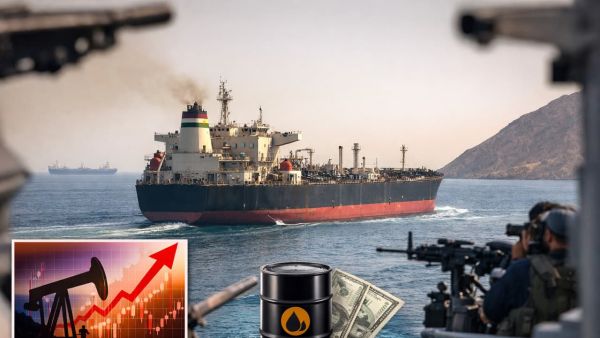
Amid escalating conflict with the United States and Israel, Iran has reportedly begun charging select vessels a massive $2 million (around ₹18.8 crore) toll to pass through the crucial Strait of Hormuz, one of the world’s most important oil transit routes.

The move reflects Tehran’s attempt to assert what it calls a new “sovereign regime” over the strategic waterway, through which nearly one-fifth of global oil supply flows. Iranian lawmaker Alaeddin Boroujerdi said, “Collecting $2 million as transit fees… reflects Iran's strength.”
He justified the decision by linking it directly to wartime costs, stating, “Now, because war has costs, naturally we must do this.”
The toll appears to be selectively imposed, with reports indicating that only certain vessels are required to pay, particularly amid tightened control and reduced shipping traffic through the strait.
The development comes as tensions soar following US President Donald Trump’s warning that Iran must reopen the strait within 48 hours or face attacks on its power infrastructure.
In response, Iran has adopted a conditional stance on maritime access. President Masoud Pezeshkian said on X, “The Strait of Hormuz is open to all except those who violate our soil.”
Scroll to load tweet…
Iran has also issued a stark warning, stating the strait would be “completely closed” if the US follows through on its threats.
The ongoing conflict has already severely disrupted shipping, with traffic through the strait reportedly plunging and only a handful of vessels continuing operations under strict coordination with Tehran.
This crisis has significant global implications. The Strait of Hormuz is a vital chokepoint for oil and liquefied natural gas shipments, and any disruption risks triggering energy price spikes and supply chain instability worldwide.
Additionally, Iran has hinted at broader control measures, including regulated corridors and selective access for ships willing to comply with its terms, further reinforcing its leverage over international trade routes.
As geopolitical tensions deepen, the imposition of transit fees underscores how the strait has transformed from a global commons into a contested zone of strategic and economic power—raising fears of prolonged instability in global energy markets.