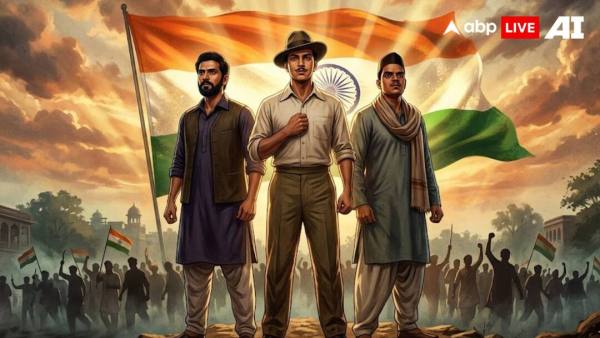
Every year on March 23, India pauses to remember extraordinary courage and sacrifice. Shaheed Diwas, also known as Martyrs’ Day, honours the legacy of Bhagat Singh, Shivaram Rajguru and Sukhdev Thapar, three young revolutionaries whose fearless actions continue to inspire generations.
The roots of this day trace back to 1931, when the British government executed the three revolutionaries for their role in the freedom struggle. Their sacrifice at such a young age transformed them into enduring symbols of resistance and patriotism.
The chain of events began in 1928 with the arrival of the Simon Commission in India. The absence of Indian representation sparked widespread outrage and protests across the country.
One of the most significant demonstrations was led by Lala Lajpat Rai in Lahore. On October 30, 1928, a brutal lathi charge left him severely injured, and he later succumbed to his injuries on November 17. His death deeply shook the nation and ignited a fierce response among young revolutionaries.
Moved by anger and a desire for justice, Bhagat Singh, along with Rajguru and Sukhdev, decided to avenge Lajpat Rai’s death. They planned to target police officer James A. Scott, believed to be responsible for the attack.
Their actions became a defining moment in India’s independence movement, highlighting the intensity and urgency felt by a generation unwilling to remain silent.
Shaheed Diwas is more than a remembrance, it is a reminder of the price of freedom. It reflects the courage, conviction and determination that shaped India’s journey to independence.
The day also encourages reflection, especially among younger generations. It bridges history with present-day values, reminding people that the nation’s freedom was built on sacrifice, unity and unwavering belief.
India observes Martyrs’ Day on multiple occasions. While March 23 commemorates the sacrifice of Bhagat Singh, Rajguru and Sukhdev, January 30 marks the assassination of Mahatma Gandhi in 1948.
Each date carries its own significance. One represents non-violence and peace, while the other reflects revolutionary courage. Together, they illustrate the diverse paths that contributed to India’s independence.