In March, Nick Fry tried to make some changes to a couple of upcoming trips.
First, he needed to bring forward a business-class flight from Phoenix to London by 24 hours due to a family emergency. The response from IAG SA’s British Airways: an additional £5,100, almost as much as the cost of the original return booking, he told me. Fry, the chairman of Motion Applied, which supplies electronics to Formula 1 teams, opted to downgrade to premium economy instead.
Then he looked into altering the arrangements on a 10-day family vacation to South Africa costing almost £45,000. To fly out a day earlier with Virgin Atlantic, and add one night’s accommodation at The One & Only hotel, he was quoted an additional £21,000. He declined. (BA said the cost to change flights was unrelated to disruption from the Iran war and depends on availability and the type of ticket booked. Virgin did not respond to a request for comment, while a more expensive room type being available contributed to the increased price at The One & Only.)
Also Read: Iran War forces India-West flights to take longer detours, sending travel times and fares soaring
(Join our ETNRI WhatsApp channel for all the latest updates)
If Fry, who used to own an F1 team, is balking at the cost of business-class seats and top-notch hotels, the travel industry has a serious problem. It’s the big spenders like him who’ve buoyed the industry since the pandemic.
Amid disruption to lucrative locations such as Dubai, rising fuel costs and stock market gyrations, airlines and hotels may be looking at substantial price hikes to protect profits. But this is a risky game, as sellers of designer handbags and clothing have learned the hard way.
Some increases are inevitable. After all, travel companies need to make money for shareholders. Many of the people who would have visited Dubai – primarily a luxury destination – will be looking for alternatives. That creates fresh demand in other warm-weather locales, including Spain, the Canary Islands and the Caribbean. It doesn’t help that we are approaching the Easter holidays, a busy time for family vacations.
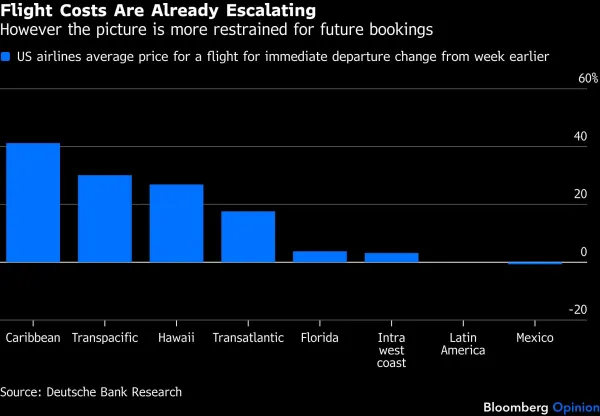
Meanwhile, US airlines have reported some of the strongest-ever booking trends, as premium leisure and corporate travelers rush to buy tickets before prices surge even more. Analysts at Deutsche Bank AG found that the cost of US tickets for immediate travel across all classes had increased in the week to March 13, compared with the week earlier, for most domestic and international routes.
Also Read: Air travel chaos-- Why air miles are a powerful backup tool for HNIs amid travel disruptions
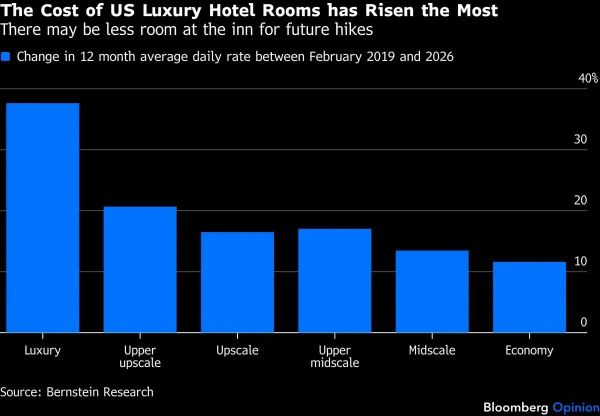
The boom in the premium sector may be emboldening the industry to raise prices on those travelers in particular. The average daily rate at US luxury hotels rose 38% between 2019 and 2026, according to Richard Clarke, an analyst at broker Bernstein. The increase in the economy sector over the same period was 12%. Occupancy has also been strongest at the more upmarket properties.
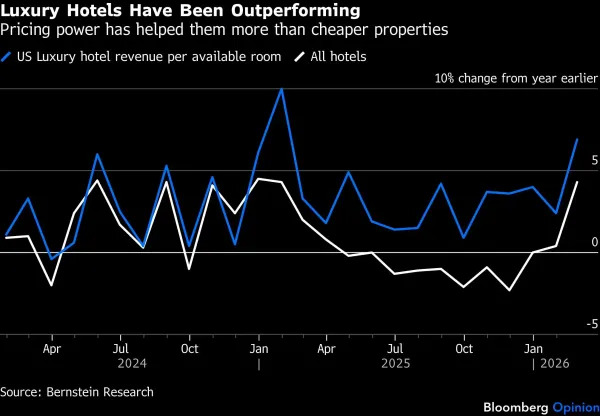
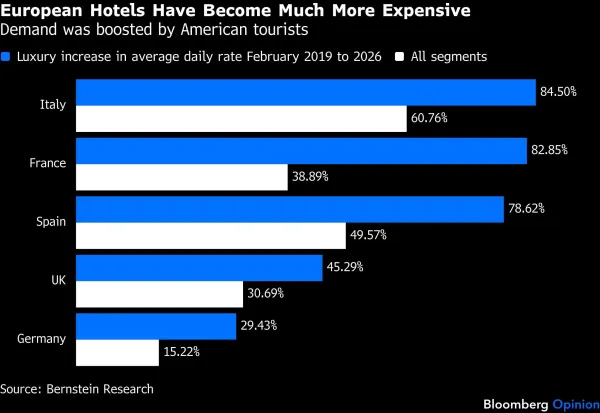
In France, Italy and Spain, price escalations have been even more eyewatering, no doubt driven by the high level of demand among US tourists amid the strong dollar in 2023 and 2024.
“We have seen that luxury accommodation has started pricing more like a luxury good than a hospitality product,” Clarke told me.
But here lies the lesson for airlines and hotel operators seeking to charge more: Even the rich don’t like to be ripped off. While the post-Covid price increases that caused some to accuse the luxury industry of “greedflation” first hit spending by aspirational shoppers, the extent of the sector’s downturn — the worst since the great financial crisis, excluding the pandemic dip — shows that even the super-wealthy ultimately started to think twice.
A case in point is Chanel Ltd. It became the leitmotif in discussions about spiraling prices after the cost of one of its most recognizable bags, the 2.55 large flap, almost doubled since 2019, according to analysts at HSBC Holdings Plc. In 2024, Chanel’s sales fell 4%. Earlier this month the brand took a step toward reversing that trend, introducing a suite of bags priced below its classic flap model. The strategy seems to be working: Fashionistas have fought to get their hands on the most-hyped items.
Hotels and airlines now emulating luxury brands (let’s not forget that LVMH Moet Hennessy Louis Vuitton SE owns the Belmond and Cheval Blanc hotel chains) may be doing so at just the wrong time.
If the conflict in the Middle East escalates, then travel more broadly could be curtailed. It’s notable that Deutsche Bank found that airfares for three weeks in advance hadn’t seen the same escalation as those for immediate travel, while some cruise prices have actually started to fall — perhaps a leading indicator of weaker appetite to come.
The potential knock-on impacts from the war, particularly to US stock markets, are another danger. The rich are more susceptible to shocks to property or equities than to increases in the cost of everyday essentials, although soaring oil prices won’t be helpful either.
Add in the fact that many people have indulged their wanderlust for the past five years, and they may be more inclined to dial back at least some of their vacation plans.
The travel industry can’t count on pent-up demand or hearty stock markets right now. So if it insists on hiking prices, it may find that more wealthy travelers like Nick Fry could soon start pushing back.
First, he needed to bring forward a business-class flight from Phoenix to London by 24 hours due to a family emergency. The response from IAG SA’s British Airways: an additional £5,100, almost as much as the cost of the original return booking, he told me. Fry, the chairman of Motion Applied, which supplies electronics to Formula 1 teams, opted to downgrade to premium economy instead.
Then he looked into altering the arrangements on a 10-day family vacation to South Africa costing almost £45,000. To fly out a day earlier with Virgin Atlantic, and add one night’s accommodation at The One & Only hotel, he was quoted an additional £21,000. He declined. (BA said the cost to change flights was unrelated to disruption from the Iran war and depends on availability and the type of ticket booked. Virgin did not respond to a request for comment, while a more expensive room type being available contributed to the increased price at The One & Only.)
Also Read: Iran War forces India-West flights to take longer detours, sending travel times and fares soaring
(Join our ETNRI WhatsApp channel for all the latest updates)
If Fry, who used to own an F1 team, is balking at the cost of business-class seats and top-notch hotels, the travel industry has a serious problem. It’s the big spenders like him who’ve buoyed the industry since the pandemic.
Amid disruption to lucrative locations such as Dubai, rising fuel costs and stock market gyrations, airlines and hotels may be looking at substantial price hikes to protect profits. But this is a risky game, as sellers of designer handbags and clothing have learned the hard way.
Some increases are inevitable. After all, travel companies need to make money for shareholders. Many of the people who would have visited Dubai – primarily a luxury destination – will be looking for alternatives. That creates fresh demand in other warm-weather locales, including Spain, the Canary Islands and the Caribbean. It doesn’t help that we are approaching the Easter holidays, a busy time for family vacations.
Meanwhile, US airlines have reported some of the strongest-ever booking trends, as premium leisure and corporate travelers rush to buy tickets before prices surge even more. Analysts at Deutsche Bank AG found that the cost of US tickets for immediate travel across all classes had increased in the week to March 13, compared with the week earlier, for most domestic and international routes.
Also Read: Air travel chaos-- Why air miles are a powerful backup tool for HNIs amid travel disruptions
The boom in the premium sector may be emboldening the industry to raise prices on those travelers in particular. The average daily rate at US luxury hotels rose 38% between 2019 and 2026, according to Richard Clarke, an analyst at broker Bernstein. The increase in the economy sector over the same period was 12%. Occupancy has also been strongest at the more upmarket properties.
In France, Italy and Spain, price escalations have been even more eyewatering, no doubt driven by the high level of demand among US tourists amid the strong dollar in 2023 and 2024.
“We have seen that luxury accommodation has started pricing more like a luxury good than a hospitality product,” Clarke told me.
But here lies the lesson for airlines and hotel operators seeking to charge more: Even the rich don’t like to be ripped off. While the post-Covid price increases that caused some to accuse the luxury industry of “greedflation” first hit spending by aspirational shoppers, the extent of the sector’s downturn — the worst since the great financial crisis, excluding the pandemic dip — shows that even the super-wealthy ultimately started to think twice.
A case in point is Chanel Ltd. It became the leitmotif in discussions about spiraling prices after the cost of one of its most recognizable bags, the 2.55 large flap, almost doubled since 2019, according to analysts at HSBC Holdings Plc. In 2024, Chanel’s sales fell 4%. Earlier this month the brand took a step toward reversing that trend, introducing a suite of bags priced below its classic flap model. The strategy seems to be working: Fashionistas have fought to get their hands on the most-hyped items.
Hotels and airlines now emulating luxury brands (let’s not forget that LVMH Moet Hennessy Louis Vuitton SE owns the Belmond and Cheval Blanc hotel chains) may be doing so at just the wrong time.
If the conflict in the Middle East escalates, then travel more broadly could be curtailed. It’s notable that Deutsche Bank found that airfares for three weeks in advance hadn’t seen the same escalation as those for immediate travel, while some cruise prices have actually started to fall — perhaps a leading indicator of weaker appetite to come.
The potential knock-on impacts from the war, particularly to US stock markets, are another danger. The rich are more susceptible to shocks to property or equities than to increases in the cost of everyday essentials, although soaring oil prices won’t be helpful either.
Add in the fact that many people have indulged their wanderlust for the past five years, and they may be more inclined to dial back at least some of their vacation plans.
The travel industry can’t count on pent-up demand or hearty stock markets right now. So if it insists on hiking prices, it may find that more wealthy travelers like Nick Fry could soon start pushing back.