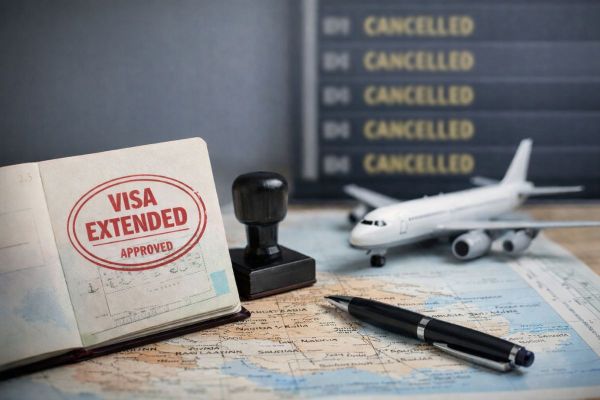
Tensions in the Middle East have led to widespread airspace closures, flight suspensions, and emergency visa measures across several countries. For travellers, foreign workers, and expats, the situation is changing quickly.
Several countries are now offering visa extensions, emergency entry options, and temporary flexibility to help people affected by cancelled flights and travel restrictions.
Airspace has been fully or partially closed in several countries, including:
Many airlines have already suspended or rerouted flights to avoid the affected areas. More changes are expected as the situation develops.
Some land borders in the region may also be closed or operating with restrictions. Travellers should check official government updates before planning any journey.
To help travellers stuck due to cancelled flights, several countries have introduced visa extensions and other temporary immigration relaxations.
Foreign nationals currently in India who cannot travel due to disruptions can contact the nearest Foreigners Regional Registration Office (FRRO). Authorities may grant visa extensions or help regularise stay so travellers do not face penalties.
Israel has announced automatic visa extensions for many visa categories expiring between February and May 2026. Eligible visas include:
Some re-entry visas for foreign workers have also been extended automatically. This allows travellers to return without submitting a new application.
Processing delays are possible as government offices are operating with limited staff.
Kuwait has introduced automatic one-month extensions for visit visas that have expired or are about to expire. Key points include:
Qatar is offering a one-month automatic extension for entry visas that are close to expiry. Travellers can complete the extension process online without paying extra fees. However, previous visa violations must be cleared before applying.
Temporary emergency entry arrangements are in place in limited situations. Some travellers may be allowed to enter Saudi Arabia via land borders and continue their journey through major airports.
Indian nationals in Qatar and Bahrain may receive assistance from their embassies to enter Saudi Arabia under special arrangements.
Approval is handled case by case, so travellers should not assume guaranteed entry.
Foreign nationals unable to leave Thailand because of Middle East flight disruptions can stay without penalties. Travellers may:
Applicants may need to provide a copy of their passport and a brief explanation for the extension request.
The UAE has introduced several relief measures:
Canada has introduced temporary support measures for Iranian nationals currently staying in the country as temporary residents. These measures aim to provide flexibility for those unable to travel due to disruptions.
The United Kingdom has also introduced limited visa concessions and entry exemptions to support travellers affected by the Middle East disruption. Eligibility and available options may vary depending on nationality, travel route, and other immigration circumstances.
Some embassies and consulates in the region are operating with reduced staff or have temporarily paused services. This may affect:
Travellers needing urgent documentation should contact their embassy as early as possible.
In certain locations, authorities have issued shelter-in-place advisories for safety reasons.
If your trip involves the Middle East, here are practical steps to consider:
Travellers with dual nationality may wish to contact both embassies for guidance.
Travel across the Middle East is currently unpredictable due to airspace closures and security concerns. Governments are offering visa extensions and temporary flexibility to reduce the impact on travellers.
If your plans involve the region, stay flexible and keep checking official updates. Rules are changing quickly, and being informed can make a big difference.
Follow and connect with us on Facebook, Twitter, LinkedIn, Instagram and Google News for the latest travel news and updates!