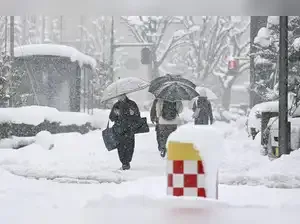
A powerful winter storm is moving across large regions of the United States, resulting in a hazardous mix of snow, ice, and strong winds that could severely interrupt travel and daily life.
The National Weather Service, The National Weather Service has provided warnings for heavy snow, icy conditions, and strong wind in six states, that includes regions of Hawaii, Maine, New Hampshire, New York, Vermont, and Alaska.Forecasters state that some regions may receive up to 6 inches of snow, alongside gusty winds and low visibility, leading to hazardous situations through Monday.
Travel disruptions and dangerous conditions expected
Meteorologists caution that the widespread system could affect areas from the Northeast to the Pacific, impacting roads, airports, and sea routes. Snow, freezing rain, and high winds are anticipated to combine, making travel risky or even impossible in some areas.Officials warn that the extreme conditions could make “travel impossible,” mainly in places experiencing heavy snowfall and ice deposits between Sunday and early next week.
Unusual weather contrast across the U.S.
While regions of the country brace for winter storms, others are facing extreme heat, with temperatures increasing as high as 108°F in some places. This sharp contrast emphasizes the unpredictable and severe weather patterns currently impacting the nation.Hawaii and Alaska under winter alerts
Even typically warmer areas are witnessing wintry conditions. In Hawaii, the Big Island summits remain under a winter storm warning, with up to 3 inches of extra snowfall and wind speeds nearing to 35 mph.Meanwhile, regions of Alaska that include Prince of Wales Island, Ketchikan Gateway, and Sitka could get up to 6 inches of snow. Minimized visibility and strong winds are anticipated to interrupt travel across land, sea, and air.
Northeast faces snow, ice, and slippery roads
States across the Northeast which includes Maine, New Hampshire, New York, and Vermont are getting ready for a mix of snowfall and freezing drizzle that could result in slick and hazardous surfaces.Western Maine is predicted to receive between 5 and 8 inches of snow through Sunday into early Monday, while other areas may witness 2 to 6 inches. Coastal and inland places, including the Penobscot Valley, could get between 3 and 6 inches by Monday morning.
Northern New Hampshire could see snowfall totals nearing up to 8 inches, while central areas may receive 3 to 6 inches alongside possible ice deposits.
The weather service has cautioned that “periods of moderate snow and low visibility will be the biggest hazards,” adding that these situations are likely to result in “dangerous driving conditions.”
Additional snowfall across key regions
In Alaska, locations like Hoonah, Sitka, and Kake are anticipated to receive up to 5 inches of snow, with visibility falling below a mile through mid-Sunday morning. Similarly, Prince of Wales Island and surrounding regions could witness between 2 and 5 inches of snow accompanied by winds of up to 35 mph.In Vermont, places along the eastern slopes of the Green Mountains may record between 3 and 7 inches of snow by Monday morning.
The Adirondack area in northern New York is also anticipated to receive up to 7 inches of snow and ice, which could significantly impact the Monday morning travel.
Authorities continue to monitor situation
The National Weather Service will keep tracking the storm and offer timely updates on snowfall totals, ice buildup, and travel risks. Residents in the impacted regions are urged to remain cautious and restrict travel as conditions worsen.FAQs:
Q1. What is causing the winter storm?A strong weather system combining cold air, moisture, and wind is driving the storm. This mix leads to snow, ice, and freezing conditions.
Q2. Which areas are most affected?
Parts of Maine, New Hampshire, New York, Vermont, Hawaii, and Alaska are under warnings. These regions are expected to experience the most severe conditions.